Introduction
Learning Python can feel like standing at the foot of a mountain, staring up at a peak hidden in clouds. You’re excited, maybe a little nervous, and definitely wondering where to start. Here’s the good news: Python is one of the most beginner-friendly programming languages you’ll ever encounter.
With the right approach and some practical Python programming tips, you’ll be writing useful code faster than you think. Whether you’re a student at Educify or a parent helping your child navigate their coding journey, these python tips and tricks will set you on the path to success.
1. Start With Real Problems, Not Just Syntax
Here’s a python tip that changes everything: don’t memorize syntax for the sake of memorizing. Instead, identify a problem you actually want to solve. Maybe you want to automate organizing your files, build a simple calculator, or create a program that tracks your homework assignments. When you have a real goal, learning Python becomes purposeful rather than abstract.
According to a 2026 study by Stanford University’s Lane Library, students who start with problem-based learning retain 73% more programming concepts than those who follow traditional syntax-first approaches. At Educify, our tutors encourage students to bring their own ideas to the table, transforming Python programming tips into personalized learning experiences.
2. Practice Consistency Over Marathon Sessions
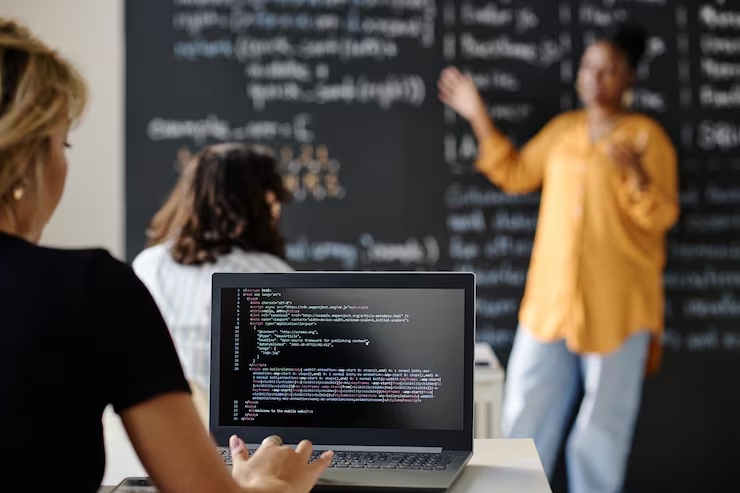
You don’t need to code for eight hours straight to become proficient. Research shows that practicing Python for just 30-60 minutes daily is far more effective than weekend coding marathons. Your brain needs time to process new concepts, and consistent exposure reinforces neural pathways that make coding feel natural. Think of it like learning a musical instrument—regular practice builds muscle memory. Set a realistic schedule that fits your life, whether that’s before breakfast or right after school. The key is showing up consistently. This python programming tip alone can accelerate your learning by months.
3. Embrace Mistakes as Your Best Teachers
Let’s get real: your code will break. A lot. And that’s exactly how you’ll learn. Every error message is Python trying to communicate with you, showing you what went wrong and where. Instead of feeling frustrated when you see a NameError or TypeError, get curious. Read the error message carefully, Google it, and understand what happened. In 2026, developers report that debugging skills are among the most valuable competencies in programming. At Educify, our Python tutors teach students to view errors not as failures but as stepping stones. This mindset shift transforms python tips into actionable learning moments.
4. Use Meaningful Variable Names From Day One
When you’re just starting out, it’s tempting to name variables with single letters like x, y, or z. Resist this urge. Professional Python developers use descriptive names that make code self-documenting. Instead of x = 100, write student_score = 100. Instead of y = "Math", use subject_name = "Math". This python programming tip might seem minor, but it pays massive dividends as your programs grow in complexity. Clear names help you understand your own code when you revisit it weeks later, and they make collaboration with classmates or tutors much smoother. Following PEP 8 naming conventions from the beginning establishes professional habits that will serve you throughout your coding career.

5. Break Big Problems Into Tiny Steps
Large programming challenges can feel overwhelming, but here’s a secret: every complex program is just a collection of simple steps executed in sequence. When faced with a challenging project, break it down into the smallest possible tasks. If you’re building a grade calculator, start with just adding two numbers. Then handle multiple numbers. Then add input validation. Then calculate averages. This incremental approach, recommended by top computer science educators in 2026, reduces cognitive load and builds confidence with each small victory. Our Educify tutors specialize in teaching this decomposition skill, transforming intimidating projects into manageable python tips and tricks.
6. Read Code Written By Others
Learning to read code is just as important as learning to write it. Explore repositories on GitHub, study code examples in documentation, and analyze solutions to common programming problems. When you read well-written Python code, you absorb patterns, idioms, and best practices that would take years to discover on your own. Try to predict what a code snippet does before running it, then verify your understanding. This active reading builds your programming intuition. Many students at Educify participate in code review sessions where they discuss and analyze different approaches to the same problem, multiplying their exposure to diverse python programming tips.
7. Leverage Built-In Functions and Libraries
Python’s superpower is its extensive standard library and ecosystem of third-party packages. Before writing complex logic from scratch, check if Python already has a built-in function or library that solves your problem. Need to sort a list? Use sorted(). Working with dates? Import the datetime module. Processing data? Explore pandas. In 2026, the Python Package Index contains over 500,000 packages, each representing solutions to common problems. Learning to find and use these resources is a critical python tip that separates beginners from intermediate developers. Don’t reinvent the wheel—stand on the shoulders of giants.

8. Write Code, Then Refactor It
Your first version doesn’t need to be perfect. Get it working first, then make it better. This two-phase approach—often called “make it work, then make it beautiful”—reduces pressure and accelerates learning. Write messy code that accomplishes the task, then revisit it to improve readability, efficiency, and elegance. Use list comprehensions instead of verbose loops. Replace repetitive code with functions. Add comments where logic isn’t obvious. According to 2026 data from Dataquest, developers who regularly refactor their code demonstrate 45% faster skill progression than those who don’t. At Educify, our tutors guide students through this iterative process, teaching python programming tips and tricks that transform functional code into professional-quality work.
9. Use Type Hints for Clarity
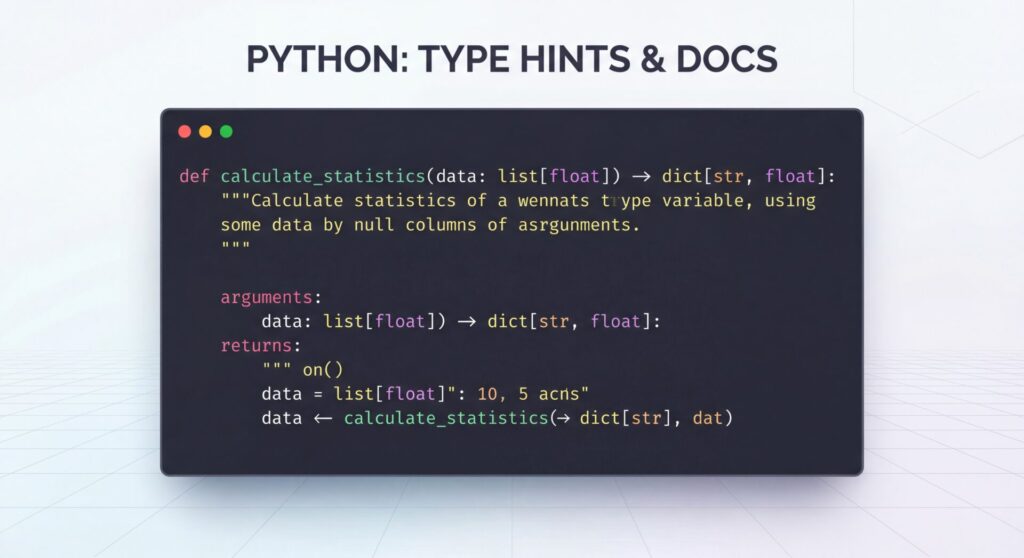
Here’s a python programming tip that professional developers swear by: add type hints to your functions. Instead of writing def calculate(x, y):, write def calculate(x: int, y: int) -> int:. Type hints document what your function expects and returns, making your code self-explanatory and catching errors before runtime. While Python doesn’t enforce these types, they serve as powerful documentation and integrate with modern development tools that provide real-time feedback. The Python community in 2026 has embraced type hints as a best practice, and starting with them early builds habits that distinguish professional code from hobbyist scripts.
10. Build Projects That Matter to You
Theory is important, but nothing cements learning like building something real. Choose projects that genuinely interest you—a Discord bot for your gaming community, a web scraper that tracks sneaker releases, a program that organizes your music library, or a tool that helps you study vocabulary. Personal investment drives persistence through challenges. Start small and expand incrementally. Your first project might be rough around the edges, and that’s perfectly fine. Each project teaches you python tips you won’t find in any tutorial. At Educify, students work on personalized projects with guidance from expert tutors who help transform ideas into working applications, making learning Python an exciting adventure rather than a chore.
Check out related articles on web development:
Conclusion
Learning Python doesn’t have to be overwhelming. With these python programming tips, you’re equipped to navigate the learning curve with confidence and purpose. Remember that every expert programmer started exactly where you are now—staring at a blank screen, wondering what to type first. The difference between those who succeed and those who give up isn’t talent; it’s persistence, curiosity, and the willingness to embrace mistakes as learning opportunities. Whether you’re automating simple tasks, building web applications, or exploring data science, these python tips and tricks will serve as your foundation. Keep coding, stay curious, and don’t be afraid to ask for help when you need it.
Ready to accelerate your Python journey with personalized guidance? Learn Python with expert tutors at Educify today.