Teaching languages or Mathematics online is not simply a matter of moving your classroom to a screen. It requires a deliberate shift in how you design lessons, engage students, and measure progress. Whether you are a seasoned educator stepping into e-learning for the first time or an experienced online tutor looking to sharpen your practice, the strategies below are grounded in what actually works — no theory overload, just clear and actionable guidance.
Table of Contents
- Why Online Teaching Demands a Different Approach
- Strategy 1: Design for Engagement First
- Strategy 2: Use Micro-Learning to Teach Complex Topics
- Strategy 3: Leverage the Right Tools for Each Subject
- Strategy 4: Build a Feedback Loop That Actually Works
- Strategy 5: Foster Real Interaction in a Virtual Space
- Key Statistics
- FAQ
- Conclusion
Why Online Teaching Demands a Different Approach
The e-learning landscape in 2026 is more competitive and more sophisticated than ever. Fast Company recently highlighted the most innovative education companies of the year — and what they all have in common is a laser focus on the learner experience, not just content delivery. Meanwhile, Penn State University has begun integrating AI exploration directly into its online faculty development courses, signaling that the bar for effective online instruction is rising fast.
For teachers of languages and Mathematics specifically, the challenge is real: these are subjects that thrive on interaction, immediate feedback, and the ability to catch misconceptions in real time. Online environments can replicate all of this — but only if you know how to set them up correctly.
📊 Projected to reach $400 billion globally by 2026 – E-learning market growth
Strategy 1: Design for Engagement First
The single biggest mistake online educators make is treating their digital classroom like a recorded lecture. Passive content kills retention.
What to do instead:
- Break every lesson into 10–15 minute segments. Attention spans online are shorter than in person. A 60-minute lesson should be structured as four distinct mini-sessions with transitions, not one continuous block.
- Start with a provocative question or a problem to solve. For Mathematics, open with a puzzle or a real-world scenario (budgeting, architecture, data interpretation). For languages, begin with a short authentic audio clip or a cultural question.
- Use polls and quizzes at the start and end of each segment. Tools like Mentimeter or built-in LMS quizzes take less than two minutes and dramatically increase active participation.
"Engagement is not a feature you add at the end — it is the architecture of the lesson itself."
Strategy 2: Use Micro-Learning to Teach Complex Topics
Research increasingly supports micro-learning — delivering content in focused, bite-sized chunks — as one of the most effective formats for online education. This is especially powerful in Mathematics and language acquisition, where students need time to absorb and practice before moving forward.
How to apply it:
| Subject | Micro-Learning Format | Example |
|---|---|---|
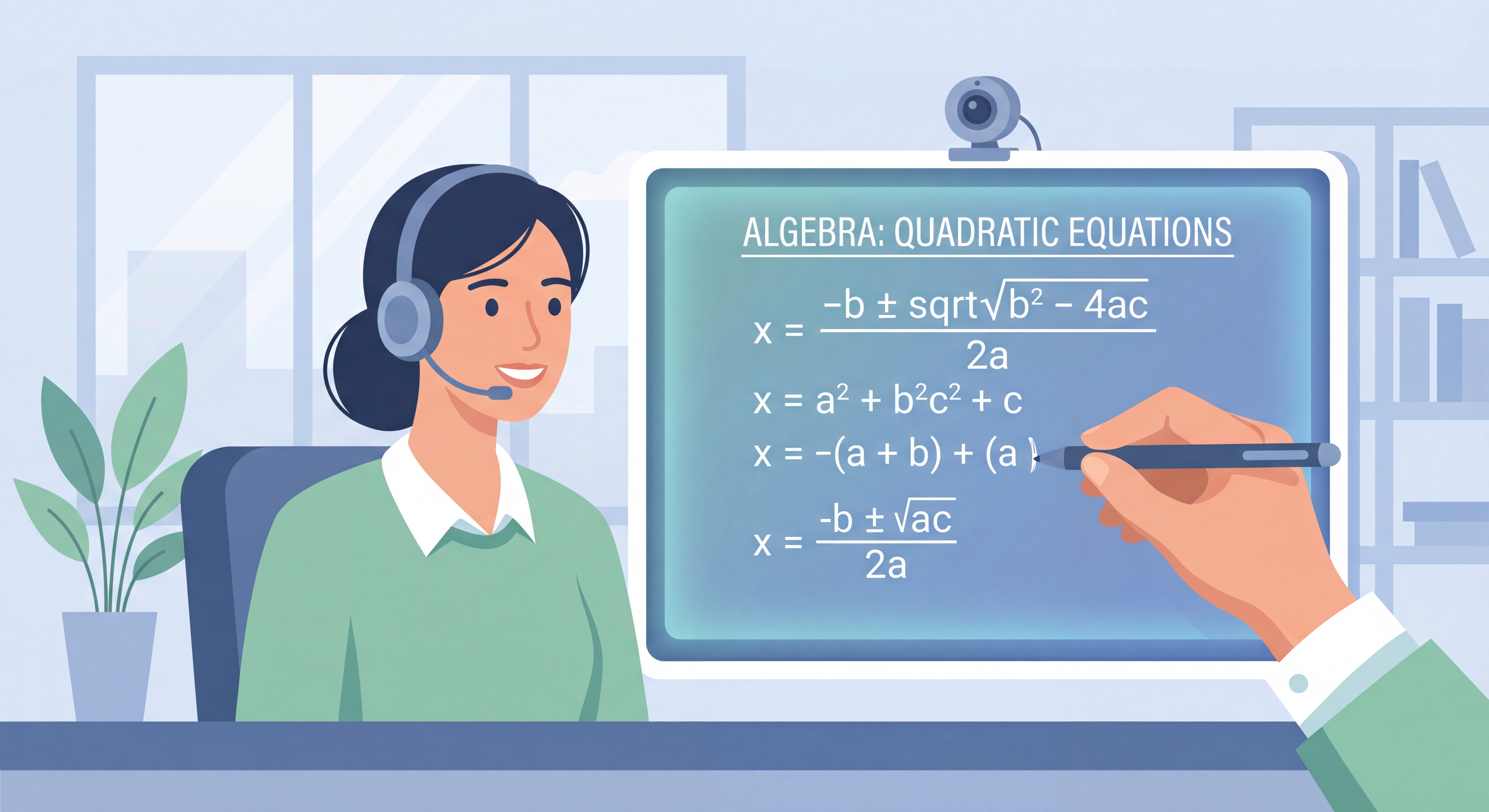
| Mathematics | Short worked-example videos (5–8 min) | Solving a quadratic equation step by step |
| Languages | Vocabulary flashcard sets (10 words max) | Daily themed vocabulary with audio |
| Mathematics | Single-concept practice sets | 5 targeted exercises on fractions only |
| Languages | Dialogue shadowing clips (2–3 min) | Native speaker conversation to repeat |
Practical tip: Record short explainer videos and make them reusable. A 6-minute video on how to conjugate irregular verbs in Spanish, or how to apply the Pythagorean theorem, can serve hundreds of students across multiple cohorts without any extra effort.
📊 Improves knowledge retention by up to 80% compared to traditional formats – Micro-learning effectiveness
Strategy 3: Leverage the Right Tools for Each Subject
Not all e-learning tools are created equal, and using the wrong platform for your subject creates unnecessary friction. Here is a practical breakdown of what works best:
For Mathematics:
- GeoGebra — Free, browser-based, ideal for geometry, algebra, and calculus visualizations. Students can manipulate graphs in real time.
- Desmos — Excellent graphing calculator that works seamlessly in any browser. Use it for live demonstrations during video calls.
- Whiteboard tools (Explain Everything, Miro) — Essential for showing working step by step, just as you would on a physical board.
- Short quizzes via Kahoot or Google Forms — Useful for rapid knowledge checks on formulas and problem-solving methods.
For Language Teaching:
- Flipgrid / Flip — Students record short video responses, which is perfect for speaking practice and pronunciation feedback.
- LingQ or Speechling — Platforms built specifically for language immersion and listening practice.
- Google Slides with embedded audio — Create interactive vocabulary decks with native speaker recordings.
- Breakout rooms (Zoom/Teams) — Simulate conversation pairs or small group discussions, replicating the communicative classroom experience online.
Key insight: The UCF Chemistry Instructor who recently earned an Excellence in Online Teaching Award was recognized specifically for creative use of digital tools — not for having the most content, but for making content interactive and memorable. The same principle applies directly to languages and Mathematics.
Strategy 4: Build a Feedback Loop That Actually Works
Feedback is the engine of learning — and online, it is easy for it to become slow, vague, or non-existent. Here is how to make it systematic:
For Mathematics:
- Use auto-graded practice sets so students get instant right/wrong feedback on calculations.
- Record short video feedback (2–3 minutes using Loom) on written assignments. Hearing your voice explaining where a student went wrong is far more effective than written comments.
- Track error patterns. If five students make the same mistake on simultaneous equations, that is a signal to reteach the concept — not just correct the individual.
A recent study published by Phys.org found that a mathematical framework using short, targeted quizzes can accurately map a student's knowledge landscape — identifying gaps far more efficiently than traditional tests. Implementing regular low-stakes quizzes (3–5 questions per session) gives you this diagnostic power without adding exam pressure.
For Languages:
- Correct errors selectively. Over-correcting during fluency practice discourages students. Focus feedback on the errors that impede communication.
- Use spaced repetition systems (SRS) like Anki to ensure vocabulary is reviewed at the optimal moment before it is forgotten.
- Record students' speaking exercises and provide timestamped audio feedback. This is far more precise than written corrections for pronunciation issues.
"Short diagnostic quizzes can map student knowledge more accurately than end-of-term tests"
— Phys.org
Strategy 5: Foster Real Interaction in a Virtual Space
One of the most common complaints from online students — particularly in language learning — is isolation. Human connection does not disappear online; it just requires more intentional design.
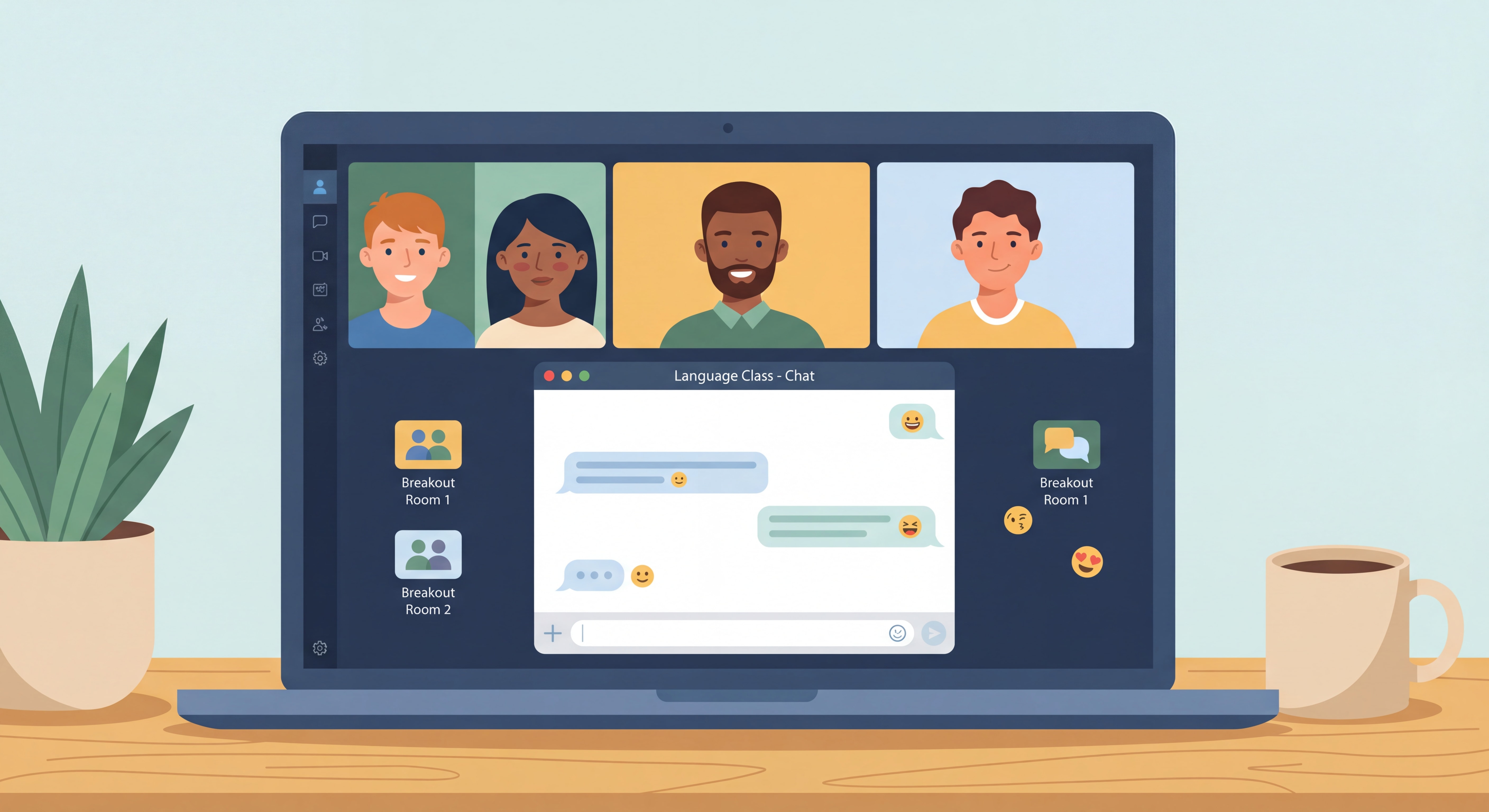
Practical tactics that work:
- Establish a weekly live session, even if most content is asynchronous. A 30-minute live call creates accountability and a sense of community that pre-recorded videos simply cannot replicate.
- Create a dedicated discussion channel (Slack, Discord, or your LMS forum) where students can ask questions, share progress, and celebrate wins.
- Assign peer-review tasks. In language courses, have students record a short dialogue and exchange recordings for feedback. In Mathematics, have students explain their problem-solving approach in a short written or video post.
- Use language exchange pairings. If you teach a language, connect students who are native speakers of each other's target language for informal practice sessions. This is particularly effective for adult learners, as recently highlighted by the inspiring story of a Japanese translator who learned nine languages starting at age 49 — proving that structured, consistent interaction is more powerful than age or natural talent.
| Interaction Type | Frequency | Tool | Benefit |
|---|---|---|---|
| Live Q&A session | Weekly | Zoom / Teams | Accountability + real-time clarification |
| Peer feedback | Per assignment | LMS forum / Flip | Collaborative learning |
| Async discussion prompt | 2x per week | Slack / Discord | Community building |
| 1:1 check-in | Monthly | Google Meet | Personalized support |
Key Statistics
📊 80% improvement in knowledge retention when micro-learning formats are used compared to traditional lecture-based delivery (Journal of Applied Learning Technology, 2025)
💡 $400 billion — projected global e-learning market size by 2026, reflecting the massive shift toward online education (Global Market Insights, 2026)
🎯 68% of online students report higher satisfaction when courses include at least one live interaction per week (Online Learning Consortium, 2025)
📚 Early language exposure dramatically accelerates acquisition — as demonstrated by New Hampshire schools where students learning a second language while mastering their ABCs show significantly stronger long-term bilingual outcomes
FAQ
How many live sessions should I run per week as an online teacher?
For most online courses in languages or Mathematics, one live session per week is the minimum recommended. This creates a rhythm of accountability and gives students a space to ask questions that asynchronous formats cannot fully address. If your course is intensive, two shorter live sessions (30–45 minutes each) tend to work better than one long session.
What is the best way to teach Mathematics online without a physical whiteboard?
Digital whiteboard tools such as GeoGebra, Desmos, and Explain Everything replicate — and in many cases surpass — the physical whiteboard experience. The key is to show your working in real time, not just the final answer. Screen-recording your problem-solving process and narrating each step is one of the most effective techniques for Mathematics instruction online.
How do I keep language students speaking when they are shy on camera?
Start with low-stakes speaking tasks: short audio recordings submitted privately, rather than live speaking in front of the group. As students gain confidence, gradually introduce pair work in breakout rooms before moving to whole-group speaking activities. Normalizing imperfection from day one — making clear that mistakes are part of the process — significantly reduces speaking anxiety.
Can I teach both languages and Mathematics effectively on the same e-learning platform?
Yes, provided the platform supports the tools you need. Most modern LMS platforms (Moodle, Canvas, Teachable, Thinkific) are subject-agnostic. The key is to supplement the platform with subject-specific tools: GeoGebra and Desmos for Mathematics, Flip and Speechling for languages. Think of your LMS as the spine and your specialist tools as the muscles.
How long should online lessons be for adult learners?
Research consistently points to 45–60 minutes as the optimal length for a live online lesson with adults, broken into segments of no more than 15 minutes each. For asynchronous video content, keep individual videos under 10 minutes. Adult learners tend to have limited time and high expectations for efficiency — respecting that is itself a teaching strategy.
Conclusion
Effective online teaching in languages and Mathematics is not about replicating the physical classroom on a screen — it is about redesigning the learning experience for a digital environment. By focusing on engagement-first design, micro-learning, subject-appropriate tools, systematic feedback, and intentional interaction, you can deliver results that rival or exceed what is possible in person.
The educators being recognized for excellence in online teaching in 2026 — from UCF to Oklahoma State — are not those with the most content or the fanciest platforms. They are the ones who understand their students' needs and engineer every element of their course to meet them.
Ready to take your online teaching to the next level? Whether you are just getting started or looking to refine a course you already run, we are here to help. Get in touch today to explore how our platform and expert support can help you build an online teaching experience that genuinely makes a difference.