The e-learning boom is no longer a trend — it's the new normal. With the global online education market projected to surpass $203 billion in 2026 and platforms like Udemy, edX, and LinkedIn Learning expanding at record pace, more educators than ever are stepping into the virtual classroom. But simply moving your lessons online isn't enough. The gap between an average online course and a truly impactful one comes down to strategy, structure, and the right tools.
Whether you teach French conversation, algebra, or advanced calculus, this guide gives you concrete, actionable steps to level up your online teaching — and keep your students coming back.
Table of Contents
- 1. Design Your Sessions Around Clear Learning Objectives
- 2. Use Interactive Tools to Replace the Whiteboard
- 3. Keep Lessons Short and Focused
- 4. Build Engagement Through Consistent Presence
- 5. Tailor Your Approach to the Subject
- 6. Use Feedback Loops Early and Often
- 7. Leverage Blended Learning for Deeper Results
- Key Statistics
- FAQ
1. Design Your Sessions Around Clear Learning Objectives
Before you open Zoom or any virtual classroom, ask yourself: What should my student be able to do by the end of this session?
This single question changes everything. Clear learning objectives:
- Help you cut unnecessary content and stay focused
- Give students a sense of direction and progress
- Make it easier to measure whether the lesson worked
For language teachers, a good objective might be: "By the end of this session, the student will be able to use the past tense to describe a weekend activity in French."
For math tutors, try: "The student will solve quadratic equations using the quadratic formula with at least 80% accuracy."
Write your objective at the top of your lesson plan and revisit it before wrapping up. If you didn't reach it, that's valuable feedback — not failure.
2. Use Interactive Tools to Replace the Whiteboard
One of the most common mistakes new online teachers make is treating their screen like a one-way TV broadcast. The virtual classroom should be just as dynamic as a physical one — sometimes more so.
Here are tools that work especially well:
| Subject | Recommended Tool | What It Does |
|---|---|---|
| Mathematics | Desmos | Interactive graphing and visual equation exploration |
| Mathematics | GeoGebra | Geometry, algebra, and calculus visualizations |
| Languages | Padlet | Collaborative boards for vocabulary, writing, and discussion |
| Languages | Quizlet Live | Vocabulary games and flashcard competitions |
| All subjects | Miro / Jamboard | Shared whiteboard for brainstorming and problem-solving |
| All subjects | Mentimeter | Real-time polls, quizzes, and word clouds |
A UCF Chemistry instructor recently earned an Excellence in Online Teaching Award precisely for this kind of creative, tech-forward approach — proof that innovation in the virtual classroom is recognized and rewarded.
"Creative use of digital tools in online teaching earns national recognition"
— University of Central Florida
3. Keep Lessons Short and Focused
Research consistently shows that online learners retain more when content is delivered in shorter bursts. This principle — known as microlearning — is not about dumbing things down. It's about respecting how the brain processes information online.
Practical guidelines:
- Live sessions: Aim for 45–60 minutes maximum, with a 5-minute break mid-session
- Pre-recorded videos: Keep individual clips under 10 minutes
- Exercises: Assign short, targeted tasks rather than long worksheets
For mathematics, break a complex topic like trigonometry into a series of focused micro-sessions: one on the unit circle, one on sine and cosine graphs, one on solving equations. For language learners, separate grammar, vocabulary, and speaking practice into distinct segments.
📊 Online learning reduces study time by 40–60% compared to traditional formats – Time savings with e-learning
4. Build Engagement Through Consistent Presence
According to research published by Faculty Focus, the two most impactful practices for successful online teaching are visibility and immediate feedback. Students who feel their teacher is present and responsive are significantly more likely to stay motivated and complete their courses.
Here's how to apply this in practice:
- Respond to messages within 24 hours — set clear expectations upfront
- Start every session with a check-in question (e.g., "What was tricky from last week?")
- Use your camera — eye contact builds trust, even through a screen
- Send a brief follow-up message after each session summarizing what was covered and what to prepare next
For language learners especially, the emotional connection with a teacher is a key driver of motivation. For math students, knowing their tutor is available to clarify doubts reduces anxiety and builds confidence.
5. Tailor Your Approach to the Subject
Online teaching is not one-size-fits-all. Languages and mathematics each come with unique challenges in a virtual environment — and each benefits from a specific set of strategies.
Teaching Languages Online
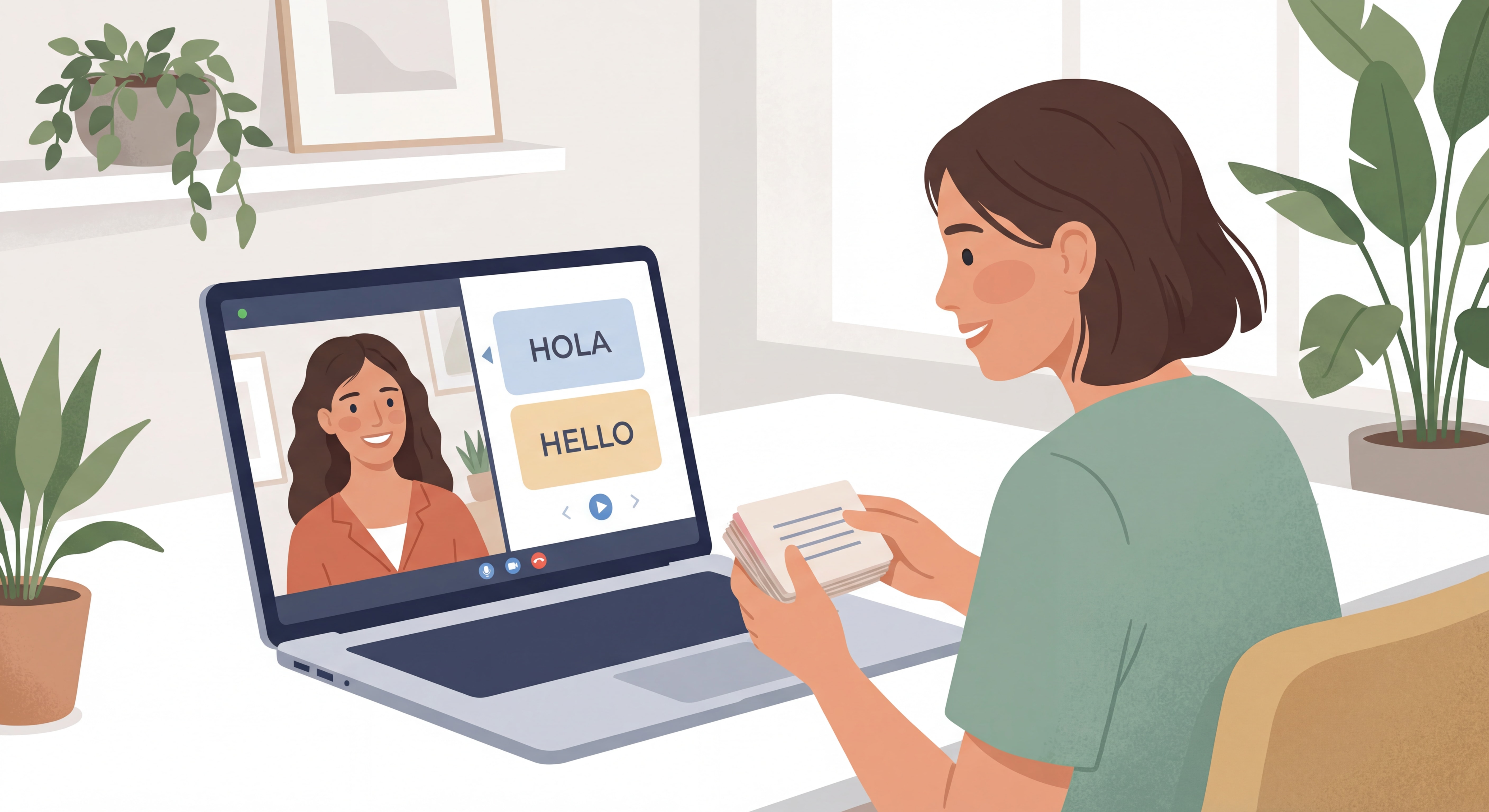
- Prioritize speaking time: Use breakout rooms for conversation practice or role-play scenarios
- Incorporate authentic media: Share short video clips, songs, or news articles in the target language
- Use spaced repetition: Tools like Anki or Quizlet help vocabulary stick over time
- Correct in context: Rather than interrupting, note errors and address them at the end of the session to maintain fluency and confidence
"Early language learning builds cognitive flexibility. Students learning a second language while still mastering their first show remarkable adaptability." — New Hampshire Public Radio, March 2026
Teaching Mathematics Online
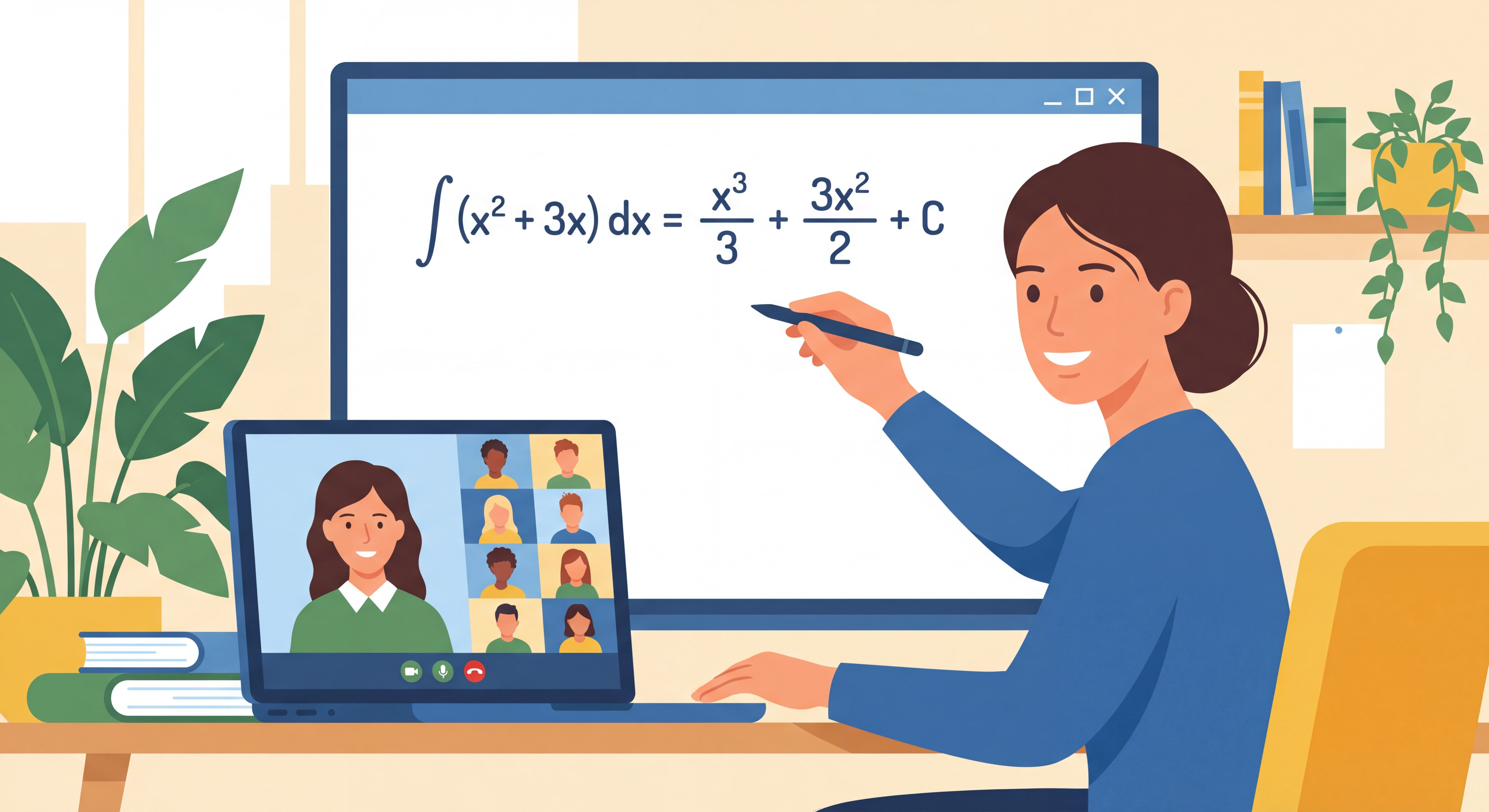
- Show your work visually: Use a drawing tablet or shared whiteboard to write equations in real time
- Ask students to explain their reasoning: Verbalizing math builds deeper understanding
- Use visual manipulatives: Platforms like Mathisfun.com or NCES graph tools make abstract concepts tangible
- Celebrate mistakes: A wrong answer is a teaching moment — model how to analyze errors systematically
6. Use Feedback Loops Early and Often
Feedback is the engine of learning — but in an online setting, it can easily slip through the cracks. Build structured feedback into every lesson:
During the session:
- Ask comprehension questions every 10–15 minutes
- Use polls or quick quizzes (Mentimeter, Google Forms) to check understanding in real time
After the session:
- Send a short recap with 2–3 key takeaways
- Assign a brief self-assessment: "Rate your confidence on today's topic from 1 to 5"
- Review the results before your next session and adjust accordingly
For mathematics, a quick 3-question exit quiz at the end of each lesson tells you exactly which concepts need revisiting. For language courses, a 2-minute spoken summary by the student is a powerful way to consolidate vocabulary and grammar simultaneously.
📊 81% of students say digital technology and online learning helped improve their grades – Student improvement with digital learning
7. Leverage Blended Learning for Deeper Results
The most effective online educators don't rely on live sessions alone. A blended learning model — combining synchronous (live) and asynchronous (self-paced) elements — gives students the flexibility they need while maximizing contact time with their teacher.
A practical blended structure for a weekly lesson:
- Before the session: Share a short video (5–8 min) introducing the new concept
- During the session: Focus entirely on practice, questions, and application
- After the session: Assign a consolidation exercise or reflection task
This "flipped classroom" approach means your live time is spent where it matters most — on interaction, not on lecturing. As the e-learning market continues to boom (with platforms like Udemy and edX reporting record enrollment numbers in 2026), the educators who thrive will be those who use the full range of tools available to them.
📊 The global e-learning services market is expanding rapidly, with major platforms reporting record growth in 2026 – E-learning market growth
Conclusion
Becoming an effective online teacher in languages or mathematics isn't about mastering every tool or platform at once. It starts with clear objectives, honest communication, and a willingness to adapt. The strategies outlined here — from microlearning and interactive tools to blended learning and structured feedback — are all things you can start implementing in your very next session.
The digital education landscape in 2026 is rich with opportunity. Students are actively seeking quality online instruction, and the demand for skilled, engaging online teachers has never been higher.
Ready to take your online teaching to the next level? Whether you're just getting started or looking to refine your approach, we'd love to help. Get in touch with us today to learn more about our resources, tools, and community of online educators.
Chiffres Clés
📊 $203.81 billion — the size of the global online education market in 2026, growing at 8.2% annually (Source: eSkilled / DemandSage)
💡 40–60% — the reduction in study time that online learning delivers compared to traditional classroom formats (Source: Devlin Peck Research)
🎯 81% of students report that digital learning tools helped them improve their grades (Source: Research.com)
📈 75% of students say online education is better than or equal to in-person learning (Source: DemandSage eLearning Statistics 2026)
Questions Fréquentes (FAQ)
How long should an online teaching session be for languages or mathematics?
For most subjects, 45 to 60 minutes is the sweet spot for a live online session. Beyond that, attention and retention tend to drop significantly. For younger learners or beginners, 30–45 minutes may be more appropriate. Break your session into segments — for example, 10 minutes of review, 20 minutes of new content, and 15 minutes of practice — to keep energy levels high throughout.
What tools do I need to start teaching online effectively?
You don't need much to get started. The essentials are: a reliable video conferencing platform (Zoom, Google Meet, or a dedicated virtual classroom), a digital whiteboard (Miro, Jamboard, or a drawing tablet), and a platform for exercises and quizzes (Google Forms, Quizlet, or Mentimeter). For mathematics, Desmos or GeoGebra are excellent free tools for visual demonstrations.
How do I keep students engaged during online lessons?
Engagement comes from interaction, not just instruction. Ask questions regularly, use polls and quizzes, give students tasks to complete during the session rather than just listening, and maintain eye contact through your camera. For language learners, maximize speaking time. For math students, ask them to explain their reasoning out loud — it deepens understanding and keeps them active.
Is online teaching effective for subjects like Mathematics and languages?
Absolutely. Studies consistently show that online learning can be as effective as — or more effective than — in-person instruction when designed well. The key factors are clear objectives, regular feedback, and interactive content. Many students actually prefer the flexibility and personalized pace of online learning, and retention rates in well-designed e-learning courses can be up to 60% higher than traditional formats.
How do I handle students who struggle with motivation in an online setting?
Motivation in online learning is closely tied to connection and progress. Make sure students can see their own improvement — use progress trackers, celebrate small wins, and check in personally between sessions. Setting short-term goals (e.g., "master this grammar point this week") gives students a sense of momentum. For mathematics, making problems relevant to real-life situations can reignite curiosity and purpose.