Learning Python is no longer just a “nice skill to have.” In 2026, Python sits at the center of technology, data, automation, artificial intelligence, and even education. If you are wondering how to learn Python in a way that actually leads to real skills, not confusion or abandoned tutorials, this guide is for you.
Many beginners search for how to learn Python from scratch and end up overwhelmed. Too many tools. Too many opinions. Too little structure. This article breaks everything down in a clear, beginner-friendly way, while also showing why having a structured tutor makes a difference, especially if you want results faster.
Let’s start from the beginning and build properly.
What Is Python and Why Is Everyone Learning It?
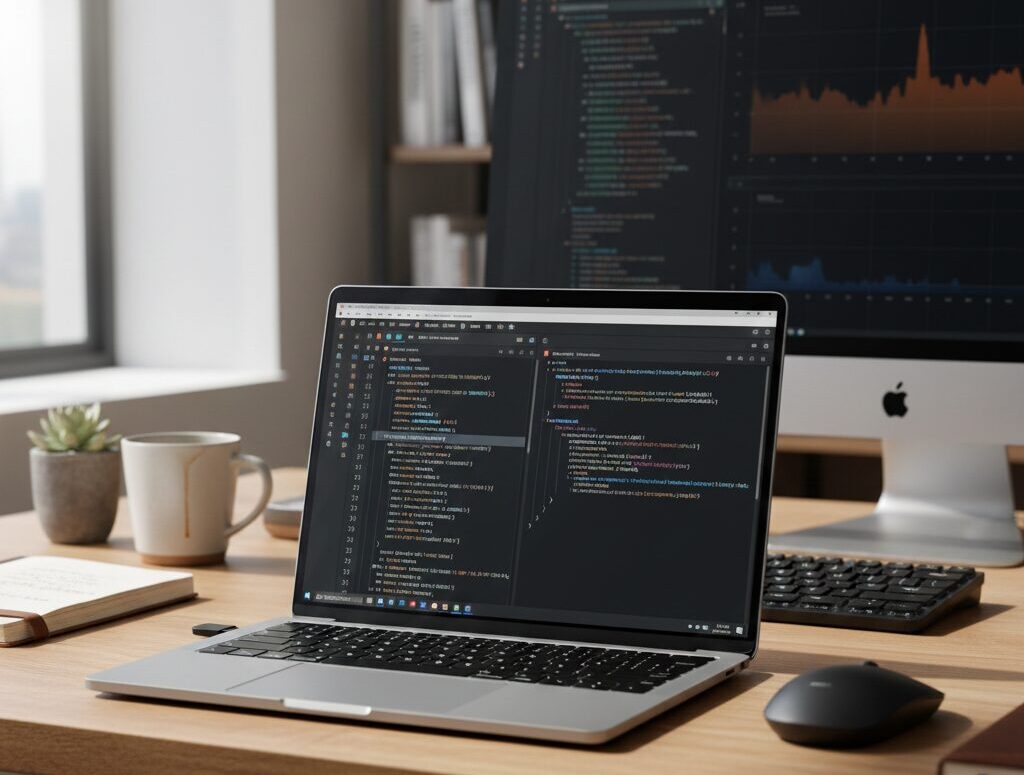
Python is a high-level programming language designed to be readable, flexible, and powerful. Unlike older languages that require complex syntax, Python reads almost like plain English.
For example, printing text in Python looks like this:
print(“Hello, world”)
This simplicity is one of the main reasons beginners choose Python first. But ease is not the only reason. Python is also one of the most versatile programming languages you can learn today.
People use Python to:
- Build websites and web apps
- Analyze data and create visual reports
- Automate repetitive tasks
- Build artificial intelligence systems
- Work in cybersecurity, finance, and healthcare
If you are curious about how Python compares with other languages beginners choose, our guide on the best programming languages to learn in 2026 gives helpful context.
Why Learning Python in 2026 Is Different From Before
If you tried learning Python a few years ago and gave up, you are not alone. Learning environments have changed significantly.
In 2026, know this:
- AI tools assist coding, but do not replace understanding
- Employers care more about problem-solving than certificates
- Self-taught learners compete with bootcamp graduates
This means knowing how to learn Python properly matters more than ever. Random YouTube videos or disconnected tutorials are no longer enough. Beginners need structure, feedback, and practical application.
This is where guided learning platforms like Educify stand out, especially for people starting from zero.
How Long Does It Really Take to Learn Python From Scratch?
One of the most searched questions about how to learn Python is about time. The honest answer depends on how you learn.
Here is a realistic breakdown for beginners:
- 2 to 4 weeks: Understand basic syntax, variables, and simple programs
- 2 to 3 months: Write small projects, use functions, loops, and data structures
- 6 months and beyond: Build real-world projects and specialize
People who follow a structured plan with guidance often progress faster than those who jump between free resources.
Learning Python from scratch is not about speed. It is about consistency and clarity.
1. Get clear on why you want to learn Python
Before you write a single line of code, you need to understand your reason for learning Python. Python is extremely flexible and used across many industries, so having clarity from the start helps you create a learning plan that fits your goals.
Whether your interest lies in automating everyday tasks, working with data, building applications, or exploring artificial intelligence, knowing your purpose will keep you motivated and focused as things get more challenging.
Ask yourself questions like:
- What do I want to use Python for professionally? Are you aiming for data science, web development, software engineering, or another Python-related field?
- What problems do I want to solve? Do you want to automate repetitive work, analyze information, build a website, or train machine learning models?
- What genuinely interests me? Some people enjoy working with numbers and data, while others prefer building products or experimenting with AI.
- What is my current experience level? If you are completely new to programming, Python is an excellent first language. If you already code, Python’s libraries and frameworks may be your main attraction.
Your answers shape your learning direction and influence every step that follows.
Python is widely considered one of the easiest programming languages to start with. One major advantage is that learning Python does not lock you into a single career path. It is used across software development, data science, artificial intelligence, automation, and many other programming-heavy roles.
2. Start with the core Python fundamentals
Understanding the basics
Python is known for its readable syntax and efficiency. As a beginner, your first goal should be understanding the foundational building blocks of the language. This includes concepts like variables, data types, and operators.
These basics may seem simple, but they form the foundation of everything you will build later. Skipping them often leads to confusion down the line.
Setting up your Python environment
Before you can start coding, you need a working environment. This usually means installing Python on your computer or using a browser-based setup.
You can download Python directly from the official website, use a distribution like Anaconda, or work in an online environment that lets you run Python without installation. The goal is simply to get comfortable running code and seeing results.
Writing your first Python program
Most beginners start with a simple program such as printing “Hello, World” to the screen. While basic, this step helps you understand how Python code is structured and executed. Writing small programs early builds confidence and helps you become familiar with Python’s syntax.
Learning Python data structures
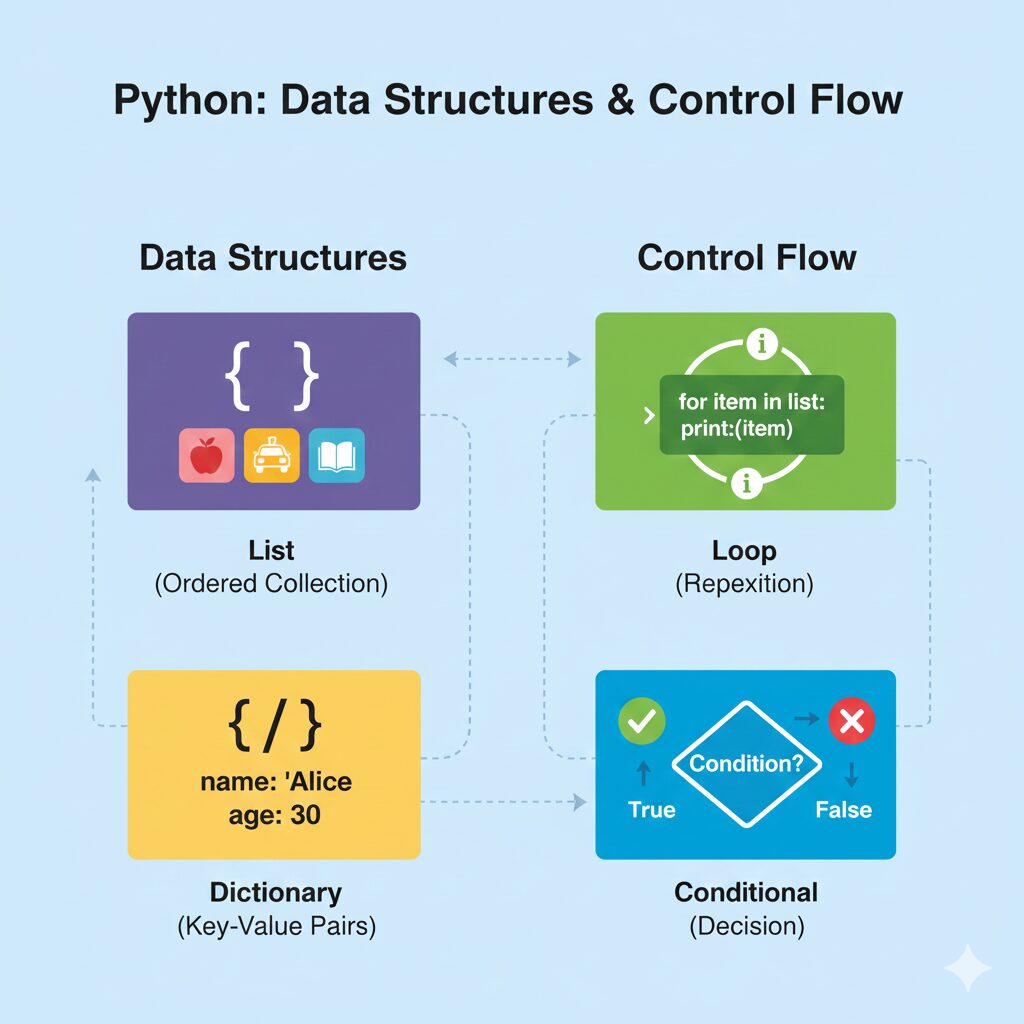
Python includes built-in data structures such as lists, tuples, sets, and dictionaries. These tools allow you to store, organize, and manipulate data efficiently. Understanding when and how to use each data structure is essential for writing clean and effective Python code, especially as your programs become more complex.
Control flow in Python
Control flow determines how your program makes decisions and repeats actions. This includes if statements, for-loops, and while-loops. These concepts allow your code to respond to different situations and handle logic dynamically, which is critical for building useful programs.
Working with functions
Functions are reusable blocks of code designed to perform specific tasks. Learning how to write and use functions helps you avoid repetition and keep your code organized. Good function design also makes your programs easier to read, debug, and maintain as they grow.
3. Move into intermediate Python concepts
Once you are comfortable with the basics, it is time to expand your knowledge. Intermediate concepts allow you to write more reliable, efficient, and professional-level Python code.
Handling errors and exceptions
Errors are inevitable when coding. Python provides tools such as try and except blocks that help your programs handle unexpected situations gracefully. Learning proper error handling makes your code more robust and easier to troubleshoot.
Using Python libraries
One of Python’s biggest strengths is its extensive library ecosystem. Libraries like NumPy, pandas, and matplotlib allow you to perform complex tasks with relatively little code. Understanding how to import and use libraries unlocks Python’s real power, especially in areas like data analysis and visualization.
Object-oriented programming in Python
Python supports object-oriented programming, which allows you to organize code around objects and classes. Key concepts include classes, objects, inheritance, and polymorphism. Learning OOP helps you structure larger programs more logically and reuse code efficiently.
4. Learn Python by actively using it
Reading about Python is not enough. The fastest way to learn is by writing code regularly and applying what you have learned.
Instead of spending weeks memorizing syntax, start working on simple projects as early as possible. This approach helps concepts stick and reveals gaps in your understanding.
Ways to practice include:
- Building small projects that interest you, such as automation scripts, basic analysis tools, or simple web apps
- Joining live coding sessions or tutorials where you can follow along in real time
- Recreating tools or programs you already use to understand how they work internally
The more you use Python, the more comfortable it becomes.
5. Create a strong project portfolio
As you complete projects, start collecting them into a portfolio. Your portfolio should demonstrate your skills, creativity, and problem-solving ability, not just completed exercises.
Try to choose projects that align with your career goals and gradually increase in complexity.
Examples include:
- Beginner projects: Number guessing games, task managers, or simple data exploration projects
- Intermediate projects: Web scrapers, small Django websites, or basic machine learning models
- Advanced projects: Full-stack applications, deep data analysis systems, or AI-powered tools
A well-organized portfolio helps showcase your progress and can be valuable when applying for jobs or internships.
6. Keep pushing yourself forward
Learning Python does not stop once you reach a certain level. Technology evolves constantly, and there is always something new to explore.
After mastering the basics, challenge yourself with harder problems and focus on areas that match your interests or career goals. Whether that is data science, automation, web development, or machine learning, Python has room for deep specialization.
Remember that learning Python is a long-term journey. Progress comes from consistent practice, curiosity, and a willingness to make mistakes and learn from them.
A Sample Python Learning Plan
Below is a realistic learning roadmap for beginners. Timelines may vary depending on your background and available study time, but this plan provides a solid structure.
Months 1–3: Python fundamentals and data handling
Focus on core programming concepts and begin working on simple projects related to your interests.
- Learn Python syntax, variables, data types, control structures, and functions
- Practice basic data manipulation using libraries like pandas and NumPy
- Work on small projects, such as analyzing a dataset or creating simple scripts
Months 4–6: Intermediate Python skills
With a strong foundation in place, move into more advanced topics.
- Study object-oriented programming, error handling, and complex data structures
- Explore advanced Python features such as decorators and context managers
- Build more challenging projects, like predictive models or feature-rich applications
Month 7 and beyond: Advanced Python and specialization
At this stage, focus on depth rather than breadth.
- Choose a specialization such as machine learning, web development, automation, or natural language processing
- Learn relevant libraries and frameworks for your chosen path
- Continue building projects and staying up to date with industry trends
Common Mistakes Beginners Make When Learning Python
If you’re curious about how to learn Python, understand that most beginners often focus on shortcuts or the newest resources, but certain habits are what quietly slow down their progress. Understanding these common pitfalls is essential, especially if you are learning Python from scratch. Recognizing mistakes early can save you frustration and accelerate your learning journey.
A major challenge many beginners face is frequently jumping between courses and tutorials. When learning Python from scratch, it can feel tempting to switch from one course to another, thinking each new platform will provide faster results. While exploring different approaches is useful, constantly changing courses prevents mastery. True progress comes from consistency, practicing the same concepts repeatedly until they become second nature.
Another common mistake is over-reliance on AI-generated code. Tools that create Python scripts automatically are convenient, but beginners often copy and run code without understanding it. This can make it seem like you are progressing in how to learn Python, while in reality, your understanding remains shallow. To genuinely learn Python from scratch, it’s important to write your own code, experiment, and troubleshoot independently.
Beginners also tend to avoid debugging, thinking errors are a sign of failure. On the contrary, debugging is one of the fastest ways to understand Python. When learning Python from scratch, reading error messages and tracing your logic helps you grasp how Python interprets your code.
Finally, patience is key when learning Python. Progress is rarely linear, and confusion is a natural part of the process. Mistakes are not failures, they are opportunities to learn and refine your skills. Whether you are coding a small project or tackling a complex problem, embracing errors and staying persistent will accelerate your journey in how to learn Python.
Do You Need a Tutor to Learn Python in 2026?
Technically, no. Practically, yes.
A good tutor:
- Explains confusing concepts clearly
- Corrects mistakes early
- Saves time and frustration
- Provides structure
This is why many self-taught learners eventually look for guided platforms after months of confusion.
Educify offers structured Python courses designed for beginners who want clarity, not chaos.

How Python Connects to Future Skills
Python is not just about coding. It supports future-proof skills like:
- Logical thinking
- Problem-solving
- Data literacy
These skills overlap with what employers seek, as discussed in essential skills for the future job market.
Learning Python strengthens how you think, not just what you code.
Popular Questions People Ask About Learning Python
Is Python hard for beginners?
Python is one of the easiest programming languages to start with, especially when learned with structure.
Can I learn Python without a tech background?
Yes. Many successful learners come from non-technical fields.
Should I learn Python before other languages?
For most beginners, yes. Python builds confidence and transferable skills.
How do I stay consistent?
Set small goals, practice daily, and follow a guided plan.
Why Structured Learning Beats Random Tutorials
When people research how to learn Python, many start with free tutorials scattered across the internet. While these resources can be useful, relying on them without a clear structure often leads to confusion, burnout, and stalled progress. For anyone learning Python from scratch, structured learning consistently produces better results. Here’s why.
1. Structured learning builds skills step by step
Python is a cumulative language. Each concept depends on what you learned before it. Structured learning introduces topics in a logical order, starting from fundamentals like variables and data types, then moving into control flow, functions, and more advanced concepts. This gradual progression makes learning Python feel manageable rather than overwhelming, especially for beginners trying to understand how to learn Python effectively.
2. It prevents gaps in understanding
Random tutorials often skip assumptions or gloss over difficult topics, leaving learners with hidden knowledge gaps. These gaps may not show up immediately but become serious obstacles later. A structured learning path ensures that every essential concept is covered, revisited, and practiced. For those learning Python from scratch, this consistency helps build a strong foundation that supports long-term growth.
3. Structured learning improves retention through repetition
According to the science of learning, information is best retained when it is repeated and applied over time. Structured programs intentionally revisit key Python concepts in different contexts, helping learners move knowledge from short-term memory into long-term understanding. This approach is far more effective than watching isolated tutorials that are never reinforced.
4. It provides accountability and momentum
One major reason beginners quit is not difficulty, but lack of direction. Structured learning offers clear milestones, progress tracking, and a sense of achievement. This accountability helps learners stay consistent, even when motivation dips. If you are serious about mastering how to learn Python, consistency is just as important as intelligence or talent.
5. Structured learning mirrors how the brain actually learns
Educational research shows that guided progression, spaced practice, and active recall significantly improve learning outcomes. Structured Python programs follow these principles naturally, while random tutorials rarely do. This mirrors principles explained in the science of learning, where structured repetition improves retention
Educify’s Python courses are designed around structured progression, practical application, and learning science principles. Instead of guessing what to learn next, learners follow a clear path from beginner to confident Python user.
Final Thoughts
If you truly want to understand how to learn Python from scratch, remember this: consistency beats intensity. You do not need to be perfect, but be persistent. Python rewards learners who:
- Practice regularly
- Ask questions
- Build projects
- Learn with guidance
Learn Python With Educify
If you are serious about learning Python in 2026 and want a clear path from beginner to confident coder, Educify is here to help.
We offer:
- Beginner-friendly Python courses
- Structured lessons with expert tutors
- Practical projects and guidance
- Support designed for real learners
Instead of guessing how to learn Python, learn it the right way with Educify.
👉 Start your Python journey today at Educify.org and build skills that actually last.




4 Responses