

Introduction
Why Learning the Igbo Language Matters Globally
The Igbo language is one of Africa’s most widely spoken and culturally rich languages, with millions of speakers around the world. While it originates from southeastern Nigeria, Igbo has grown beyond geographical borders and is now spoken in homes, communities, and cultural spaces across several continents. Today, more people want to learn Igbo not only for communication, but also for identity, connection, and education.
Outside Africa, families are looking for ways to preserve their roots, pass down heritage to their children, and stay connected to their history. Others are drawn to the Igbo language for academic study, cultural curiosity, or professional reasons. Whether you are a child growing up in the diaspora or an adult learning later in life, Igbo remains accessible and rewarding.
This guide is designed for both kids and adults. It explains what the Igbo language is, where it is spoken, how it works, and the best ways to learn Igbo confidently from anywhere in the world.
Overview of the Igbo Language
Where Is the Igbo Language Spoken?
The Igbo language originates from Nigeria, where it is one of the country’s major indigenous languages. It is traditionally spoken in the southeastern region of Nigeria, including states such as Anambra, Imo, Abia, Enugu, and Ebonyi. In these areas, Igbo is used in daily communication, cultural ceremonies, local media, and traditional institutions.

Beyond Nigeria, the Igbo language is also spoken in parts of neighboring African countries due to historical migration and trade. Smaller Igbo-speaking communities exist in Ghana, Cameroon, and Equatorial Guinea. In these places, Igbo is often maintained within families and cultural groups rather than as a dominant public language.
However, the reach of Igbo today goes far beyond Africa. Migration over the last several decades has led to strong Igbo-speaking communities in the United States, Canada, and the United Kingdom. In cities across North America, Igbo is spoken at home, in churches, cultural associations, community events, and language schools. This global spread has made learning Igbo relevant even for people who have never lived in Nigeria.
Who Speaks Igbo Today and Why It Still Matters
Millions of people worldwide speak the Igbo language, including native speakers, heritage learners, and new learners. In countries like the United States and Canada, many children grow up hearing Igbo at home but do not always learn how to speak it fluently. As a result, parents are increasingly looking for structured ways to help their children learn Igbo properly.
Igbo remains relevant outside Nigeria because language is deeply tied to identity and belonging. For families in the diaspora, learning Igbo helps children understand who they are and where they come from. For adults, it strengthens cultural confidence and creates meaningful connections across generations.
Education also plays a role. Universities, cultural institutions, and language programs abroad are showing renewed interest in African languages, including Igbo. Learning Igbo language today is not just about communication. It is about preserving culture, building confidence, and staying connected in a global world.
Read Also: How to Learn Python From Scratch in 2026: A Practical Roadmap For Beginners
What Makes the Igbo Language Unique?
The Igbo language stands out because of how meaning is shaped by sound, context, and culture. One of its most distinctive features is that it is a tonal language. This means that the pitch or tone used when pronouncing a word can completely change its meaning. A single word may have different meanings depending on whether it is spoken with a high, mid, or low tone. For new learners, this can feel unfamiliar, but it also makes Igbo precise and expressive once the system is understood.
Pronunciation plays a central role when you learn Igbo. Unlike some languages where incorrect pronunciation can still be understood, tone in Igbo carries meaning. Learning the correct sounds from the beginning helps learners avoid confusion and build confidence when speaking. This is why listening and repetition are essential parts of mastering the Igbo language.
Another unique aspect of Igbo is how deeply culture is embedded in everyday speech. Proverbs, idiomatic expressions, and respectful forms of address are used regularly. Many ideas in Igbo are expressed through imagery and metaphor, especially when speaking to elders or in formal settings. Greetings, requests, and even simple conversations often reflect respect, community values, and social relationships.
The Igbo language is also flexible and adaptable. It has absorbed new words over time while maintaining its core structure and identity. This balance between tradition and adaptability is one reason the language remains relevant today. When learners understand these unique qualities, they begin to see Igbo not just as a language to memorize, but as a living system that carries history, emotion, and shared meaning.
How Do You Greet in Igbo?
Greetings are an essential part of communication in the Igbo language. They do more than open a conversation. They show respect, acknowledge relationships, and set the tone for interaction. In many Igbo-speaking communities, greeting properly is seen as a sign of good upbringing, especially when speaking to elders or meeting someone for the first time. This is why greetings are one of the best places to start when you want to learn Igbo.
Common Igbo greetings are often tied to the time of day. In the morning, people say “Ụtụtụ ọma”, which means good morning. During the afternoon, “Ehihie ọma” is used to say good afternoon, while “Mgbede ọma” or “Abalị ọma” is used in the evening to say good evening or good night, depending on the context. These greetings are simple, but they immediately help beginners feel comfortable using the language.
Respect is especially important when greeting elders. Younger people often add respectful phrases or body language such as a slight bow or kneeling, depending on age and setting. Greetings like “Ndeewo” are commonly used as a polite and general greeting, especially when addressing elders or a group of people. When greeting peers or close friends, the tone may be more relaxed, but politeness is still valued.
For children and beginners, practicing greetings daily is an effective way to build confidence. Saying simple greetings at home, during lessons, or while role-playing conversations helps learners become familiar with Igbo sounds and rhythm. Because greetings are used every day, they create a natural entry point into the language. Mastering them early makes the journey to learn Igbo feel less intimidating and more practical from the very beginning.
What Are the 36 Igbo Alphabet?
To learn Igbo effectively, it is important to understand how the language is written and pronounced. The Igbo language uses a standardized alphabet made up of 36 letters. While it shares some similarities with the English alphabet, there are key differences that reflect the unique sounds found in Igbo speech.
How the Igbo Alphabet Differs from English
The English alphabet has 26 letters, but Igbo expands on this to properly represent its sounds. Some English letters are not used in Igbo, while additional letters are introduced to capture sounds that do not exist in English. This helps learners pronounce words accurately rather than guessing.
The 36 Igbo Letters
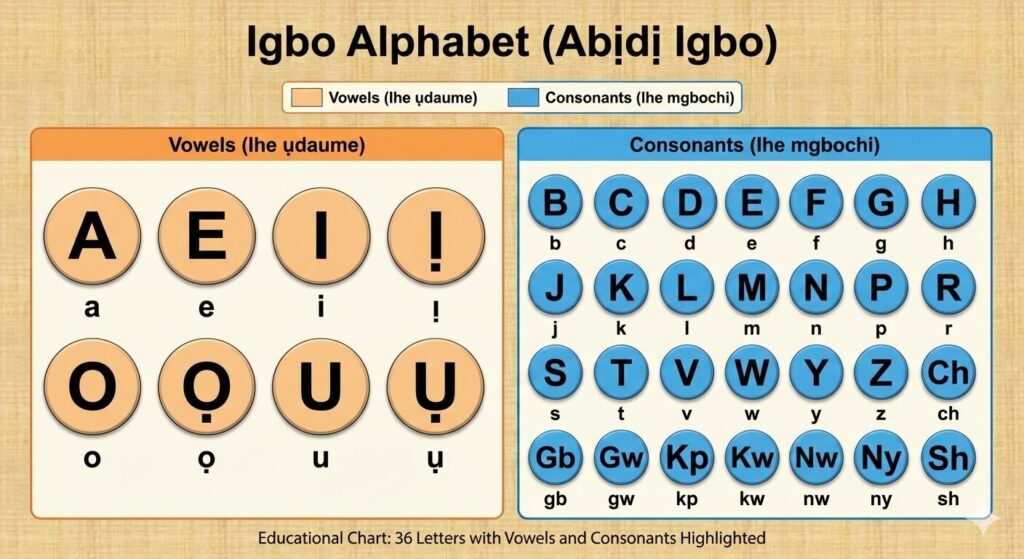
The Igbo alphabet includes:
Vowels (8):
- A
- E
- I
- Ị
- O
- Ọ
- U
- Ụ
Consonants (28):
- B
- CH
- D
- F
- G
- GB
- GH
- GW
- H
- J
- K
- KP
- KW
- L
- M
- N
- NW
- NY
- P
- R
- S
- SH
- T
- V
- W
- Y
- Z
- Ṅ
Special Sounds to Pay Attention To
Some consonants such as GB, KP, NW, and NY are digraphs. They represent single sounds, not two separate letters. The dotted vowels Ị, Ọ, and Ụ are also very important because they change pronunciation and meaning.
Learning the Igbo alphabet early helps with:
- Correct pronunciation
- Better reading skills
- Improved listening comprehension
At Educify, beginners are introduced to the Igbo alphabet step by step, with audio support and practice exercises. This structured approach helps both children and adults build a strong foundation before moving on to speaking full sentences.
Is Igbo a Difficult Language to Learn?
Many beginners ask the same question before they start. Is Igbo a difficult language to learn? The honest answer is that it depends on how it is taught and how you approach it. Like any language, Igbo has features that may feel unfamiliar at first, but it is not as difficult as many people assume.
What Makes Igbo Seem Difficult at First
For new learners, two main elements often stand out:
- Tone
The Igbo language is tonal, which means the pitch of your voice can change the meaning of a word. This can be confusing in the beginning, especially for learners who speak non-tonal languages like English. - New Sounds
Igbo has sounds that do not exist in English, such as kp, gb, and dotted vowels like ọ and ụ. Without guidance, learners may struggle to pronounce these sounds correctly.
What Makes Igbo Easier Than Expected
Despite these challenges, there are several reasons why many learners find Igbo easier than anticipated:
- No verb conjugation by person or tense
Igbo verbs do not change the way verbs do in many European languages. This removes a major learning barrier. - Logical sentence structure
Igbo sentences follow a clear and consistent pattern, which helps learners form correct sentences quickly. - Straightforward grammar rules
Once the basics are understood, grammar becomes predictable rather than confusing.
Why Kids Often Learn Igbo Faster Than Adults
Children tend to pick up tone and pronunciation more naturally because they are less afraid of making mistakes. Adults, on the other hand, often overthink pronunciation. With the right teaching method, both age groups can succeed.
When learners follow a structured approach that focuses on sounds, listening, and real-life usage, learning Igbo becomes manageable and enjoyable rather than difficult.
How Long Does It Take to Learn Igbo?
The time it takes to learn Igbo depends on what level of speaking and understanding you want to achieve. Learning a language is not a single destination. It happens in stages, and each stage comes with its own expectations.
What Learning Igbo Means at Different Levels
- Basic Communication: At this stage, learners can greet others, introduce themselves, and use simple everyday expressions.
- Intermediate Speaking: Learners can hold short conversations, ask questions, and understand common responses.
- Fluency: This level involves comfortable conversation, understanding tone, and using the Igbo language naturally in different situations.
A Realistic Learning Timeline
With consistent practice and guided lessons, many learners experience the following progress:
- 0 to 2 months:
Understanding sounds, tones, greetings, and basic sentence patterns. - 3 to 6 months:
Holding simple conversations and understanding commonly used phrases. - 6 to 12 months:
Developing confidence, better pronunciation, and conversational fluency.
Kids vs Adults
Children often reach conversational levels faster because they absorb sounds easily. Adults may take longer but often understand grammar and structure more quickly.
A Simple Strategy That Works
- Practice for 15 to 30 minutes daily
- Focus on listening and speaking before reading heavily
- Review consistently instead of cramming
Consistency matters far more than talent. With the right plan, learning Igbo becomes achievable for anyone.
How to Learn Igbo Language Effectively
Learning the Igbo language effectively requires the right order and method. Many beginners struggle not because Igbo is too hard, but because they start the wrong way. When you follow a structured approach, progress becomes faster and more enjoyable.
What Actually Works for Beginners
To learn Igbo successfully, focus on these proven strategies:
- Learn sounds before memorizing words
Understanding Igbo sounds and tones first helps prevent bad pronunciation habits. This foundation makes every new word easier to learn. - Listen and speak early
Do not wait until you know many words before speaking. Listening to native pronunciation and repeating aloud builds confidence and fluency from the start. - Avoid direct English translation
Igbo does not always follow English logic. Translating word for word often leads to confusion. It is better to learn meanings in context. - Use everyday sentences, not isolated words
Learning full phrases such as greetings, questions, and daily expressions helps learners communicate faster than memorizing long vocabulary lists. - Practice consistently in short sessions
Ten to thirty minutes daily is more effective than long, irregular study sessions.
Why Guided Lessons Matter
Many learners rely on random videos or scattered resources online. This often leads to gaps in understanding and slow progress. Guided lessons provide:
- Clear learning order
- Correct pronunciation from the beginning
- Structured progress from beginner to confident speaker
When learning is guided, learners understand not just what to say, but why it is said that way. This approach makes the Igbo language easier to retain and apply in real-life situations.
How Kids and Adults Learn Igbo Differently
Children and adults approach language learning in different ways, and understanding this difference is important when learning the Igbo language. Teaching methods that work well for children may not always suit adults, and vice versa.
How Children Learn Igbo
Children learn best through repetition, play, and listening. They are less afraid of making mistakes and are more open to mimicking sounds. Effective methods for kids include:
- Songs and rhymes in Igbo
- Simple stories and picture-based lessons
- Repeating greetings and short phrases daily
Children often develop good pronunciation early because they naturally copy tone and rhythm.
How Adults Learn Igbo
Adults usually prefer structured explanations. They like to understand why a sentence is formed in a certain way. Adults benefit from:
- Clear grammar explanations
- Practical sentence patterns
- Real-life conversation practice
However, adults sometimes hesitate to speak early because they fear mistakes. This can slow progress if not addressed.
Common Mistakes Parents Make
Many parents try to teach Igbo by translating directly from English or correcting children too harshly. This can discourage learning. Instead, exposure and encouragement work better.
How Educify Adapts for Both Age Groups
Educify designs lessons differently for kids and adults, using age-appropriate methods that keep learners engaged while ensuring steady progress.
Learning Igbo Online: Why It Works Best for Global Learners
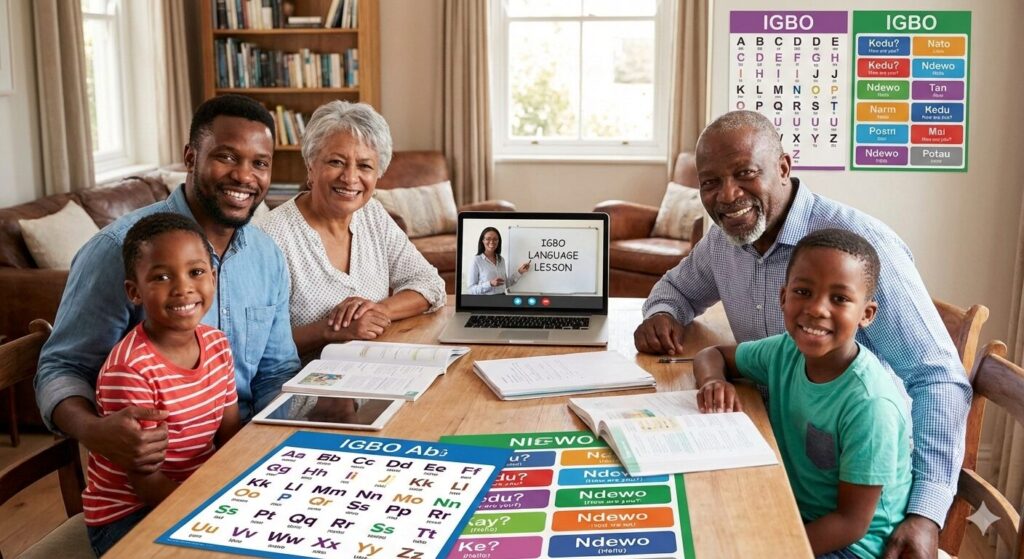
For learners living in the United States, Canada, and other parts of the world, learning Igbo online offers the most practical and effective solution. Time zones, busy schedules, and limited access to local teachers often make in-person learning difficult. Online learning removes these barriers.
Key reasons online learning works well include:
- Flexibility for busy families and professionals
Lessons can fit into school schedules, work routines, and family time. - Access to native-level pronunciation
Learners hear correct tones and sounds from the beginning, which is essential for the Igbo language. - Structured progress
A clear learning path prevents confusion and helps learners move step by step. - Consistent exposure
Regular listening and speaking opportunities help reinforce learning.
Many learners try to teach themselves using random videos or apps. Without structure, progress is often slow and inconsistent. Guided online learning provides clarity, accountability, and real improvement, especially for global learners who want measurable results.
Conclusion
Learning the Igbo language is more than acquiring a new skill. It is a way to connect with culture, preserve identity, and build confidence across generations. For children growing up abroad and adults learning later in life, Igbo offers a meaningful link to history and community.
With the right approach, Igbo becomes accessible, engaging, and practical. Whether your goal is basic communication or long-term fluency, learning Igbo is a rewarding journey. When supported by structured teaching and consistent practice, anyone can learn Igbo regardless of age or location.
Start learning the Igbo language today with Educify!
Join our structured Igbo tutorials designed for kids and adults worldwide.
It is never too early or too late to learn Igbo with confidence and clarity.