
Introduction
Why Should Every Child Learn at Least One Musical Instrument?
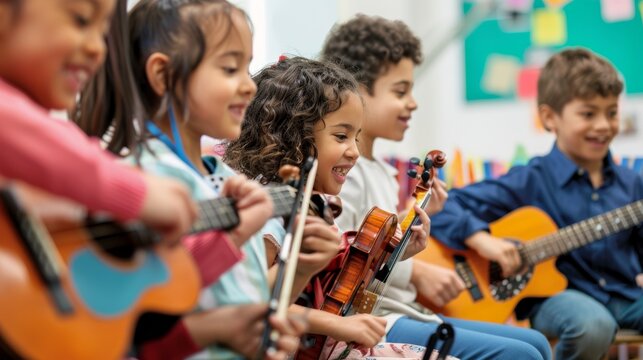
Most parents want their children to grow confident, curious, and capable, yet it is easy to overlook how much music can support those goals. Learning a musical instrument is not about forcing a child into long practice hours or preparing them for stage performances, because it is simply a fun and structured way for children to develop important life skills. When music becomes part of a child’s routine, learning starts to feel natural rather than stressful.
Musical instruments for kids offer more than entertainment, as they quietly support how children think and learn. Playing an instrument encourages listening, focus, and coordination, while helping children improve memory and attention without feeling like schoolwork. Many children who learn music early become more comfortable with patterns, numbers, and language, because music trains the brain to recognize structure in an enjoyable way.
In this article, you will discover ten musical instruments every child should know how to play, along with what each one teaches and why it can make a lasting difference in your child’s development.
How Learning Musical Instruments Benefits Children at Different Ages
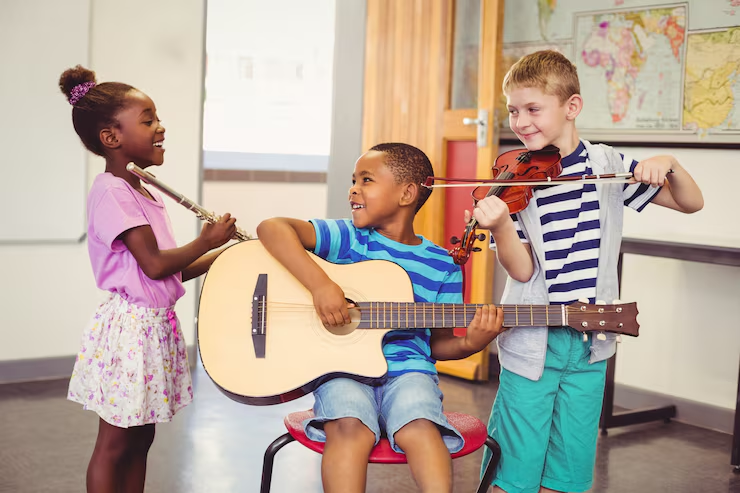
Children do not learn the same way at every stage of growth, which is why music education works differently depending on when it begins. Younger children respond to sound, movement, and repetition, while older children become more interested in structure, progress, and mastery. Musical instruments for kids fit naturally into these stages because music can be playful at the start and more goal oriented as children grow.
For early learners, usually between ages four and seven, music helps develop coordination and listening skills without pressure. Simple instruments and short practice sessions teach children how to follow instructions, recognize patterns, and stay engaged for longer periods. At this stage, learning music feels like play, which makes children more willing to explore and experiment without fear of mistakes.
As children grow older, music becomes a tool for focus and discipline rather than just exploration. Between ages eight and twelve, children begin to understand practice routines, improvement, and personal responsibility. Learning an instrument during this stage supports problem solving skills, strengthens memory, and helps children manage time more effectively alongside schoolwork.
For teenagers, music often becomes a form of identity and emotional expression. Playing an instrument gives them a constructive outlet for stress while reinforcing confidence through measurable progress. At every age, music adapts to the child’s needs, which is why choosing the right instrument matters.
1. Piano: The Best Instrument for Musical Confidence
If many music teachers had to agree on one starting point, the piano would almost always come first for young learners. Among all musical instruments for kids, the piano offers the clearest visual and logical introduction to how music actually works.

The layout of the piano keyboard makes sense immediately to children. Notes are arranged in a straight line, patterns repeat predictably, and every key produces a clear sound without much physical struggle. This simplicity allows children to focus on learning music rather than fighting the instrument itself.
Why piano works so well for kids
- The keys are laid out visually, which helps children understand notes faster
- Children can play full melodies early, which builds confidence quickly
- It develops both hands equally, improving coordination and balance
- Reading music becomes easier because piano matches written notation clearly
Another major advantage of piano learning is how transferable the skill becomes. Children who start on piano often find it easier to transition to other musical instruments for kids later, including guitar, violin, or even singing. They already understand rhythm, pitch, and harmony at a foundational level.
If your child shows curiosity about music but feels unsure where to begin, piano creates a friendly and rewarding starting point that sets them up for long term success.
Check out our comprehensive guide on How To Learn the Piano with No Stress: A Step by Step Guide for Beginners for help on how to get your child on the best learning program for piano.
2. Guitar: A Fun and Social Instrument Kids Love to Show Off
The guitar holds a special place among musical instruments for kids because it feels instantly cool and expressive. Children often recognize it from songs, movies, or family gatherings, which makes the instrument feel familiar even before the first lesson begins.
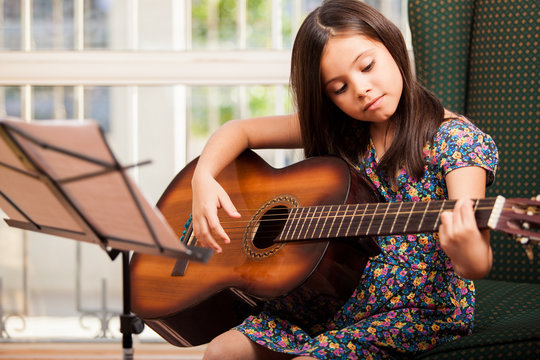
Unlike some instruments that feel formal or rigid, the guitar invites creativity early. Kids can strum simple chords, play recognizable riffs, and feel like real musicians sooner than expected. That early sense of achievement plays a big role in keeping their interest alive.
Why guitar connects so well with kids
- It allows children to play popular songs they already enjoy
- The instrument encourages creativity through chords and simple melodies
- Guitar playing improves finger strength and hand coordination
- It builds rhythm skills naturally through strumming patterns
Guitar also supports social learning in a powerful way. Children who play guitar often enjoy performing for friends, siblings, or classmates, which boosts confidence without pressure. It becomes a shared experience rather than a solitary task, especially when kids play together or accompany singers.
For families exploring musical instruments for kids that balance fun with real skill development, guitar remains one of the most engaging and versatile choices available.
Read Also: How to Play Guitar for Beginners: Practical Steps That Actually Works
3. Violin: Best for Building Focus, Discipline, and a Strong Musical Ear
The violin may look small, but it plays a powerful role in shaping how children listen to music. Among musical instruments for kids, violin stands out because it trains the ear as much as it trains the hands, which leads to deep musical awareness over time.
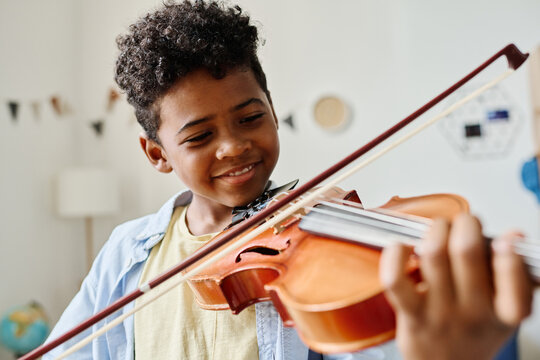
Unlike instruments with fixed notes, the violin requires children to place their fingers accurately to produce the correct pitch. This process teaches careful listening and patience from the very beginning. While progress may feel slower at first, the long term rewards are significant.
Why violin is a valuable choice for kids
- It sharpens listening skills and pitch recognition early
- It builds discipline through structured practice routines
- It strengthens posture, balance, and fine motor control
- It prepares children well for orchestras and school music programs
Violin learning also supports emotional development. Children learn how to manage frustration, celebrate small improvements, and stay focused on gradual progress. These habits often carry into academics and other life skills without parents even realizing it.
For families who value structure and long term musical growth, violin offers a clear path. It may not provide instant gratification, but it rewards consistency and effort in a way few musical instruments for kids can match.
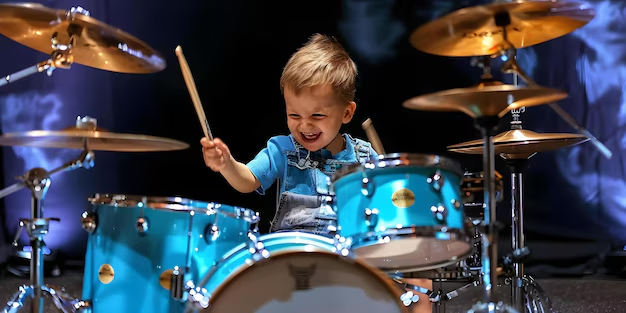
4. Drums: Helps Turn Energy Into Rhythm and Control
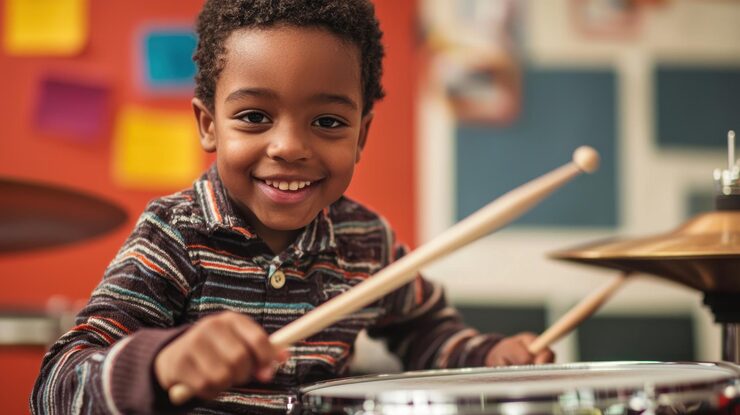
Many parents worry that drums will only add noise to the house, but the reality is far more positive when children receive proper guidance. Among musical instruments for kids, drums offer an excellent outlet for energy while teaching structure, timing, and self control.
Children naturally respond to rhythm, often tapping on tables or clapping along to music without realizing it. Drum lessons take that instinct and shape it into a skill. Instead of random hitting, kids learn patterns, coordination, and steady timing.
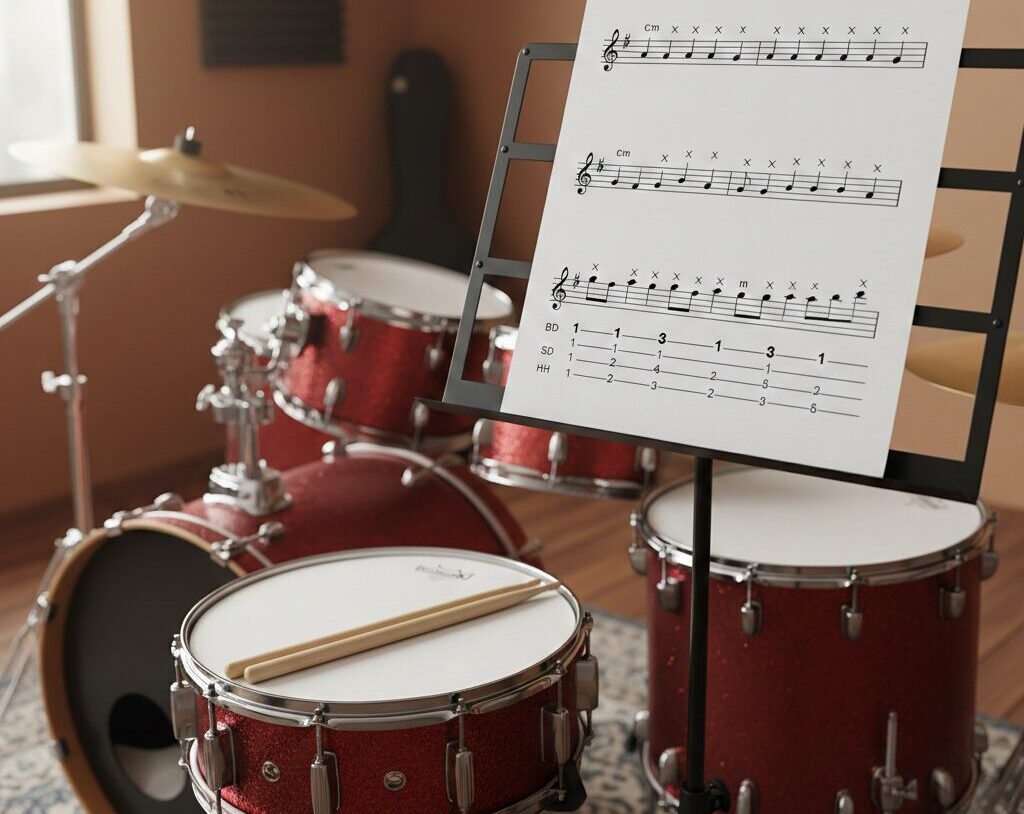
Why drums work especially well for active kids
- They develop strong timing and rhythm awareness
- Drumming improves coordination between hands and feet
- It helps children release energy in a focused way
- It builds listening skills within group music settings
Drums also teach responsibility in a subtle way. Kids must pay attention to tempo, dynamics, and when to play or stay silent. These lessons translate well into teamwork, especially when playing with other musicians.
If yours is a family exploring musical instruments for kids who thrive on movement and rhythm, drums are the best choice as they provide both structure and freedom in equal measure.
Read Also: Learning Drums for Beginners: What You Need to Know First
5. Voice Training: The Instrument Your Child Already Has
One of the simplest yet most powerful musical instruments for kids is their own voice. Singing teaches rhythm, pitch, and expression without requiring any special equipment, making it a natural starting point for children of almost any age.

Why voice training is a great choice for kids
- Builds confidence through performance, even in small settings
- Improves posture, breathing, and lung control
- Encourages self-expression and emotional awareness
- Supports listening skills and pitch accuracy for future instruments
Parents often underestimate how effective singing can be in developing musical skill. Children who start with voice training are more aware of tone, rhythm, and melody, which makes learning other instruments like piano, guitar, or violin easier later on.
Additionally, singing is highly flexible. Lessons can happen anywhere, and children can explore songs they enjoy, which keeps practice fun and engaging. Unlike some instruments that require investment or space, the voice is free and always available.
If you’re looking for a low-barrier entry into music, voice training offers both accessibility and powerful skill-building opportunities, making it an essential part of musical instruments for kids.
Read Also: What Voice Lessons Actually Teach (And What They Don’t)
6. Recorder or Flute: A Gentle Introduction to Wind Instruments
Wind instruments like the recorder or flute are often a child’s first experience with breath control and finger coordination. Among musical instruments for kids, these instruments are approachable, lightweight, and excellent for building foundational skills that apply to many other instruments later.
The recorder is particularly popular in schools because it is inexpensive, easy to hold, and introduces children to reading music without overwhelming them. The flute requires a bit more breath control but rewards patience with beautiful, clear tones.
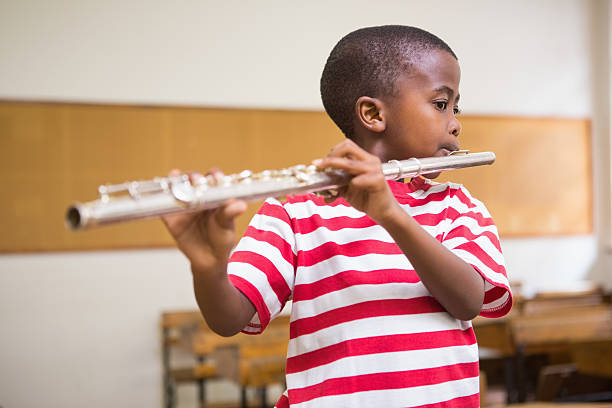
Why recorder and flute work well for beginners
- They develop lung control and proper breathing techniques
- Finger coordination improves naturally through scale practice
- They teach children to listen carefully to pitch and tone
- These instruments are small, portable, and simple to maintain
Recorder and flute lessons also support cognitive development, as children must coordinate breath, finger placement, and reading music simultaneously. This combination strengthens multitasking and focus, skills that extend far beyond music.
For families seeking musical instruments for kids that balance simplicity, achievement, and skill-building, recorder and flute offer a friendly, effective starting point.
7. Saxophone: Gives Confidence and Musical Expression to Older Kids
The saxophone is often one of the first “cool” instruments that older children notice, especially in jazz bands, school ensembles, or popular music. Among musical instruments for kids, it stands out because it combines expressive sound with opportunities for creativity, making it ideal for children who want to explore music beyond basic lessons.
While it may take some practice to produce the first clean notes, the instrument rewards persistence with a rich, full sound that excites children and encourages them to keep improving.
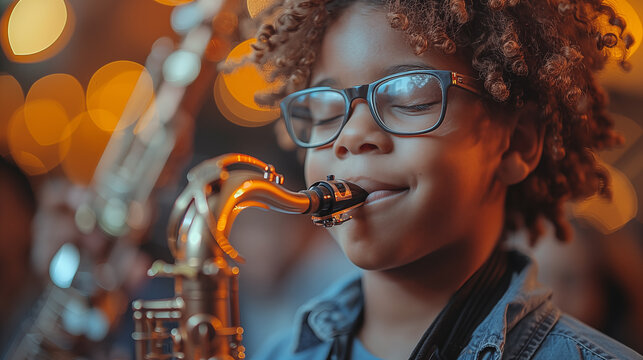
Why saxophone is a great choice for kids
- Develops lung capacity and breathing technique
- Encourages confidence through performance and self-expression
- Teaches focus and patience while mastering complex fingerings
- Builds stage presence and comfort in group settings
For parents, the saxophone also offers social benefits. Many children enjoy joining ensembles or small bands, where they learn to listen to others, harmonize, and contribute as part of a team. These experiences strengthen communication skills and create a sense of belonging.
If your goal is a musical instrument for kids that balances creativity, confidence, and technical growth, the saxophone is an excellent option.
8. Trumpet: For Discipline, Breath Control, and Leadership Skills
The trumpet is a bold, bright instrument that can teach children both musical skill and personal discipline. Among musical instruments for kids, the trumpet stands out because it requires focus, breath control, and endurance, all of which develop patience and responsibility from an early stage.
Playing the trumpet is a structured process. Children learn to control air pressure, embouchure (mouth position), and finger coordination to produce clear, accurate notes.
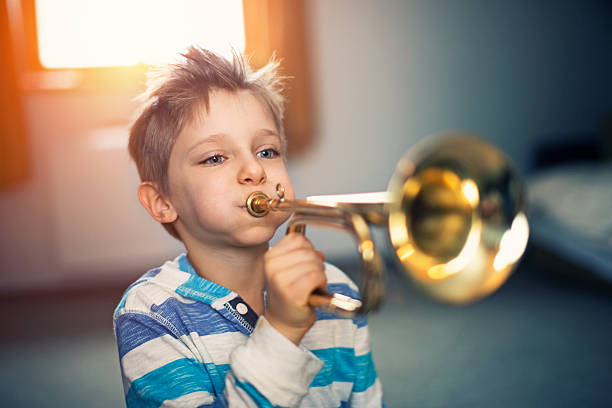
Why trumpet is a strong choice for kids
- Strengthens lung capacity and controlled breathing
- Improves finger coordination and timing
- Encourages discipline through structured practice routines
- Builds confidence and leadership in ensemble settings
Trumpet students often experience a sense of pride performing in bands, orchestras, or school concerts. They learn to listen carefully to other musicians, follow cues, and support the group’s overall sound, which teaches teamwork and responsibility naturally.
For most parents, the trumpet represents an investment in a child’s focus, confidence, and cooperative skills. While it may require more initial guidance than some beginner instruments, the rewards in musical and personal growth are significant.
9. Bass Guitar: Best for Learning Rhythm, Responsibility, and Teamwork
The bass guitar may not grab as much attention as piano or guitar, but it plays a critical role in music by holding rhythm and supporting melodies. Among musical instruments for kids, the bass is excellent for teaching children how to listen carefully, stay consistent, and contribute to a group performance.
Learning the bass guitar helps children understand the backbone of songs, which develops timing and rhythm awareness.
Why bass guitar benefits kids
- Develops strong sense of rhythm and timing
- Teaches supportive roles in music and collaboration
- Improves hand coordination and finger strength
- Encourages patience and focus through steady practice
For parents, bass guitar offers both versatility and motivation. Children who start on bass often enjoy playing in bands or ensembles, where their contribution is crucial to the music’s success. The instrument’s slower, groove-oriented learning curve helps kids gain confidence without feeling rushed or overwhelmed.
The bass guitar is a great choice for parents looking for musical instruments for kids that combine practical skill-building with teamwork, responsibility, and long-term musical enjoyment.
10. Keyboard and Digital Music Tools: Modern Musical Literacy for Kids
In today’s world, musical learning is not limited to traditional instruments. Keyboards and digital music tools offer children opportunities to explore sound, rhythm, and composition using technology. Among musical instruments for kids, these tools are especially appealing for children who enjoy experimenting, creating, and producing their own music.
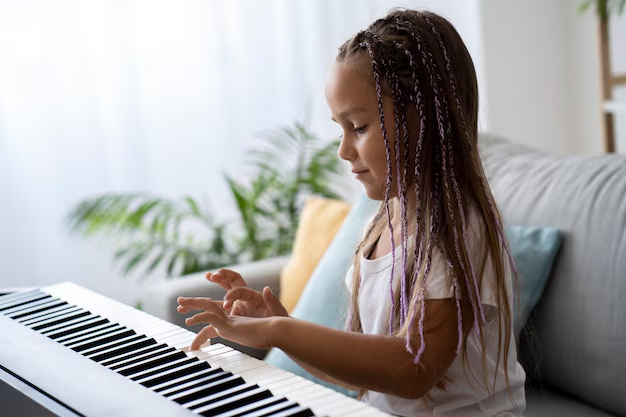
Keyboards provide a visual layout similar to a piano, making it easy for beginners to understand notes and scales. Digital music tools, such as music production apps, allow children to mix sounds, experiment with beats, and compose original pieces, giving them creative freedom while still learning musical fundamentals.
Why keyboards and digital music tools are effective
- Introduces children to modern music production and creativity
- Teaches musical theory in a hands-on, interactive way
- Encourages experimentation without fear of making mistakes
- Builds coordination, timing, and listening skills
If you’re looking to balance creativity, technical skills, and modern relevance, keyboards and digital music tools provide a versatile and highly engaging choice among musical instruments for kids.
How Parents Can Support Their Child’s Musical Learning Without Pressure
Supporting a child’s musical journey does not mean turning practice into a source of stress or competition. Many parents worry that they need to supervise every session or enforce strict schedules, but the best results come when encouragement is paired with freedom and fun.
Ways to support your child effectively
- Create a welcoming practice space
- Set up a quiet, comfortable area with the instrument easily accessible
- Ensure proper lighting, seating, and minimal distractions
- Small touches, like music posters or a stand for sheet music, make the space inviting
- Set realistic practice expectations
- Focus on short, consistent sessions rather than long, infrequent ones
- Encourage steady progress rather than perfection
- Celebrate effort, even when mastery takes time
- Encourage without forcing
- Let your child choose the pieces or songs they enjoy
- Praise persistence and curiosity more than flawless execution
- Avoid comparisons with siblings, peers, or famous performers
- Be involved in fun ways
- Listen to your child play without correcting every mistake
- Attend recitals or informal performances to show support
- Occasionally practice together to create a shared experience
- Connect music learning to daily life
- Encourage playing along with favorite songs
- Introduce games that teach rhythm, pitch, or improvisation
- Highlight music in movies, apps, and family activities
When parents balance structure with encouragement, children develop confidence, independence, and a genuine love for music.
Conclusion
Learning a musical instrument is more than a hobby; it is a pathway to confidence, creativity, and lifelong skills. Each of the ten instruments we explored offers unique benefits, from developing rhythm and coordination to fostering emotional expression and focus. Whether your child begins with piano, guitar, drums, or even digital music tools, the experience shapes how they think, feel, and grow.
🎤Give Your Child the Gift of Music Today 🎵
If you want your child to thrive through music, at Educify we offer expert tutors across the US and Canada, ready to guide beginners with patient, personalized instruction. With structured lessons, hands-on guidance, and a focus on building confidence and skills, learning musical instruments for kids becomes both fun and meaningful.
Start your child’s musical journey today and watch them discover a talent that lasts a lifetime 🎶








One Response