Introduction
Learning a new language can feel overwhelming at first, especially when you are supporting your child’s academic growth. The good news is that starting with common Spanish phrases makes learning practical, achievable, and immediately useful. Instead of memorizing long vocabulary lists, students can focus on real conversations they will use at school, while traveling, or when connecting with new friends.
As a parent, you do not need to be fluent to help your child succeed. Simple daily practice using meaningful Spanish phrases builds confidence and curiosity. This guide introduces essential expressions that help learners communicate clearly from day one. You will also find practical examples and easy ways to practice together at home without turning learning into pressure or stress.
How Useful Are These Common Spanish Phrases?
When students begin learning a new language, progress often depends on early success. Starting with common Spanish phrases gives children quick wins that motivate continued learning. Instead of feeling lost in grammar rules, learners begin communicating immediately, which builds both confidence and enthusiasm.
In the family, language learning becomes more meaningful when it connects to real life. Many schools introduce Spanish as a second language, and students who already understand practical Spanish phrases often feel more comfortable participating in class. They recognize familiar words, follow simple instructions, and engage more actively in group activities.
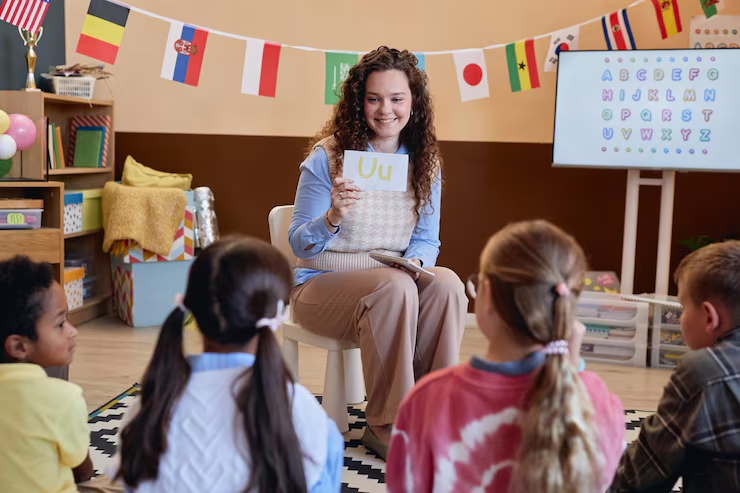
There are also cultural benefits. Learning everyday Spanish greetings exposes children to different ways people communicate around the world. It encourages respect for diverse cultures and opens conversations about traditions, travel, and global citizenship.
Parents benefit as well. Supporting your child with basic Spanish greetings and responses does not require expert knowledge. Simple practice sessions during meals, car rides, or homework time help reinforce learning naturally. Over time, children begin using phrases automatically, which strengthens memory and improves communication skills.
When families treat language learning as a shared journey instead of a school requirement, students are more likely to stay motivated and continue developing strong academic habits.
Read Also: The Best Way to Learn Spanish Fast: A Complete Step by Step Guide for Real Results
Simple Pronunciation Tips Before You Start Speaking Spanish
Before practicing Spanish greetings and responses, it helps to understand a few basic pronunciation patterns. Spanish pronunciation is often more consistent than English, which makes it easier for beginners to sound confident quickly.
Start by focusing on vowel sounds. Spanish vowels are usually short and clear. The letter “a” sounds like ah, “e” like eh, “i” like ee, “o” like oh, and “u” like oo. Encourage your child to say words slowly at first so they can hear the rhythm of each sound.
Another helpful tip is to pronounce most letters clearly. Unlike English, many Spanish words are spoken almost exactly as they are written. This reduces guessing and makes reading aloud a powerful learning strategy.
As a parent, you can model a growth mindset by practicing alongside your child. You do not need perfect pronunciation. Listening to audio examples together and repeating phrases as a team builds confidence. Focus on communication rather than perfection. Consistent practice with everyday Spanish phrases will naturally improve pronunciation over time while keeping learning enjoyable and stress free.
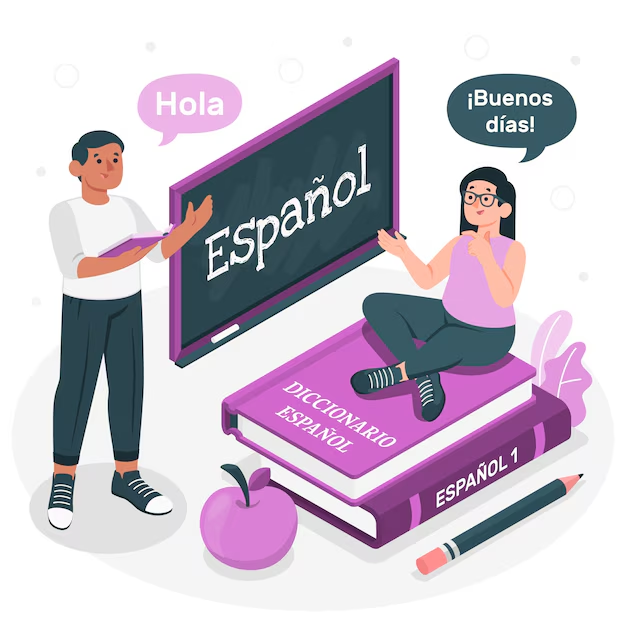
Spanish Greetings You Should Learn First
Spanish greetings are often the first step toward meaningful communication. Teaching students how to greet others helps them start conversations politely and confidently. Below are essential Spanish greetings and responses that beginners can practice daily.
1. Hola
Meaning: Hello
Usage: A friendly greeting for almost any situation.
Parent tip: Practice saying hola when greeting family members at home.
2. Buenos días
Meaning: Good morning
Usage: Used until midday in formal and informal settings.
Parent tip: Encourage your child to say this before school each day.
3. Buenas tardes
Meaning: Good afternoon
Usage: Common greeting during the afternoon hours.
Parent tip: Practice during after school conversations.
4. Buenas noches
Meaning: Good evening or good night
Usage: Used when greeting someone at night or saying goodbye before sleep.
Parent tip: Include this phrase in bedtime routines.
5. Cómo estás?
Meaning: How are you? informal
Usage: Used with friends or classmates.
Parent tip: Ask your child this question daily to encourage responses.
6. Cómo está?
Meaning: How are you? formal
Usage: Used with teachers or adults.
Parent tip: Explain when to use formal language respectfully.
7. Estoy bien
Meaning: I am well
Usage: Simple response to a greeting question.
Parent tip: Practice both asking and answering together.
8. Mucho gusto
Meaning: Nice to meet you
Usage: Used during introductions.
Parent tip: Role play meeting a new classmate or neighbor.
9. Y tú?
Meaning: And you?
Usage: Encourages two way conversation after answering a question.
Parent tip: Teach children to keep conversations going with follow up questions.
10. Hasta luego
Meaning: See you later
Usage: Friendly way to say goodbye.
Parent tip: Use this phrase when leaving for school or activities.
Practicing Spanish greetings and responses regularly helps students build strong conversational habits. These expressions form the foundation for more advanced communication skills and allow learners to participate actively in real world interactions.
Read Also: 7 Proven Benefits of Learning A New Language for Kids
Polite Spanish Phrases That Build Respectful Communication
Politeness plays an important role in how students interact with teachers, classmates, and new people. Learning respectful Spanish phrases early helps children communicate confidently while showing good manners in any setting. These expressions are useful in classrooms, public spaces, and family conversations.
1. Por favor
Meaning: Please
Usage: Used when making requests politely.
Example: Por favor, puedo entrar?
Parent tip: Encourage children to add this phrase whenever they ask for help.
2. Gracias
Meaning: Thank you
Usage: Shows appreciation and kindness.
Example: Gracias por ayudarme.
Parent tip: Practice gratitude routines at home using Spanish phrases.
3. Muchas gracias
Meaning: Thank you very much
Usage: A stronger expression of appreciation.
Example: Muchas gracias por tu tiempo.
Parent tip: Teach the difference between casual thanks and deeper appreciation.
4. Perdón
Meaning: Excuse me or sorry
Usage: Used when interrupting politely or acknowledging small mistakes.
Example: Perdón, no entendí.
Parent tip: Help children feel comfortable asking for clarification respectfully.
5. Lo siento
Meaning: I am sorry
Usage: Expresses sincere apology.
Example: Lo siento por llegar tarde.
Parent tip: Role play real life scenarios to reinforce responsible communication.
Teaching these polite Spanish phrases strengthens emotional intelligence while encouraging respectful behavior. Students learn that language is not only about words but also about empathy and social awareness.
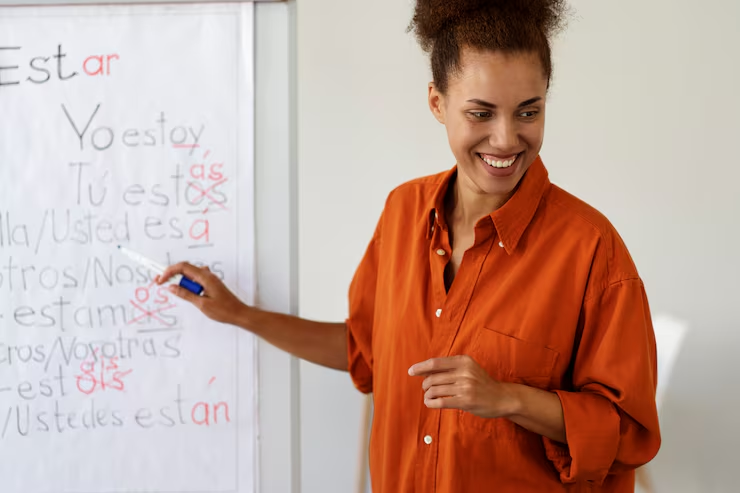
Everyday Conversation Spanish Phrases for Students
Once students master greetings, they can expand into everyday conversation using common Spanish phrases that help them express needs, opinions, and questions. These expressions are especially helpful in classroom discussions and social interactions.
1. Qué haces?
Meaning: What are you doing?
Usage: Casual conversation with friends.
Parent tip: Encourage children to use this during playtime conversations.
2. No entiendo
Meaning: I do not understand
Usage: Useful when lessons become challenging.
Parent tip: Teach children that asking for help is a strength.
3. Puedes ayudarme?
Meaning: Can you help me?
Usage: Used when requesting support from teachers or peers.
Parent tip: Practice this phrase during homework sessions.
4. Necesito ayuda
Meaning: I need help
Usage: Simple and direct communication during learning activities.
Parent tip: Encourage children to speak up instead of staying silent.
5. Me gusta
Meaning: I like it
Usage: Expressing positive opinions about activities or subjects.
Parent tip: Ask your child to describe favorite foods or games using Spanish phrases.
6. No me gusta
Meaning: I do not like it
Usage: Expressing preferences respectfully.
Parent tip: Teach children to communicate dislikes politely.
7. Qué significa?
Meaning: What does it mean?
Usage: Helpful when learning new vocabulary or instructions.
Parent tip: Turn curiosity into learning by encouraging frequent questions.
These common Spanish phrases help students move beyond memorization into real communication. When learners can express their thoughts and needs clearly, they feel more confident participating in academic and social environments.
Read Also: Top 10 Proven Easiest Languages to Learn for English Speakers
School and Family Related Spanish Phrases
Learning Spanish becomes more meaningful when it connects to daily routines at home and school. The following Spanish phrases help students communicate during lessons, homework time, and family interactions. Parents can easily incorporate these expressions into everyday conversations.
1. Tengo tarea
Meaning: I have homework
Usage: Used when discussing school responsibilities.
Parent tip: Encourage children to say this when starting study time.
2. Necesito estudiar
Meaning: I need to study
Usage: Helps children communicate focus and academic priorities.
Parent tip: Create a routine where children announce study time using this phrase.
3. Puedo ir al baño?
Meaning: May I go to the bathroom?
Usage: A common classroom request.
Parent tip: Practice polite school communication through role play.
4. Vamos a aprender
Meaning: Let’s learn
Usage: Encourages positive attitudes toward education.
Parent tip: Use this phrase to start homework sessions or family learning activities.
Practicing Spanish phrases connected to real routines helps children remember vocabulary faster. When parents reinforce learning through familiar situations, students begin to associate language with daily life rather than just classroom exercises. This approach strengthens both communication skills and academic confidence.
Spanish Greetings and Responses to Practice Together
Learning Spanish greetings and responses as complete exchanges helps students move from memorization to real communication. Practicing conversations builds listening skills and teaches children how dialogue flows naturally. These examples help learners respond confidently during introductions and daily interactions.
1. Hola, cómo estás?
Response: Estoy bien, gracias. Y tú?
Usage: Friendly everyday conversation.
Parent tip: Practice this exchange during daily check ins after school.
2. Buenos días
Response: Buenos días
Usage: Polite morning greeting between students and teachers.
Parent tip: Turn morning routines into mini Spanish practice sessions.
3. Mucho gusto
Response: Igualmente
Usage: Meeting someone for the first time.
Parent tip: Role play introductions before school events or social gatherings.
4. Hasta luego
Response: Adiós
Usage: Ending conversations politely.
Parent tip: Encourage children to use Spanish greetings and responses when leaving home or finishing phone calls.
Practicing common Spanish phrases through full conversations strengthens memory and helps students understand how language works in real situations. When children learn to respond naturally instead of memorizing isolated words, their confidence and fluency grow steadily.
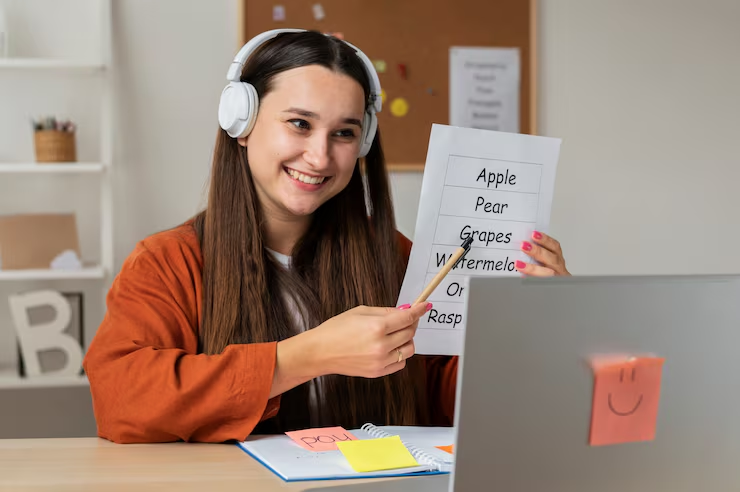
Essential Spanish Phrases for Directions and Travel 600 words
Travel situations give students a practical reason to use common Spanish phrases in real conversations. Whether your child is visiting a new city, participating in a school exchange program, or simply practicing real life communication, learning travel related Spanish phrases builds independence and confidence. As a parent, you can also use these examples to create fun practice scenarios at home that feel meaningful and realistic.
Asking for Directions Clearly
Students often need simple questions to navigate unfamiliar places. Teaching common Spanish phrases for directions helps children communicate politely when they need assistance.
- Dónde está el baño?
Meaning: Where is the bathroom?
This is one of the most useful Spanish phrases for beginners. Encourage children to practice it during role play travel games. - Dónde está la escuela?
Meaning: Where is the school?
This question helps students practice vocabulary connected to education and daily routines. - Cómo llego al hotel?
Meaning: How do I get to the hotel?
Children learn to ask for step by step guidance using practical Spanish greetings and responses.
Parents can model asking and answering these questions during pretend travel activities at home. Practicing directions regularly helps common Spanish phrases feel natural instead of memorized.
Understanding Directions from Others
Students also need to recognize common responses when someone explains directions. Listening skills are just as important as speaking.
- A la derecha
Meaning: To the right - A la izquierda
Meaning: To the left - Todo recto
Meaning: Straight ahead
Encourage children to follow simple instructions while walking around the house or neighborhood. Turning practice into movement based games makes Spanish phrases more memorable and engaging.
Travel Situations at Airports and Stations
Travel environments introduce new vocabulary that students can master using common Spanish phrases connected to transportation.
- Dónde está la salida?
Meaning: Where is the exit? - Dónde compro boletos?
Meaning: Where do I buy tickets? - Necesito ayuda
Meaning: I need help
These Spanish phrases help children feel prepared in busy public spaces. Parents can simulate travel scenarios by setting up pretend ticket counters or information desks at home.
Ordering Food While Traveling
Food related conversations are some of the most enjoyable opportunities to practice Spanish greetings and responses. Students learn cultural awareness while building communication skills.
- Quiero agua, por favor
Meaning: I want water please - Cuánto cuesta?
Meaning: How much does it cost? - La cuenta, por favor
Meaning: The bill please
Encourage children to practice ordering meals during family dinners. Using common Spanish phrases in everyday routines reinforces memory through repetition.
Safety and Emergency Communication
Students should also learn basic phrases that help them stay safe during travel. These Spanish phrases support clear communication in unexpected situations.
- Estoy perdido
Meaning: I am lost - Llame a la policía
Meaning: Call the police - Necesito ayuda ahora
Meaning: I need help now
Discussing these scenarios calmly helps children understand how language can support safety and independence.
Teaching travel related common Spanish phrases gives students tools they can use in real world experiences. Parents who practice Spanish greetings, Spanish phrases, and simple responses with their children help transform language learning into a practical life skill.
Practical Ways Parents Can Help Children Practice Spanish Phrases Daily
Parents play a powerful role in reinforcing Spanish phrases outside the classroom. Consistent practice does not require long study sessions. Short, meaningful interactions help students build strong language habits while keeping learning enjoyable.
Start by creating simple daily routines. Choose one or two common Spanish phrases each week and use them during regular activities such as greetings, meals, or homework time. Repetition in familiar situations helps children remember vocabulary naturally.
Another effective strategy is role play. Pretend to be a teacher, friend, or travel guide and encourage your child to respond using Spanish greetings and responses. These playful conversations make practice feel less like studying and more like real communication.
Visual reminders also help. Place sticky notes around the home with common Spanish phrases related to objects or activities. Children quickly connect words with actions when they see language used consistently.
Finally, celebrate progress rather than perfection. Encourage effort and curiosity. When families treat language learning as a shared experience, students develop confidence and stay motivated to continue expanding their Spanish phrases over time.
Common Mistakes Beginners Make When Using Spanish Phrases
Beginners often make small mistakes when learning common Spanish phrases, and that is completely normal. One common issue is translating directly from English, which can create unnatural expressions. Another challenge involves pronunciation, especially when students rush through words without listening carefully.
Some learners also worry too much about making errors, which prevents them from practicing Spanish greetings and responses openly. Encourage children to focus on communication rather than perfection. Remind them that mistakes are part of learning. Regular speaking practice, listening exercises, and supportive feedback help students develop confidence and improve accuracy naturally over time.
Conclusion
Learning common Spanish phrases gives students a strong foundation for communication, academic success, and cultural awareness. By practicing greetings, polite expressions, and everyday conversations, children gain confidence using language in real situations.
Parents play an essential role by encouraging consistent practice and creating positive learning routines at home. With patience and repetition, Spanish phrases become natural tools for expression rather than memorized vocabulary lists. Supporting your child’s language journey today can open doors to future educational and personal opportunities.
Learn Spanish with us at Educify! 📚🖊️
Enroll with us to learn Spanish through patient, engaging lessons designed for real communication, led by experienced tutors across the US and Canada. Click here to know more.