Introduction
In 2026, learning to code is no longer just for tech professionals. It has become an essential skill for children and beginners who want to understand how technology works. With so many programming languages available, many parents feel unsure about where to start. Which language is simple enough for beginners, useful in real life, and flexible for future growth? Python often comes up in these conversations, and for good reason.
Understanding Python vs other programming languages helps parents make confident, informed decisions. Some languages are built for narrow tasks or specific industries, while others demand complex rules early on.
In this guide, we compare Python with other popular programming languages used today. You will learn how Python supports learning, creativity, and problem-solving, and where alternatives like JavaScript, C, and R may fit better. By the end, you will clearly understand why Python remains a strong choice for young learners in 2026.
Why Python Remains Popular in 2026
Python continues to grow in popularity because it is easy to read, easy to learn, and flexible enough for real-world use. Unlike many programming languages that rely on complex symbols and strict rules, Python uses clear, human-like syntax. This helps beginners understand what their code is doing without feeling overwhelmed. For children, this early clarity matters because quick wins build confidence and curiosity.
One major reason learners choose Python is its practical value. The benefits of Python go beyond theory. Learners can use it to:
Automate simple tasks
Build basic games and apps
Work with data and charts
Explore beginner-friendly artificial intelligence projects
Seeing results quickly keeps students motivated and engaged.
Python is also used across many industries, which makes it future-ready. The applications of Python include web development, machine learning, robotics, and data science. Beginners can start with simple projects like a calculator or quiz game, then slowly move into more advanced work as their skills grow.
For parents, Python offers peace of mind. It has strong community support, thousands of tutorials, and tools designed specifically for beginners and children. When comparing Python vs other programming languages, Python stands out as both practical and encouraging, making it a smart long-term learning choice in 2026.
Python or JavaScript: Which Should Beginners Learn?
JavaScript is one of the most widely used programming languages today, especially for building websites and interactive web pages. However, for beginners, the learning experience with JavaScript can feel very different from Python. While Python focuses on simplicity and readability, JavaScript often introduces learners to browser behavior, web structure, and technical rules early on.
When parents compare Python or JavaScript for beginners, ease of learning becomes a major factor. Python allows students to focus on core programming ideas like logic, problem-solving, and structure without worrying about how browsers work. Learners can quickly build:
Simple games
Small programs
Automation scripts
JavaScript shines when it comes to web design. It allows students to create interactive buttons, animations, and dynamic websites. This can be exciting for learners who are already interested in how websites function. However, beginners may feel overwhelmed by the need to understand HTML, CSS, and browser environments alongside JavaScript itself.
Setup and learning flow also matter. Python runs easily on most devices, making it ideal for home learning. JavaScript often requires a web-based setup, which can add complexity at the early stages.
When comparing Python vs other programming languages, Python often provides a smoother starting point. Many students build confidence with Python first, then transition to JavaScript later with a stronger foundation and less frustration.
Python or C: Understanding the Differences for Young Learners
C is one of the oldest and most influential programming languages. It is commonly used in operating systems, hardware programming, and embedded systems. While powerful, C is often difficult for beginners, especially young learners, because it requires strict rules and technical precision from the start.
When parents compare Python or C for beginners, simplicity is usually the deciding factor. Python uses clear, readable syntax that feels closer to everyday language. This allows students to focus on thinking through problems and building solutions rather than worrying about complex technical details.
C introduces advanced concepts early, including:
Manual memory management
Data types and pointers
Strict program structure
These ideas are important but can feel overwhelming for children who are just starting to learn how coding works.
Another major difference is how quickly learners see results. Applications of Python are often visual and interactive. A beginner can write a simple program or game with very little code and see it work immediately. In C, even basic programs require more setup, which can slow down motivation and confidence.
For parents supporting their child’s learning, Python offers a gentler and more encouraging entry into programming. Once students understand core ideas using Python, moving to C later becomes much easier. Comparing Python vs other programming languages shows that Python helps learners build confidence first, then complexity later.
Python or R: Exploring Data Science Options for Beginners
R is a programming language created mainly for statistics and data analysis. It is widely used by researchers, analysts, and data scientists who work with complex datasets. While R is powerful, it can feel difficult for beginners because its syntax is less intuitive and more specialized.
When choosing between Python or R, versatility becomes a key advantage. Python allows beginners to explore many areas of programming, not just data analysis. Students can use Python to build games, automate simple tasks, create basic websites, and later move into data science or artificial intelligence. R, on the other hand, is mostly limited to data-focused work, which may feel restrictive for learners who want variety.
Python also makes data projects easier to approach. Libraries like Pandas and Matplotlib help beginners clean data, create charts, and understand patterns using fewer lines of code. This quick feedback helps students stay motivated and confident as they learn.
For parents comparing Python vs other programming languages in education, Python stands out as a flexible starting point. It introduces data science concepts in a simple, practical way while still allowing room for creativity and exploration.
By evaluating Python or R, parents can see why Python is often the better first language. It gives young learners a strong foundation in both programming and data thinking without limiting their curiosity or growth.
Benefits of Python for Students and Young Learners
Python stands out for beginners because it is simple to read, easy to write, and flexible to use. One of the biggest benefits of Python is its human-readable syntax. Children do not need to memorize complex rules before they can start coding. Instead, they focus on understanding ideas like loops, conditions, and functions, which build strong logical thinking skills.
Another major strength is the wide range of applications of Python. Students can:
Create simple games and quizzes
Build interactive stories
Analyze basic data
Design small websites
These hands-on projects help learners see real results from their efforts, which boosts confidence and keeps them engaged.
Python also supports creative problem-solving. Students learn that coding is about thinking through challenges and finding solutions, not just typing commands. Breaking problems into smaller steps teaches patience, focus, and critical thinking.
For parents, Python offers a friendly learning environment. There are countless tutorials, beginner courses, visual tools, and online communities designed specifically for young learners. Even parents with no coding background can follow along and support their child’s progress.
Overall, the benefits of Python make it an excellent choice for students. It combines ease of learning with practical skills, helping young learners build confidence while preparing for future technology pathways.
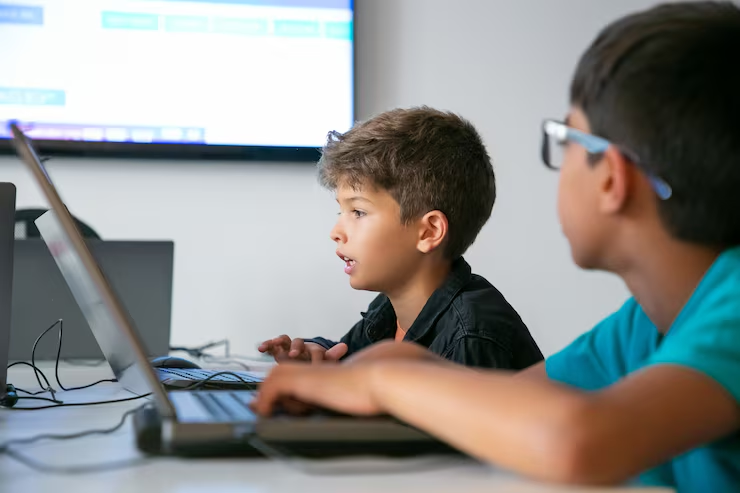
Expanding the Applications of Python and Project Ideas for Beginners
Python’s versatility makes it an excellent language for beginners who want to learn while creating useful and fun projects. Beyond common uses like web development and data analysis, there are many applications of Python that appeal to children and young learners. One popular starting point is game creation. Beginners can build simple quiz games, interactive stories, or basic arcade-style games. These projects introduce key concepts such as variables, loops, and conditional logic while keeping learning engaging and visual.
Another practical area is automation. Students can write small Python programs to:
Rename multiple files at once
Organize folders automatically
Create simple reminder scripts
These activities show how coding can solve everyday problems, helping learners understand the real-world value of programming. Parents can encourage these projects to strengthen logical thinking and practical problem-solving.
Python also supports creative expression. With beginner-friendly libraries, students can generate music, draw shapes, or create visual patterns. Using tools like Turtle graphics, learners can design drawings while practicing loops and functions. This approach works especially well for visual learners because they immediately see the outcome of their code.
When comparing Python vs other programming languages such as JavaScript, C, or R, Python remains the most flexible starting point. JavaScript suits web-focused learners, C offers deep technical control, and R specializes in statistics. Python, however, provides a broad introduction that builds confidence before moving into specialized areas.
Parents can support progress by suggesting small projects that grow in difficulty, such as:
Building a calculator
Creating a quiz game
Visualizing simple data
Designing a storytelling app
Through creative projects and hands-on practice, Python helps beginners develop strong coding skills, confidence, and curiosity. These experiences make learning meaningful while preparing students for more advanced programming in the future.
Predicting the Future: Python’s Role in Education and Technology
As technology evolves, Python continues to play a central role in both education and industry. Its combination of simplicity, versatility, and real-world applications ensures it remains a preferred choice for beginners in 2026 and beyond.
Key trends show Python increasingly integrated into schools and online programs. Educators use it to teach coding fundamentals without overwhelming students with complex syntax. This approach allows children to focus on problem-solving, logical thinking, and creativity—skills that transfer across subjects and future careers.
Python’s adaptability makes it highly relevant in emerging fields like artificial intelligence, machine learning, and robotics. Beginners can start with small, manageable projects and gradually explore more advanced applications. Early exposure builds a strong foundation for academic and career pursuits later.
Compared to other programming languages, Python stands out for its scalability. While languages like C or R serve specific niches, Python offers a broad range of opportunities for experimentation, practical learning, and creative projects. Children can start with simple exercises and eventually tackle complex challenges without feeling limited.
Parents can leverage Python’s supportive ecosystem—libraries, tutorials, and communities—to guide learning at home. By incorporating Python into everyday practice, students gain practical skills while staying motivated and engaged.
Looking forward, Python’s ease-of-use, accessibility, and professional relevance make it a cornerstone language for young learners. Understanding Python vs other programming languages allows parents to choose a pathway that supports both immediate learning and long-term skill development.
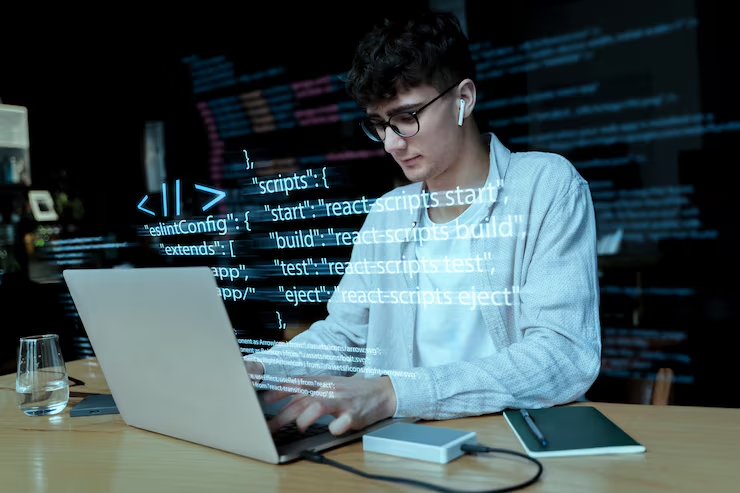
Python in Education and STEAM Learning
Python is now widely used in classrooms and homeschool environments because it’s accessible and versatile. Beyond traditional coding exercises, it can be applied in STEAM (Science, Technology, Engineering, Arts, and Math) projects, helping children see how programming connects to real-world concepts.
For example:
Students can simulate scientific experiments, like predicting a ball’s trajectory or modeling plant growth.
They can create digital art, graphs, or visual representations of data.
Python programs can calculate, visualize, or animate math functions, making abstract concepts easier to understand.
These projects develop critical thinking, creativity, and problem-solving skills at the same time. Python’s beginner-friendly syntax allows even young learners to participate in meaningful, hands-on work.
Children gain a sense of achievement as they see the results of their code applied in practical or creative contexts. This makes learning programming more engaging and encourages continued exploration.
With Python, students don’t just learn to code—they learn to analyze information, solve problems, and express ideas in tangible ways, giving them confidence and a strong foundation for future STEAM studies.
Progression: Moving from Python to Other Languages
Starting with Python gives learners a strong foundation for exploring other programming languages later. Many concepts in Python—like loops, variables, and functions—transfer directly to languages such as C, JavaScript, or R.
Key points for progression:
Confidence in Logic: Python teaches structured thinking, making it easier to understand more complex syntax later.
Algorithmic Design: Concepts like conditionals and functions prepare learners for problem-solving in any language.
Smooth Transition: Children who master Python basics can adapt to JavaScript for web projects or R for data analysis.
Foundation for C: Even languages with strict rules and manual memory management, like C, become less intimidating after Python.
Parents can support progression by gradually introducing small exercises in new languages while reinforcing Python concepts. This ensures learners stay motivated and don’t feel overwhelmed.
By mastering Python first, beginners gain transferable skills, a growth mindset, and confidence to tackle more specialized programming languages effectively.

Encouraging Curiosity and Self-Learning
One of the best ways parents can support coding education is by fostering curiosity. Encourage children to experiment with the applications of Python, try new functions, and learn through trial and error.
Tips for nurturing curiosity:
Celebrate Exploration: Focus on the process, not just getting the “right” answer.
Try New Features: Encourage learners to modify code, add extra functionality, or test different outcomes.
Independent Problem-Solving: Let children find solutions on their own before giving answers, building confidence and critical thinking.
Mix Learning with Play: Incorporate small, fun projects that spark creativity and maintain engagement.
By supporting self-learning, parents help children develop not only coding skills but also problem-solving, resilience, and a lifelong love for learning. Curiosity-driven practice encourages innovation and makes programming a rewarding experience from the start.
Conclusion
In 2026, Python continues to outshine many other languages for beginners. Its readability, versatility, and wide range of projects make it ideal for young learners. Comparing Python vs other programming languages shows why it fosters creativity, problem-solving, and logical thinking.
Parents who support consistent practice, project-based learning, and hands-on exploration help children gain confidence and enjoy programming. The benefits of Python are not restricted to teaching coding only but also to build skills that prepare students for future technology challenges.
Start Learning Python Today with Educify 💻
Give your child the tools to succeed in coding and technology. Explore our beginner-friendly Python guides, fun projects, and structured lessons to make learning programming exciting, practical, and confidence-building. Click here to start.