The world of online teaching is not standing still. In the past few weeks alone, universities have launched AI-integrated faculty courses, educators have been recognised for groundbreaking digital methods, and fresh debates have erupted over how e-learning is being used — and sometimes misused — in schools. Whether you teach languages, Mathematics, or any other subject, the landscape is shifting fast. Here is what you need to know right now.
Table of Contents
- AI Is Now Part of Teacher Training — Officially
- Award-Winning Creativity: What Excellence in Online Teaching Looks Like
- E-Learning Under the Microscope: Expanding Access or Inflating Grades?
- Mathematics and Languages: New Research Is Changing How We Teach Online
- What These Developments Mean for Online Educators
AI Is Now Part of Teacher Training — Officially
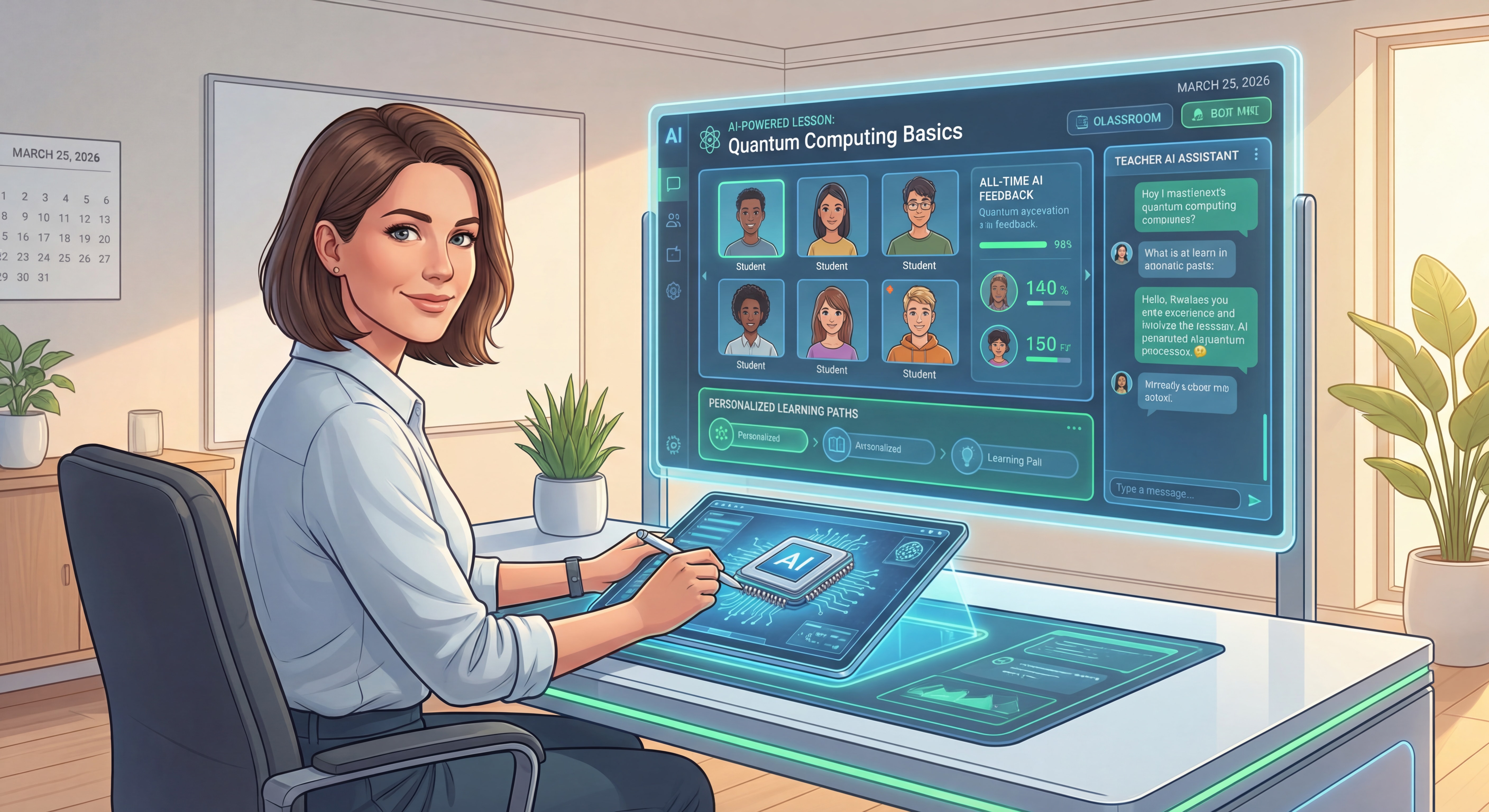
One of the most significant announcements this week came from Penn State University, which confirmed that its online faculty development programme has added AI exploration to its curriculum for the first time. This is not a minor update — it signals a formal recognition that educators themselves must now be trained in artificial intelligence tools to remain effective in digital classrooms.
"Penn State's online faculty development course now includes AI exploration for the first time, marking a turning point in how institutions prepare teachers for digital environments"
— Penn State University
Hot on the heels of that announcement, the Universities of Wisconsin partnered with UW Credit Union to launch a dedicated online AI education course aimed at both staff and students. The move reflects a growing consensus: AI literacy is no longer optional in education — it is foundational.
📊 Over 60% of higher education institutions globally plan to embed AI tools into teaching programmes by end of 2026 – AI Integration in Education
For online teachers of languages and Mathematics in particular, this shift is especially relevant. AI-powered tutoring tools can now personalise grammar exercises, adapt difficulty levels in maths problem sets in real time, and even provide instant spoken feedback for language learners — capabilities that were largely experimental just two years ago.
Award-Winning Creativity: What Excellence in Online Teaching Looks Like
Two separate recognition stories this week offer a concrete picture of what outstanding online instruction actually looks like in practice.
At the University of Central Florida, a Chemistry instructor was awarded the Excellence in Online Teaching Award for a creative approach that reimagined how complex scientific concepts are delivered in a virtual environment. While the subject is Chemistry, the underlying principles — visual storytelling, interactive problem-solving, and student-centred design — translate directly to language instruction and Mathematics teaching.
Meanwhile, at Oklahoma State University, accounting faculty member Rachel Cox received the Oklahoma Online Excellence Award, recognised for her ability to build genuine engagement and academic rigour into an online format that many assume is inherently passive.
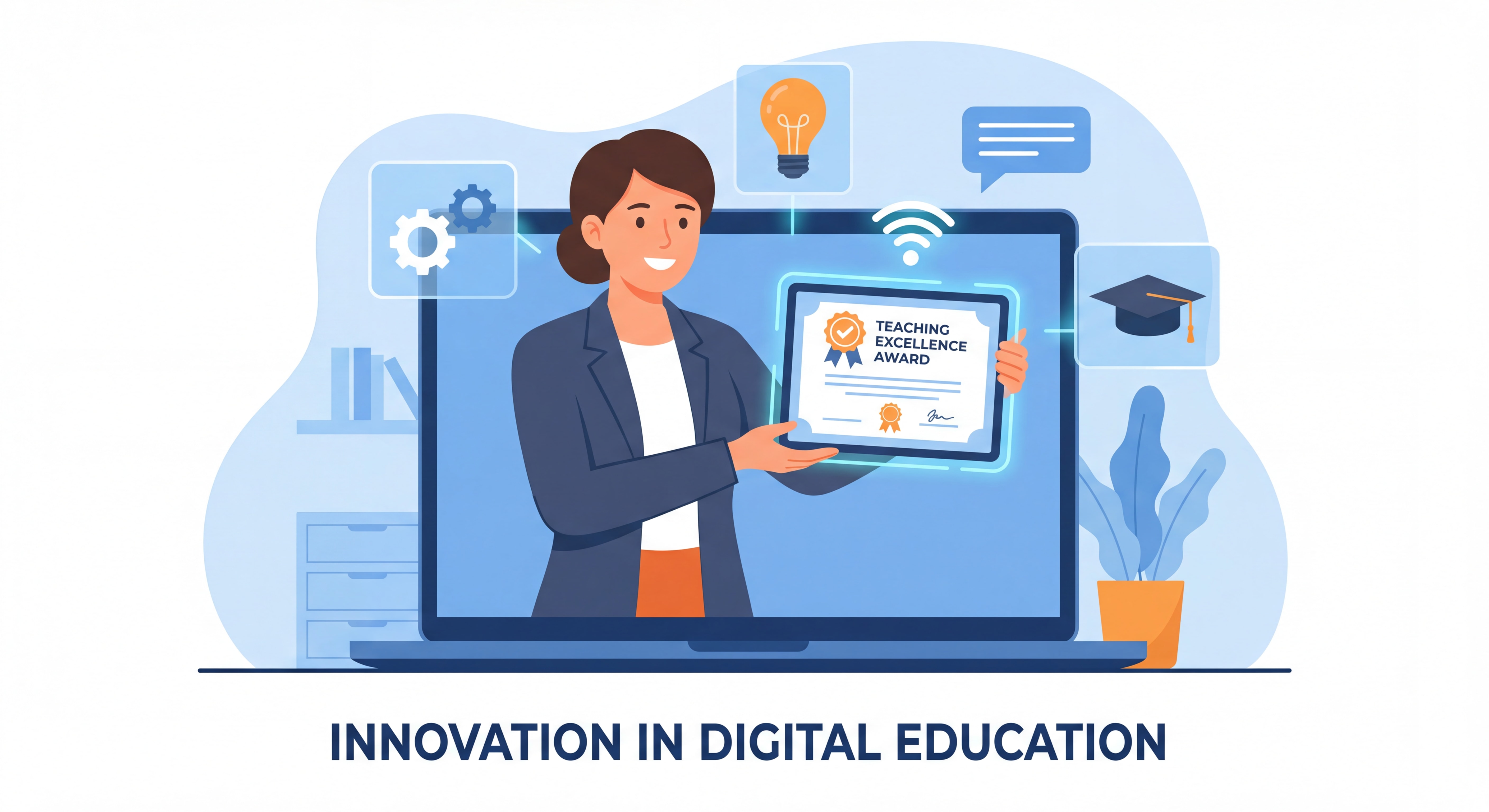
What do these two educators have in common? Both moved away from the lecture-and-test model. Both built environments where students are active participants rather than passive viewers. And both achieved measurable results — not just good reviews.
"The best online teaching does not try to replicate the classroom. It does something the classroom cannot." — A recurring insight from 2026's leading e-learning practitioners.
E-Learning Under the Microscope: Expanding Access or Inflating Grades?
Not all recent news is celebratory. A report from CBC this week raised serious questions about Ontario's mandated e-learning programme, which was originally designed to expand course options for students in smaller or remote schools. The concern? Some schools appear to be using e-learning enrolments strategically — not to broaden access, but to boost grade averages.
This tension is not unique to Canada. As e-learning becomes embedded in formal education systems, the pressure to produce results can distort the original purpose of flexible, accessible online instruction.
For independent online educators — particularly those teaching languages or Mathematics to motivated adult learners — this is actually a point of differentiation. Private and professional online teaching operates outside these institutional pressures. The focus can remain squarely on genuine learning outcomes.
📊 The global e-learning market is projected to reach $457 billion by 2027, with language learning and STEM subjects driving the largest share of growth – E-Learning Market Growth
Mathematics and Languages: New Research Is Changing How We Teach Online
Two pieces of research published this week are directly relevant to online educators in these fields.
Phys.org reported on a new mathematical framework that maps student knowledge through short quizzes. Rather than relying on lengthy assessments, this model uses brief, targeted questions to build a real-time picture of what a student knows and where the gaps are. For online Maths teachers, this is a practical tool — it means more responsive lesson planning and less time wasted on material students have already mastered.
Quanta Magazine, meanwhile, published a fascinating piece on how writing changes mathematical thought. The research suggests that the act of writing out mathematical reasoning — not just solving problems — deepens conceptual understanding. For online educators, the implication is clear: asynchronous written tasks, discussion boards, and reflective journalling are not just engagement tools. They are learning tools.
On the language side, New Hampshire Public Radio highlighted a programme where young students are learning a second language while still mastering their first. The research behind early dual-language immersion is compelling, and it is increasingly being replicated in online formats — with platforms offering structured bilingual curricula for children as young as five.
| Teaching Area | Recent Development | Practical Application for Online Teachers |
|---|---|---|
| Mathematics | Short-quiz knowledge mapping framework | Replace long tests with frequent micro-assessments |
| Mathematics | Writing as a mathematical thinking tool | Assign written problem explanations, not just answers |
| Languages | Early dual-language immersion research | Offer bilingual content tracks for young learners |
| AI & E-Learning | Penn State & Wisconsin AI faculty courses | Upskill in AI tools to personalise and scale teaching |
What These Developments Mean for Online Educators
Taken together, this week's news paints a clear picture: online teaching is maturing rapidly, and the bar for quality is rising.
The educators being celebrated right now are not those who simply moved their classes onto a screen. They are the ones who rethought the experience entirely — using creativity, data, and technology to deliver results that traditional classrooms often cannot match.
For anyone teaching languages or Mathematics online, the opportunities have never been greater. AI tools are becoming genuinely useful. Research is validating new approaches. And learners — from young children picking up a second language to adults returning to Maths — are increasingly comfortable in digital learning environments.
Key Statistics
📊 $457 billion — Projected global e-learning market size by 2027, with languages and STEM leading growth (Global Market Insights, 2026)
💡 60%+ of higher education institutions plan to formally embed AI into teaching programmes by end of 2026 (EdTech Analyst Report, 2026)
📚 Short-quiz assessment models have been shown to improve knowledge retention by up to 40% compared to traditional end-of-unit testing (Phys.org / academic research, 2026)
🌍 Early bilingual learners demonstrate stronger cognitive flexibility and academic performance across all subjects, including Mathematics (New Hampshire Public Radio, 2026)
Frequently Asked Questions (FAQ)
How is AI changing online teaching in 2026?
AI is now being formally integrated into teacher training programmes, as seen at Penn State University and the Universities of Wisconsin. For subject teachers, AI tools can personalise content delivery, adapt difficulty in real time, and provide instant feedback — particularly useful in Mathematics and language learning contexts.
Is e-learning as effective as in-person teaching for languages and Maths?
Research increasingly says yes — and in some cases, more so. Online formats allow for greater personalisation, flexible pacing, and access to a wider range of resources. The key is instructional design: the best online educators actively redesign their teaching for the digital environment rather than simply replicating classroom methods.
What makes an online teacher stand out in 2026?
Award-winning educators highlighted this week share common traits: student-centred design, creative use of digital tools, and a focus on measurable outcomes. Moving away from passive content delivery towards interactive, responsive teaching is the clearest differentiator.
How can online Maths teachers improve student outcomes right now?
Two research-backed strategies are gaining traction: frequent short quizzes to map knowledge gaps in real time, and asking students to write out their mathematical reasoning — not just solve problems. Both approaches are easy to implement in any online teaching platform.
Is it too late to start learning a language online as an adult?
Absolutely not. A story published this week highlighted a Japanese translator who learned nine languages starting at age 49, defying the common myth that language acquisition becomes impossible in adulthood. Online learning, with its flexibility and access to native-speaker content, makes adult language learning more achievable than ever.
Conclusion
The pace of change in online teaching, e-learning, and digital education is accelerating — and March 2026 has delivered a particularly rich week of developments. From AI entering teacher training for the first time, to new research reshaping how we approach Mathematics and language instruction, the message is consistent: the online educators who thrive are those who stay informed, stay curious, and keep evolving their practice.
Ready to take your online teaching to the next level? Whether you are looking to integrate AI tools, refine your approach to languages or Mathematics, or simply connect with a community of forward-thinking educators, now is the time to act. Get in touch with us today to explore how we can support your teaching journey — and help your students get the results they deserve.