
Introduction
If you are just starting French, or you already know some words but still feel unsure when you speak, you are not alone. Many learners feel confident with vocabulary yet freeze when it is time to greet someone. That hesitation often starts with greetings. In French, how you say hello matters more than you might expect. The right greeting sets the tone for the entire conversation. The wrong one can feel awkward, even if your grammar is correct.
French greetings are not just words you memorize. They reflect politeness, timing, and social awareness. French vowel sounds, rhythm, and formality all show up in greetings, which is why they are the best place to begin. In this guide, I will walk you through French greetings in real situations, so you know exactly what to say, when to say it, and why it works.
What Are French Greetings All About & When Do You Use Them?
French greetings are simple on the surface, but they carry meaning beyond the words themselves. In French culture, greeting someone is not optional or casual filler. It is a sign of respect and awareness. You greet before you ask questions, before you request help, and before you start a conversation.

Unlike English, where a quick “hi” can fit almost any situation, French greetings change based on time, place, and relationship. Who you are speaking to matters. Where you are matters. Even the moment of the day matters. A greeting that sounds friendly in one situation can feel rude or careless in another.
As a learner, your first goal is not to sound perfect. It is to recognize which greeting fits which moment. Once you understand that logic, French conversations start to feel more predictable. This section prepares you to notice greetings in real conversations and understand why they are used, which leads naturally into mastering basic French greetings that every student needs.
What Are the Basic French Greetings Everybody Must Know
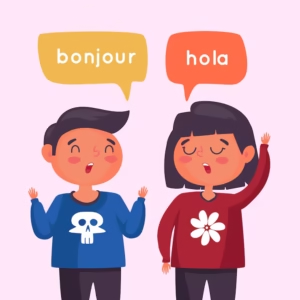
If you remember only three French greetings at the beginning, let them be bonjour, salut, and bonsoir. These form the foundation of everyday interaction in French, and you will hear them everywhere.
Bonjour is the most important. It means “good day,” but in practice, it works as hello in most situations. You use bonjour in the morning, in the afternoon, and any time you enter a space where politeness matters. Say it when you walk into a classroom, a shop, or an office. Say it before asking a question. In French culture, skipping bonjour can sound rude, even if your grammar is perfect.
Salut is informal. It is closer to “hi” in English. You use it with friends, classmates, siblings, or people your age in relaxed settings. You do not use salut with teachers, shop staff, or adults you do not know well. Many beginners overuse salut because it feels friendly, but in the wrong setting, it sounds careless.
Bonsoir means “good evening.” You use it later in the day, usually from early evening onward. If you greet someone after work hours or at night, bonsoir replaces bonjour. Learners often hesitate here, but the rule is simple. If it feels like evening, bonsoir is the safer choice.
In real life, imagine walking into a bakery. You say bonjour before ordering. Meeting a friend after school, you say salut. Arriving at a dinner event, you say bonsoir. Mastering these basic French greetings instantly makes your French sound natural and respectful.
Formal French Greetings and When to Use Them
Formal French greetings show respect. They matter more in French than many learners expect. Using the right greeting can change how people respond to you, even before you speak further.
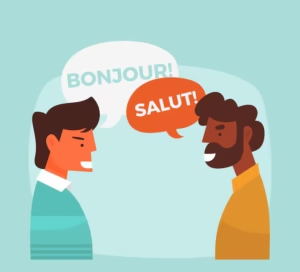
The base of formal greetings is still bonjour, but you often add a title. Bonjour monsieur is used when greeting a man. Bonjour madame is used for a woman. These forms are common in schools, offices, shops, interviews, and any professional setting. If you are unsure which greeting to use, choose the formal one. In French culture, being too formal is safer than being too casual.
Another important formal greeting is enchanté, which means “nice to meet you.” You use it when meeting someone for the first time, often after saying bonjour. It works in both formal and semi-formal situations and shows good manners.
In schools, students are expected to greet teachers with bonjour, followed by monsieur or madame. Using salut in this context sounds disrespectful, even if your relationship feels friendly. The same rule applies in professional spaces like offices, hospitals, or government buildings.
Formal French greetings are not about distance. They are about respect. Once you understand this, choosing the right greeting becomes easier and more natural.
Greetings Based on Time of Day in French
Time of day is important when choosing the right French greeting. Using the wrong one can sound odd or out of place. Here’s a breakdown for beginners:
Morning – Bonjour
Used from early morning until around 5–6 p.m.
Means “good day” but literally translates to “good morning.”
Safe to use in almost any situation: school, shops, work, or with friends.
Example: Bonjour, madame! (Good morning, ma’am!)
Evening – Bonsoir
Used after late afternoon, roughly 5–6 p.m. onward.
Means “good evening.”
Common for dinners, evening events, or when meeting someone later in the day.
Example: Bonsoir, monsieur! (Good evening, sir!)
Night – Bonne nuit
Used only when saying goodbye before going to bed.
Not a greeting for arriving somewhere, only for departure at night.
Example: Bonne nuit, à demain! (Good night, see you tomorrow!)
Casual Notes
Avoid saying bonjour late in the evening, it feels strange to native speakers.
Morning greetings can stay formal or informal depending on your relationship.
Practice listening to native speakers to feel the rhythm of greetings throughout the day.
Tip for learners: Pair these greetings with polite gestures, like a smile or slight nod, to match the natural French style.
Check the following articles for more helpful practical tips on learning French:
100 Basic French Words You’ll Actually Use – reinforces daily vocabulary context
The Best Way to Learn French – for learners wanting structured guidance

How to Respond Properly to French Greetings
Responding correctly is just as important as greeting someone. Using the wrong response can make you sound awkward or even rude. Here’s a guide to mastering greeting-response pairs:
- Basic Responses
- Bonjour → Bonjour – The simplest and safest response. Always works in formal and informal contexts.
- Salut → Salut / Ça va ? – With friends, you can answer with the same casual greeting or add Ça va ? (How’s it going?).
- Bonsoir → Bonsoir – Evening greetings are mirrored, just like morning greetings.
- Adding Politeness
- Use madame, monsieur, or mademoiselle with formal greetings.
- Example: Bonjour, monsieur Dupont! → Bonjour, madame!
- Tone Matters
- Smile and use a friendly tone; French responses carry meaning in voice and attitude.
- A flat or monotone reply may come across as uninterested.
- Common Response Errors
- Saying Salut to a teacher or authority figure can be seen as disrespectful.
- Overusing Ça va ? in formal situations can feel too casual.
- Forgetting to return Bonjour or Bonsoir when greeted is considered rude.
- Practice with Short Dialogues
- Teacher: Bonjour, Claire!
Student: Bonjour, madame! - Friend: Salut, ça va ?
Student: Salut, ça va bien, et toi ?
- Teacher: Bonjour, Claire!
Tip for learners: Always mirror the greeting first, then add a friendly question or comment. This builds confidence for live conversations.
Read Also: Top 10 Proven Easiest Languages to Learn
How to Greet for Christmas in French
Greeting people during the holidays in French is both festive and culturally important. Knowing the right phrases shows respect and warmth, whether you’re talking to friends, family, or teachers. Here’s how to handle French holiday greetings confidently:
Core Christmas Greeting
Joyeux Noël – This is the standard way to say “Merry Christmas.”
Use it with anyone: family, friends, classmates, or colleagues.
Formal vs Informal Christmas Greetings
Formal: Joyeux Noël, monsieur/madame – Perfect for teachers, authority figures, or acquaintances.
Informal: Joyeux Noël! or Bonnes fêtes! – Great for friends, classmates, or peers.
Other Holiday Greetings
Bonnes fêtes – Literally “Happy Holidays,” covers the season beyond Christmas.
Meilleurs vœux – “Best wishes,” often used in cards or emails.
Situational Use
At school: Joyeux Noël, madame!
With friends: Salut! Joyeux Noël!
Family gatherings: Add warmth with phrases like Passe de belles fêtes! (Have a wonderful holiday!).
Tips for Learners
Pay attention to tone; enthusiasm adds warmth.
When writing cards or messages, remember accents: é in Joyeux Noël matters.
Don’t overthink formalities with close friends; casual greetings are fine.
Mastering French holiday greetings not only makes you sound more natural but also helps you connect culturally with native speakers.

Greeting People in Special Situations
In French, knowing how to greet different people appropriately is key to sounding natural and polite. Each situation has its own tone and level of formality:
Greeting Teachers and Instructors
Always use a formal greeting: Bonjour madame, Bonjour monsieur, or Bonsoir depending on the time of day.
Add a polite gesture if appropriate, like a slight nod or handshake in formal contexts.
Avoid casual greetings like Salut in class unless invited.
Greeting Elders and Authority Figures
Use formal greetings and their title if you know it.
Examples: Bonjour Madame Dupont or Bonjour Monsieur le Directeur.
Respectful tone matters more than speed; speak clearly and calmly.
Greeting Classmates and Friends
Informal greetings like Salut, Coucou, or Ça va? are perfect.
You can follow up with a friendly handshake or a light cheek kiss if culturally appropriate.
Adjust the tone depending on closeness; younger students may stick to Salut.
Greeting Strangers in Shops or Public Spaces
Formality is key: Bonjour madame/monsieur on entering a store or asking for help.
Add Merci or S’il vous plaît when appropriate; politeness goes a long way.
Do’s and Don’ts
Do greet everyone you meet in formal settings.
Do adjust your greeting based on age, relationship, and context.
Don’t overuse informal phrases with strangers or authority figures.
Don’t skip greetings; in French culture, ignoring them can be seen as rude.
By practicing these situational greetings, you’ll feel confident in classrooms, shops, and social settings.
Written French Greetings for Messages and Emails
Written French greetings follow clear rules, and once you understand them, writing messages feels much easier. The biggest difference from speaking is structure and tone.
Formal Email Greetings
Use these when writing to teachers, school staff, or professionals.Bonjour Madame
Bonjour Monsieur
Bonjour Madame Dupont
Tips to remember:
Always start with Bonjour.
Never use Salut in formal emails.
Avoid first names unless invited to use them.
Informal Text and Message Greetings
These are fine for friends, classmates, or people you know well.Salut
Coucou
Ça va ?
These greetings feel friendly and relaxed, just like spoken French.
School-Related Writing Examples
To a teacher: Bonjour Madame, je vous écris pour poser une question sur le devoir.
To a classmate: Salut, tu as compris le cours d’aujourd’hui ?
Avoid Literal Translations
“Hi” is not Hi in French. Use Bonjour or Salut.
“Dear” does not translate directly in casual writing.
Once you master written French greetings, your messages will sound polite, natural, and confident, not awkward or translated.
How Does Mastering French Greetings Build Confidence Fast?
French greetings are small, but they carry a lot of weight. When you get them right, everything else feels easier.
Here is how greetings quickly boost your confidence:
They help you start conversations smoothly
Once you know how to greet correctly, you no longer hesitate before speaking. The first step is already clear.They improve how native speakers respond to you
A proper greeting often leads to warmer replies and more patience from the person you are speaking with.They strengthen your listening skills
When you understand greetings, you catch the beginning of conversations instead of feeling lost right away.They reduce fear of making mistakes
Greetings are short, repeatable, and predictable. Mastering them gives you quick wins early on.They support long-term fluency
Confident openings lead to better sentence flow, better rhythm, and more natural interaction over time.
For beginners, French greetings are the fastest way to sound polite, clear, and comfortable in real conversations.
How Do I Practice French Greetings Effectively?
Knowing French greetings is one thing, using them naturally is another. The goal is to make them automatic.
Here are simple, effective ways to practice:
Practice greetings out loud every day
Say greetings as full habits, not single words. For example, say bonjour the way you would say it to a real person.Role-play real situations
Practice greeting a teacher, a friend, a shopkeeper, or a stranger. Change your tone based on the situation.Listen before you speak
Pay attention to how native speakers greet each other in videos, podcasts, or short conversations. Notice tone and timing.Repeat short greeting exchanges
Practice pairs like greeting and response together so they feel complete and natural.Use greetings in daily routines
Greet yourself when you start studying. Greet people in French in your head during the day. Repetition builds comfort.
Consistent, simple practice works better than memorizing long lists. Structure helps, but daily use makes greetings stick.
Final Thoughts
French greetings are not complicated. They are logical, structured, and deeply tied to context. Once you understand when and why each greeting is used, confidence follows naturally. You do not need perfect grammar to greet someone well. You need awareness, correct tone, and consistent practice.
Start small, repeat often, and pay attention to real usage. Over time, greetings will stop feeling like rules and start feeling natural. Mastering greetings is one of the fastest ways to sound polite, confident, and genuinely French from day one.
Learn French the Right Way With Educify!📚🖊️
Ready to speak French with confidence, not guesswork? Learn French greetings and real conversation skills step by step with expert guidance at Educify.