

Introduction
Many parents want to give their children every possible advantage, but it is not always clear which skills truly shape long-term growth. Among the most overlooked skills every child needs is language learning. It’s important to understand that the benefits of learning a new language go far beyond speaking differently or sounding impressive.
For children, learning a new language influences how they think, how they learn, and how they relate to the world around them. It strengthens the brain, supports academic development, and builds social confidence from an early age.
When introduced thoughtfully, language learning becomes a natural part of a child’s development rather than an added burden. This article will help you clearly understand these benefits so as to make informed decisions about expanding your child’s learning curve in meaningful, lasting ways.
Why You Should Add a New Language to Your Child’s Learning Curve
Parents often focus on subjects like mathematics, reading, and science because these areas feel measurable and familiar, yet language learning quietly supports all of them at once. One of the strongest benefits of learning a new language is that it stretches a child’s thinking without forcing rigid academic pressure. When children learn a new language, they practice listening closely, recognizing patterns, and making sense of unfamiliar sounds in a calm, natural way.
Adding a new language early also helps children understand that learning is not limited to one system or one way of thinking. This exposure builds flexibility in how they approach problems, instructions, and even social situations. Over time, children who grow up with more than one language often show greater patience when learning difficult concepts, because they are already used to navigating unfamiliar territory.
Language learning is valuable because it integrates easily into daily life. Songs, stories, games, and simple conversations turn learning into something playful rather than stressful. Instead of memorizing facts, children connect words to meaning, emotion, and context, which strengthens memory naturally.
Some key reasons many parents choose to introduce a new language early include:
- Helping children become comfortable with learning unfamiliar skills
- Encouraging curiosity about different cultures and perspectives
- Supporting stronger communication skills in all subjects
- Creating a foundation that benefits future academic and career growth
When as a parent you understand these early advantages, it becomes clear that language learning is not an extra task. It is a powerful tool that shapes how your children learn, think, and engage with the world as they grow.
Read Also: Top 10 Proven Easiest Languages to Learn for English Speakers

How Does Learning a New Language Improve Children’s Social Skills?
One of the clearest benefits of learning a new language is how it strengthens a child’s ability to connect with others. Language is not just words; it is a bridge to understanding different perspectives, emotions, and cultural norms.
When children learn another language, they become more aware of how people communicate and express themselves in diverse contexts. This awareness builds empathy and helps children navigate social situations with sensitivity and confidence.
Language learners often develop better listening skills because they must pay attention to tone, context, and subtle cues to understand meaning. This attentiveness improves interactions with peers, teachers, and family members alike.
Children who practice a new language also gain courage in expressing themselves, knowing that mistakes are part of learning. Over time, these skills carry into friendships, group activities, and collaborative learning, making them more adaptable and socially confident.
Parents can observe these social benefits in practical ways:
- Broader communication opportunities – Children can talk to peers from different cultural backgrounds.
- Increased empathy – Understanding how others think and feel becomes natural.
- Enhanced teamwork – Group language exercises improve cooperation and problem-solving skills.
- Greater social confidence – Children approach new situations and friendships with curiosity rather than fear.
These social advantages last well beyond childhood, giving children tools to form meaningful relationships and navigate multicultural environments throughout life.
How Does Learning a New Language Support Academic Growth?
Academic success is rarely about memorizing information alone, and one of the most lasting benefits of learning a new language is how it strengthens learning across multiple subjects. When children study another language, they practice recognizing patterns, understanding rules, and applying logic in real time. These same skills directly support reading comprehension, writing ability, and even mathematical reasoning.
Learning a new language improves focus because children must pay close attention to structure, meaning, and context at the same time. This mental coordination helps them follow instructions more accurately and organize their thoughts clearly in schoolwork.
According to studies at Cambridge,
“in a meta-analysis of 20 studies examining language learning and its impact on academic performance, the majority of studies (90%) showed that language learners perform better across a range of academic subjects than students who don’t study a second language. Learning another language also boosts student literacy, which gives learners an advantage in core school subjects like mathematics and science.”
Over time, children who learn a new language often show stronger problem-solving skills, because they are used to thinking through challenges rather than avoiding them. Academic advantages commonly linked to language learning include:
- Stronger reading and writing skills
Learning grammar and sentence structure in another language deepens understanding of how language works overall. - Improved memory and concentration
Remembering vocabulary and sentence patterns strengthens short-term and long-term memory. - Better performance in standardized learning environments
Language learners often adapt more easily to tests and structured academic tasks. - Higher confidence in classroom participation
Children become more comfortable asking questions and explaining ideas clearly.
These academic benefits build gradually, but they create a solid foundation that supports long-term learning. Rather than competing with core subjects, learning a new language reinforces them in practical, meaningful ways.
Read Also: The Best Way to Learn French: A Complete Beginner-Friendly Guide

What Are the Brain Benefits of Learning a New Language?
Learning a new language is not only about speaking differently; it profoundly strengthens the brain. Here are the key benefits of learning a new language for the child’s mind, explained in detail:
- Enhanced Cognitive Flexibility
Children who learn another language regularly switch between words, sentence structures, and cultural norms. This constant mental juggling strengthens cognitive flexibility, allowing them to think creatively and adapt quickly to new situations. Flexible thinking is essential for problem-solving, decision-making, and even handling unexpected challenges in school or social settings.
- Improved Memory
Remembering vocabulary, grammar rules, and pronunciation patterns exercises both short-term and long-term memory. This mental workout trains children to retain information more effectively, which carries over to other subjects such as math, science, and reading comprehension. The brain becomes more efficient at organizing and recalling information.
- Better Attention and Focus
Learning a new language requires children to pay close attention to context, meaning, and subtle differences between similar words or sounds. This repeated practice of concentrated focus improves their ability to stay attentive in other learning environments. Over time, children become more capable of filtering distractions and concentrating on tasks that demand mental effort.
- Stronger Problem-Solving Skills
When children learn a new language, they often encounter unfamiliar grammar or sentence structures that require analysis and creative thinking. Figuring out how to express an idea in another language encourages logical reasoning, pattern recognition, and persistence. These skills transfer directly into mathematics, science, and everyday decision-making.
- Long-Term Brain Resilience
Studies show that early language learners develop neural pathways that enhance mental flexibility well into adulthood. This resilience helps children adapt to challenges later in life, supports lifelong learning, and may even reduce the risk of cognitive decline in older age.
By understanding these brain benefits, parents can see that language learning is more than memorizing words—it is a structured mental exercise that strengthens thinking, focus, memory, and adaptability, forming a foundation for success in every area of life.

How Can Learning a New Language Open Future Opportunities?
One of the long-term benefits of learning a new language is the advantage it provides in future careers and global opportunities. In today’s interconnected world, employers increasingly value multilingual employees who can communicate across cultures.
Children who learn a new language early develop skills that set them apart academically and professionally, giving them a competitive edge later in life.
Learning another language also prepares children for experiences beyond the classroom. Travel, study abroad programs, and remote work opportunities all become more accessible when a child is comfortable with multiple languages.
Even in careers that may not appear language-dependent, such as science, technology, or business, the ability to think across linguistic frameworks enhances problem-solving and adaptability.
Key advantages of early language learning for the future include:
- Global career prospects – Multilingual skills make children attractive candidates for international opportunities.
- Cultural adaptability – Children can navigate diverse social and professional environments more easily.
- Study abroad readiness – Language skills increase confidence in immersive learning experiences.
- Long-term skill growth – Early language learning supports additional language acquisition later in life.
Read Also: Why Learning French Is a Career and Life Advantage in a Global World
How Does Learning a New Language Boost Emotional Growth and Confidence?
Learning a new language is an emotional journey as much as it is an intellectual one, offering profound benefits of learning a new language that shape a child’s self-esteem and resilience. Every new word learned, sentence formed, or conversation attempted creates a sense of accomplishment. These small victories accumulate, giving children tangible proof that effort and practice lead to success.
Language learning also teaches patience and perseverance. Children quickly discover that mistakes are part of the process and that progress does not happen overnight. This repeated experience of trying, failing, and improving helps them develop a growth mindset, where effort is valued more than immediate perfection.
Practical emotional and confidence benefits include:
- Boosted self-esteem – Mastering new words or understanding a conversation builds pride in their achievements.
- Comfort with mistakes – Children learn that errors are natural and provide opportunities to improve.
- Patience and perseverance – Language learning encourages consistent effort, which strengthens resilience.
- Increased willingness to participate – Confidence in one skill often carries into other areas, such as classroom activities or social interactions.
By engaging with another language, children become more self-assured, adaptable, and emotionally resilient, giving them the tools to navigate both challenges and successes with confidence.
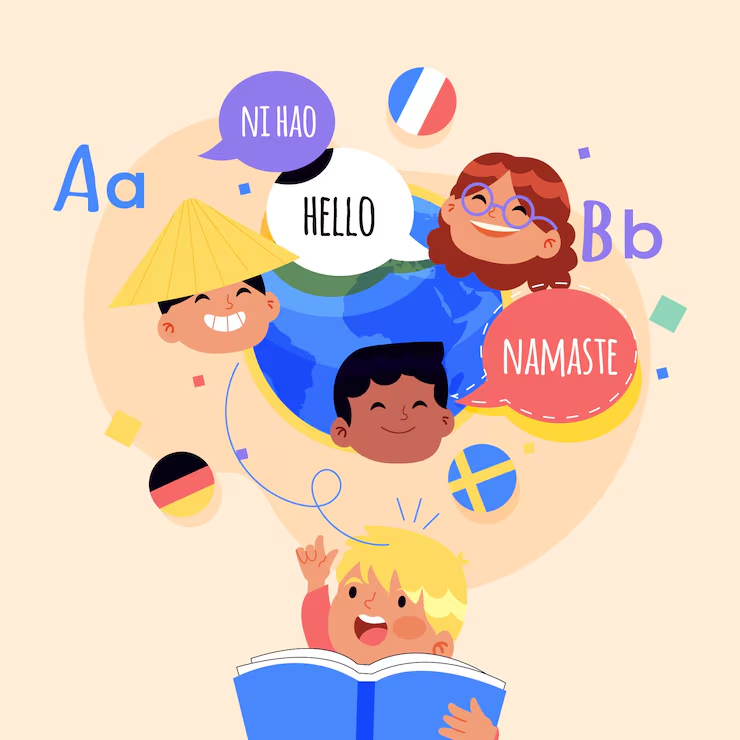
Which Languages Can Children Learn and What Benefits Do They Offer?
Once parents understand the benefits of learning a new language, the next practical question is often which language their child should start with. The good news is that several languages offer clear and lasting advantages, especially when learned early.
- Spanish
Spanish is one of the most widely spoken languages globally and especially useful in the United States. Children who learn Spanish gain practical communication skills, cultural awareness, and an easier transition into learning additional Romance languages later. - French
French is spoken across multiple continents and is an official language in Canada. Learning French strengthens pronunciation skills, improves sentence structure awareness, and supports academic pathways in international relations, education, and global studies. - Mandarin Chinese
Mandarin challenges the brain through tonal pronunciation and character-based writing. This strengthens memory, attention, and listening skills while preparing children for future opportunities in technology, business, and global trade. - German
German encourages precision and logical thinking. It is valuable for children interested in science, engineering, and analytical fields, while also supporting strong grammar and problem-solving habits.
Each of these languages allows children to enjoy the benefits of learning a new language while building social, cognitive, and future-focused skills that grow more valuable with time.
Why Do Children Learn Languages Faster Than Adults?
Children have a natural advantage when it comes to picking up a new language, and understanding this helps parents appreciate the benefits of learning a new language at an early age. Their brains are highly plastic, meaning they can form new neural connections quickly and efficiently. This plasticity allows children to absorb vocabulary, grammar, and pronunciation with ease, often without the conscious effort adults require.
Another key factor is pronunciation. Young learners can replicate sounds more accurately, which helps them develop near-native accents and makes speaking more fluid. This ability diminishes with age, so early exposure provides a critical window for mastering pronunciation naturally.
Children also learn best through play, repetition, and contextual learning rather than formal instruction. Engaging activities such as songs, storytelling, games, and interactive conversations make the learning process enjoyable and less intimidating.
Because children approach language with curiosity rather than self-consciousness, they are more likely to experiment with words and phrases, building confidence in their communication skills.
Parents can maximize this advantage by:
- Introducing languages early – Even a few minutes of daily exposure can make a noticeable difference.
- Incorporating playful learning methods – Games, songs, and storytelling help concepts stick naturally.
- Encouraging repeated practice – Consistent use reinforces vocabulary and sentence structures without pressure.
- Avoiding stress about perfection – Children thrive when mistakes are treated as learning opportunities rather than failures.
By understanding how children learn languages differently from adults, parents can provide an environment that supports natural, effective learning while enjoying the journey with their child.
Read Also: How to Speak Good English: A Deep, Practical Guide for Real Life Communication
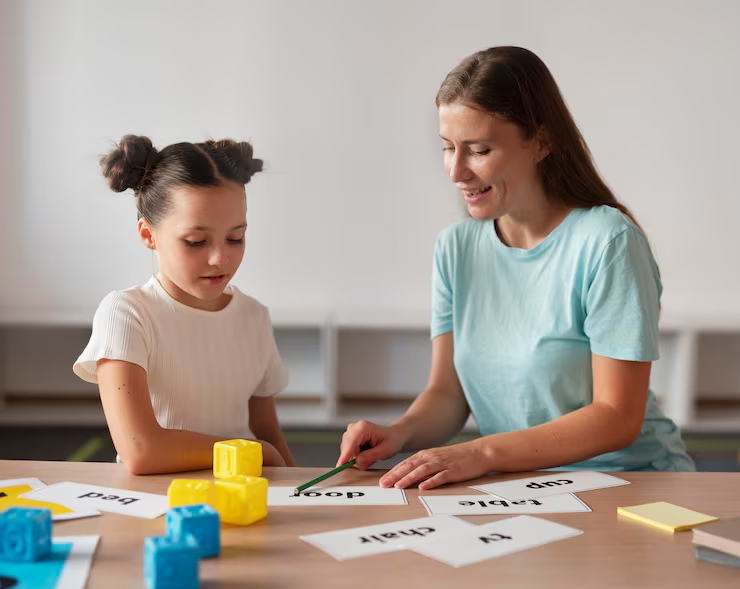
How Can Parents Support Language Learning at Home?
Parents play a crucial role in reinforcing the benefits of learning a new language by creating a supportive and engaging environment at home. The goal is not to pressure children but to make language exposure consistent, fun, and relevant to their daily lives. Even small, simple strategies can have a big impact over time.
Practical ways parents can help include:
- Encourage exposure, not perfection – Let children listen, repeat, and experiment without worrying about mistakes.
- Celebrate effort, not just fluency – Praise curiosity, persistence, and progress rather than flawless execution.
- Integrate language into daily routines – Label objects, sing songs, or describe activities in the new language to make learning practical.
- Use media and interactive tools – Educational apps, videos, and games can make learning entertaining and immersive.
- Model enthusiasm – Children mirror parental attitudes, so showing excitement about language learning encourages them to stay engaged.
- Create mini-goals – Simple tasks like learning five new words a week or practicing greetings help children see measurable progress.
By making language learning a natural part of home life, parents help children build habits, confidence, and a positive mindset toward mastering another language. This steady support allows children to explore the language without pressure while reinforcing cognitive, social, and emotional growth.
Conclusion
The benefits of learning a new language extend far beyond speaking fluently; they shape a child’s brain, social skills, confidence, and future opportunities. Language learning strengthens memory, attention, and problem-solving, while also teaching empathy, patience, and perseverance. Children gain academic advantages and develop skills that will benefit them in school, careers, and personal life.
Starting early gives children a natural edge, and steady encouragement from parents makes the journey enjoyable and effective. Investing in language learning is not a burden but a gift that builds lasting cognitive, social, and emotional foundations.
Kickstart Your Child’s Second Language Learning with Educify!
Give your child the gift of a new language and open doors to lifelong opportunities. Enroll them with Educify today and let expert, kid-friendly tutors guide their journey. Click here to know more!














One Response