
Introduction
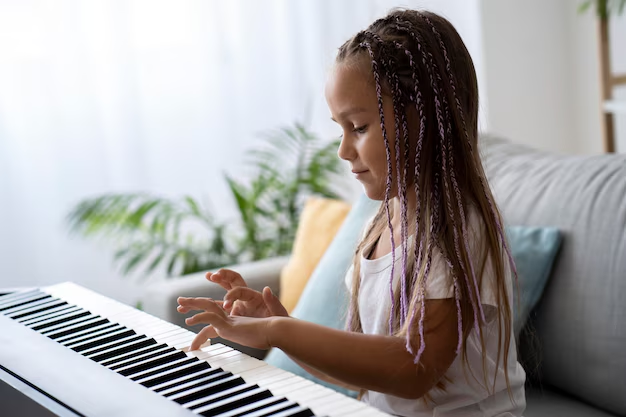
Many parents look for activities that do more than keep their child busy after school. Learning how to play the piano is one of the few skills that actively supports mental growth, emotional balance, discipline and keep your kid busy at the same time. Beyond music, piano lessons help children develop focus, confidence, and problem solving skills that show up in everyday life.
This article explains the real, research backed benefits of learning how to play the piano and why it remains one of the most valuable skills a child can learn. If you are considering structured piano lessons that guide progress step by step, enrolling your child in a supportive piano program is a practical place to start.
1. Strengthens Brain Development and Neural Connections
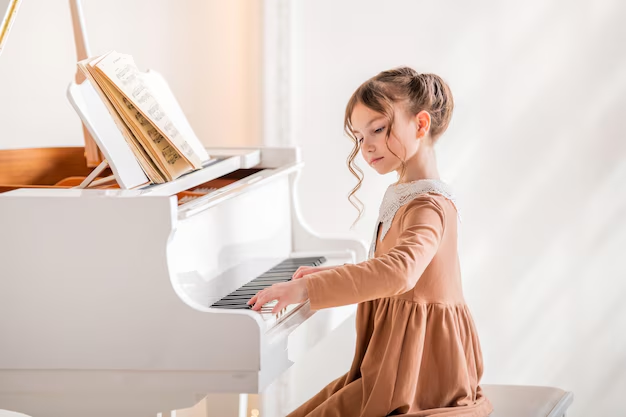
Learning how to play the piano engages the brain in a way very few activities do. Reading music, coordinating both hands, and listening critically all happen at the same time. This forces both hemispheres of the brain to work together, strengthening neural connections responsible for memory, attention, and reasoning.
This matters even more during childhood and adolescence, when the brain is still highly plastic and responsive to training. According to music education researcher Dr. Anita Collins, “music education literally changes the brain by building new neural networks.” Piano learning does not just activate the brain temporarily. It reshapes how it processes information, helping children think more clearly and adapt more easily across learning situations.
2. Improves Focus, Attention Span, and Self Discipline
One of the most noticeable changes parents see when a child learns how to play the piano is improved focus. Piano practice requires sustained attention. A child must slow down, follow instructions, and stay present until a task is completed. This is very different from activities that reward quick reactions or constant stimulation.
Learning how to play the piano also teaches self discipline in a practical way. Progress depends on regular practice, not shortcuts. Children learn that effort leads to improvement, even when results are not immediate. Over time, this mindset carries into schoolwork and daily responsibilities.
Piano lessons help children build the ability to concentrate for longer periods and develop habits that support consistent learning across different areas of life.
Read Also: Top 10 Musical Instruments Your Child Should Know How To Play
3. Supports Academic Skills, Especially Math and Reading
Learning how to play the piano supports academic learning in ways many parents do not expect. Music is built on patterns, timing, and structure. When children learn rhythm, they are working with fractions and sequences. When they read music, they practice decoding symbols and following written instructions in the correct order.
Studies from institutions such as Harvard Graduate School of Education have linked music education to stronger performance in reading and mathematics. Piano learning strengthens working memory and sequencing skills, which are essential for understanding sentences, solving math problems, and following multi step instructions.
By learning how to play the piano, children practice academic thinking in a hands on way that makes learning feel active rather than abstract.
4. Builds Emotional Expression and Stress Regulation
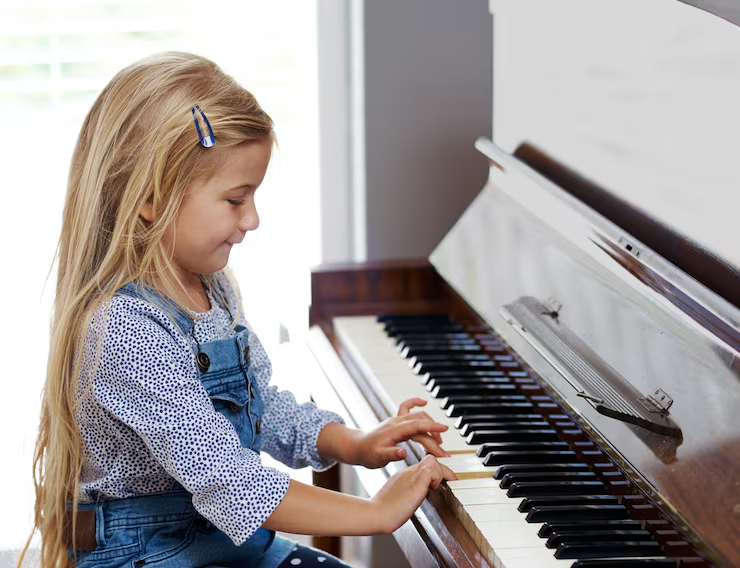
Children and teens often experience strong emotions they cannot easily explain. Learning how to play the piano gives them a healthy outlet to express frustration, excitement, or anxiety through structured sound. Music becomes a language when words feel limited.
Regular piano practice also supports emotional regulation. The act of playing encourages focus, controlled breathing, and presence. For teens especially, the piano can serve as emotional grounding during periods of academic pressure or social change.
Learning how to play the piano strengthens emotional literacy by teaching children how to process feelings actively rather than suppressing or avoiding them.
5. Boosts Confidence Through Measurable Progress
Learning how to play the piano gives children tangible proof of their growth. Starting with simple exercises and gradually moving to more complex pieces shows them that effort produces results. Each mastered piece becomes a small victory, reinforcing self belief and a sense of accomplishment.
This process shifts focus from innate talent to consistent effort. Children learn that improvement comes from dedication, not shortcuts. Over time, these experiences build confidence that carries into school, sports, and social situations.
Regular piano practice provides a structured environment where children see their own progress clearly, making learning how to play the piano a consistent confidence builder.
Read Also: How To Learn Piano Yourself With No Stress: A Step by Step Guide for Beginners
6. Enhances Memory and Information Retention
Learning how to play the piano strengthens both short-term and long-term memory. Memorizing pieces, remembering hand positions, and recalling musical patterns exercise the brain in ways that support overall cognitive development.
These memory skills transfer to other areas of learning, including test preparation, reading comprehension, and following multi-step instructions. By practicing consistently, children develop a stronger capacity to retain information and recall it when needed.
Piano training challenges the brain to store and retrieve complex sequences, making learning how to play the piano not just a musical exercise, but a practical tool for improving memory and boosting academic performance.
7. Encourages Social Skills and Collaboration
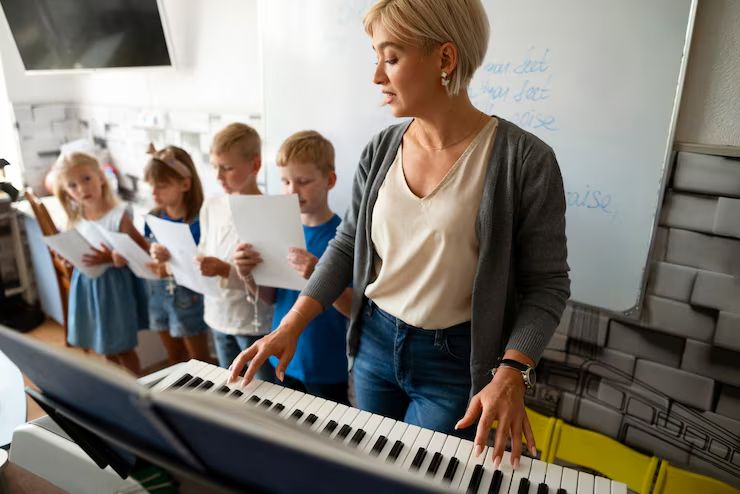
Learning how to play the piano is not always a solo activity. Children often participate in recitals, group lessons, duets, or ensemble performances, which teach them to listen carefully, stay in rhythm, and coordinate with others.
These experiences help children develop important social skills such as cooperation, patience, and empathy. Even shy children find that music provides a low-pressure way to connect with peers and express themselves. By learning how to play the piano, children not only gain musical ability but also strengthen their ability to communicate, collaborate, and participate confidently in social settings.
8. Teaches Goal Setting and Delayed Gratification
Learning how to play the piano teaches children that meaningful progress requires patience and structured effort. Mastering a piece involves breaking it into smaller sections, practicing each carefully, and gradually combining them. This step-by-step approach reinforces the importance of setting achievable goals.
Through consistent practice, children learn delayed gratification—success comes from effort over time, not instant results. These skills extend beyond music, helping children manage school projects, personal challenges, and long-term objectives.
By learning how to play the piano, children develop the mindset to plan, persist, and achieve, understanding that real accomplishment comes from steady dedication rather than shortcuts.
9. Improves Hand-Eye Coordination and Motor Skills
Learning how to play the piano refines both fine and gross motor control. Coordinating both hands to play different notes simultaneously requires finger independence and precise timing. Reading music while moving hands across the keys further strengthens hand-eye coordination.
These skills benefit younger children as they develop dexterity and growing teens as they refine physical control. Regular piano practice also promotes posture awareness and overall body coordination. By learning how to play the piano, children train their muscles and brains to work together seamlessly, enhancing not only musical ability but also everyday motor skills and physical confidence.
Read Also: How to Play Guitar for Beginners: Practical Steps That Actually Works
10. Creates a Lifelong Skill and Identity
Learning how to play the piano gives children a skill they carry into adulthood. Early exposure shapes self perception, discipline, and a sense of identity that extends beyond music. Even if children do not pursue music professionally, the habit of playing fosters creativity, patience, and personal expression.
Renowned cellist Yo-Yo Ma notes, “Music is a lifelong companion that shapes who we are and how we relate to the world.” By learning how to play the piano, children gain not just a musical skill, but a lasting tool for confidence, self discovery, and meaningful personal growth.
Conclusion
Learning how to play the piano gives children more than a musical skill. It helps them think clearly, manage emotions, work patiently toward goals, and connect with others through sound and structure. For parents, it is a practical way to support long term cognitive and emotional growth.
For teens, it becomes a tool for identity and confidence. When supported with the right guidance, learning how to play the piano becomes a skill that grows with your child, not something they outgrow.
Learn Piano the right way with Educify! 🎹
Start your child’s musical journey today with a program that guides progress step by step, helping them gain a skill that will benefit them for life.





One Response