
Introduction
Many students struggle with maths, and parents often worry about how to help. The truth is, learning maths doesn’t have to be stressful or about speed. Research from Stanford and the University of the People shows that the best way to learn maths is by building strong foundations, developing number sense, and practicing thoughtfully, not by memorizing facts under pressure.
Students who enjoy maths, understand concepts, and apply numbers flexibly consistently outperform those who focus solely on speed and rote learning. Mistakes, slow thinking, and guided help are all part of the process, and math anxiety can be managed with the right approach.
In this article, we’ll explore research-backed strategies, practical tips, and actionable methods to make maths engaging, meaningful, and effective. Whether you’re a parent looking to support your child or a student aiming to improve, these methods work for everyone.
Why Traditional Maths Learning Methods Often Fail
For decades, maths has been taught as a race. Finish first. Answer fastest. Memorize more. While this approach may work for a few learners, it leaves many students confused, anxious, and convinced they are “not good at maths.” Research from Stanford’s Graduate School of Education shows that speed and timed testing do not measure true mathematical understanding. In fact, they often block it.

When students are pushed to memorize procedures without understanding why they work, maths becomes fragile. One forgotten step can break the entire solution. This is why many learners perform well in early years but struggle as topics become more complex. Algebra, geometry, and higher-level maths all depend on flexible thinking, not rigid recall.
The best way to learn maths is not about how fast answers come. It is about how deeply numbers are understood, how confidently problems are approached, and how safely students are allowed to think, reason, and even struggle without fear.
What the Best Way to Learn Maths Actually Looks Like
The best way to learn maths is not built on speed, pressure, or memorization. It is built on understanding, flexibility, and repeated meaningful use of numbers. When students see maths as something they can explore rather than survive, learning improves naturally.
Effective maths learning starts with strong foundations. Concepts like addition, subtraction, multiplication, and division are not just steps to memorize. They are ideas that must be understood. When learners grasp how numbers relate to one another, new topics stop feeling random and start making sense.
Researchers highlight the importance of number sense, which is the ability to think about numbers in more than one way. A student who understands that 7 × 8 can be solved through reasoning, not just recall, is developing real mathematical strength.
This approach also reduces anxiety. When students are allowed to think slowly, use strategies, and make sense of problems, confidence grows. Maths becomes logical, not intimidating, and progress becomes consistent.
Read Also: Liberal Arts Mathematics: What It Is & Why It Matters for Students
Develop Number Sense, Not Just Memorization

One of the biggest shifts in understanding the best way to learn maths is moving away from pure memorization and toward number sense. Number sense means understanding how numbers relate to each other, not just recalling answers from memory.
For example, a student who understands numbers does not panic when asked to solve 7 × 8. They might think of 10 × 7 as 70, then subtract two groups of 7 to arrive at 56. This approach shows flexibility, confidence, and real understanding.
Students who rely only on memorized facts often struggle when pressure increases or when problems look slightly different. Those with strong number sense can adapt. They see patterns, estimate answers, and choose strategies that make sense to them.
To build number sense:
- Encourage mental maths and estimation
- Use visual models like number lines or groups
- Ask students to explain how they got an answer
This flexible thinking forms the backbone of long term maths success.
According to education research shared by University of the People, students who understand numerical relationships perform better than those who depend on rote learning. This is because understanding travels across topics, while memorization stays limited.
The best way to learn maths encourages learners to think with numbers, not just remember them. This skill supports long-term success and reduces fear around complex problems.
Make Maths Enjoyable and Engaging
Enjoyment is one of the most powerful drivers of learning maths. Students who are curious and motivated are more likely to understand concepts deeply, retain knowledge longer, and approach problems creatively. When maths is taught with pressure, correction, or fear of mistakes, students often disengage. Creating a positive, playful, and interactive environment changes this dynamic entirely.

Here are some ways to make maths engaging:
- Use Games and Puzzles – Incorporate logic games, pattern challenges, or problem-solving puzzles. Students explore concepts actively rather than passively memorizing rules.
- Encourage Exploration – Let students try multiple ways to solve a problem. Experimenting with different strategies develops flexibility and number sense.
- Celebrate Discovery – When a student finds a solution independently, acknowledge their reasoning. Understanding why an answer works is more valuable than just getting it right.
- Normalize Mistakes – Present errors as learning opportunities. Reflection after a wrong answer strengthens understanding far more than immediate correction.
- Parent Engagement – Parents can ask children to explain their thinking, guide discussions, and celebrate creative solutions instead of emphasizing speed.
When learning becomes enjoyable, maths is no longer intimidating. Students develop confidence, resilience, and curiosity. This approach directly supports the best way to learn maths, where engagement and understanding take priority over rote memorization or speed.
Read Also: Hooda Math Games: Fun & Educational Online Math Games for All Ages
Practice Smart, Not Just Hard
Practice is essential in learning maths, but not all practice is equally effective. Repetition without understanding often reinforces mistakes or creates anxiety. The best way to learn maths is to practice thoughtfully, focusing on comprehension and flexibility rather than just finishing many problems.
- Consistency Over Volume – Regular, short practice sessions are more effective than occasional marathon sessions. Daily exposure helps concepts settle in long-term memory.
- Analyze Mistakes Carefully – When a problem is answered incorrectly, take time to understand why. What step caused the error? Was it a calculation mistake, a misunderstanding of the concept, or misreading the question? Reflection converts mistakes into valuable learning.
- Vary Problem Types – Applying the same concept in different contexts strengthens understanding. For example, solving addition with word problems, number lines, and visual arrays helps students see the concept from multiple angles.
- Use Strategic Tricks – Techniques such as rounding numbers before adding, breaking multiplication into smaller parts, or visualizing patterns can make problems more manageable and reinforce number sense.
- Revisit Old Topics – Integrating review into practice prevents forgetting and reinforces connections between concepts. Revisiting foundational ideas alongside new ones strengthens confidence and fluency.
Parents can support practice by encouraging reflection rather than speed. Asking questions like “Why did you choose that method?” keeps students engaged with the reasoning behind the solution. Smart practice builds both skill and confidence, making maths feel achievable and even enjoyable.

Break Down Complex Problems Step by Step
Complex problems in maths can feel overwhelming, especially for students who are still developing confidence. The best way to learn maths is to approach these problems systematically, breaking them into smaller, manageable steps. This not only reduces anxiety but also builds understanding of how concepts connect.
Students can tackle complex problems by following these steps:
- Identify the problem type – Determine whether the task involves arithmetic, algebra, geometry, or another area. Recognizing the type guides the approach.
- Understand the question – Read the problem carefully. Highlight important information and restate the question in your own words.
- Break it into smaller steps – Solve each part sequentially rather than attempting the full problem at once. Smaller steps are easier to manage and reduce errors.
- Check each step – Review calculations or logic before moving on. Early detection of mistakes prevents confusion later.
- Combine the results – Once all steps are complete, synthesize the partial solutions into a final answer.
Parents can guide without giving answers, asking questions like “What’s the first step?” or “How could you check this part?” This encourages independent thinking while providing support. Gradually, students learn to approach challenging problems confidently, seeing them as solvable rather than intimidating.
Breaking problems down reinforces reasoning and ensures that learning is deep and durable.
Read Also: Free 1st Grade Math Worksheets for US Students (Printable)
Use Visuals and Multiple Representations
One of the most effective strategies to learn maths is to engage multiple parts of the brain through visual and hands-on approaches. Research shows that students who connect numbers to diagrams, charts, or physical models develop stronger understanding and retention. Visual representation helps students see patterns, relationships, and structures rather than just memorizing facts.
For example, fraction problems can be solved using pie charts, bar models, or number lines. Algebraic equations can be represented with balancing scales or interactive software. Drawing or manipulating objects allows students to experiment, test ideas, and understand concepts deeply. This multi-sensory approach reduces anxiety and helps struggling learners see maths as flexible and approachable.

Parents and educators can encourage students to learn maths by asking them to explain solutions visually, sketch steps, or use manipulatives like blocks or counters. Combining visual strategies with traditional practice builds number sense, improves problem-solving skills, and reinforces the best way to learn maths: understanding, not memorizing.
Set Goals and Track Progress
Setting goals transforms maths from a vague challenge into a series of achievable steps. Students often feel overwhelmed when they try to tackle large topics like algebra or geometry without a roadmap. The best way to learn maths includes setting clear, measurable goals that provide focus and motivation.
Goal-setting works best when broken into short-term and long-term targets:
- Short-term goals – These could include mastering a type of problem, completing a set of practice questions correctly, or understanding a specific concept. Small wins provide immediate feedback and build confidence.
- Long-term goals – Examples include finishing a textbook chapter, achieving a certain grade, or preparing for an exam. These goals give direction and purpose to daily practice.
- Track progress visually – Using charts, checklists, or journals helps students see their improvement over time. Progress tracking reinforces effort and shows that growth is possible.
- Celebrate milestones – Acknowledging accomplishments, no matter how small, encourages persistence and enjoyment in learning.
Parents and educators can support this process by discussing goals with students, helping them set realistic expectations, and encouraging reflection on progress. When students have clear goals and can see themselves achieving them step by step, motivation rises naturally.
Tracking progress also reinforces a growth mindset, showing that consistent effort, not innate talent, drives improvement in maths.

Seek Help Strategically
Learning maths does not have to be a solo journey. Even the most capable students benefit from guidance, and asking for help is a sign of strength, not weakness. The best way to learn maths includes knowing when and how to seek support to accelerate understanding and build confidence.
Students can seek help strategically in several ways:
- Tutors and teachers – A skilled tutor or teacher can provide explanations tailored to the student’s learning style. They can identify gaps, clarify confusing concepts, and model problem-solving strategies.
- Peer study – Working with classmates or friends allows students to discuss approaches, share ideas, and learn from each other’s reasoning. Explaining a concept to someone else reinforces understanding.
- Online resources – Interactive exercises, instructional videos, and guided practice can supplement classroom learning. Choosing resources aligned with the student’s level ensures productive practice.
- Parent support – Parents can guide without giving answers by asking questions like “What approach could work here?” or “Can you show me your thinking?” This encourages independence while providing reassurance.
Seeking help strategically also involves knowing when to step back. Over-reliance on external assistance can hinder independent thinking. The goal is to balance guidance with self-practice so that students gradually develop confidence and problem-solving skills.
With the right support, challenging concepts become approachable, and maths feels less intimidating.
Apply Maths in Real Life
Maths becomes meaningful when students see its relevance beyond worksheets. Applying concepts to everyday life reinforces understanding and develops practical skills. The best way to learn maths involves connecting numbers, operations, and reasoning to real-world situations, making learning both engaging and functional.
Parents and students can explore real-life applications in various ways:
- Cooking and baking – Measuring ingredients requires fractions, multiplication, and conversions. Scaling a recipe helps students understand proportions and ratios in a tangible way.
- Shopping and budgeting – Calculating discounts, comparing prices, or planning a budget teaches addition, subtraction, percentages, and practical decision-making.
- Games and puzzles – Board games, card games, and logic puzzles often involve counting, probability, and strategic thinking. These activities show that learning maths can be fun and interactive.
- Everyday problem-solving – Tasks like planning travel, estimating distances, or figuring out time schedules involve arithmetic and reasoning, reinforcing number sense.
When students see that maths is not an abstract exercise but a tool they can use in daily life, motivation and engagement increase naturally. Parents can encourage this by prompting children to explain their reasoning or create their own real-life maths challenges.
Applying concepts in real-world contexts not only strengthens understanding but also develops confidence, showing that learning maths has tangible, lasting value.

Mindset Matters: Overcoming Anxiety and Building Confidence
Learning maths is as much an emotional journey as it is an intellectual one. Students often struggle not because they lack ability, but because anxiety or fear of failure blocks their learning. Developing a positive mindset is the ultimate best way to learn maths.
High achievers are often careful, thoughtful thinkers rather than fast calculators. Research shows that speed does not equal ability; deep thinking is a strength, not a weakness. Encouraging students to slow down, reflect, and reason through problems helps them build confidence and reduces the stress that comes from timed tests or pressure.
Strategies to foster the right mindset include:
- Normalize mistakes – Mistakes are learning opportunities, not failures. Analyzing errors helps students improve reasoning and develop resilience.
- Celebrate progress – Recognizing small wins, such as understanding a tricky concept or solving a challenging problem, reinforces effort over innate talent.
- Encourage persistence – Students should be reminded that complex problems are solvable with patience and strategy.
- Promote a growth mindset – Emphasize that ability develops through practice and understanding, not memorization or speed.
Parents and educators can guide students by modeling calm, reflective thinking and praising effort rather than perfection. By nurturing a positive mindset, students approach learning maths with curiosity, confidence, and determination, making learning a rewarding experience rather than a source of fear.
Conclusion
Learning maths effectively requires more than memorization or speed. The best way to learn maths combines strong foundations, number sense, thoughtful practice, and real-world application. Students who approach maths with curiosity and confidence are more likely to retain knowledge, solve problems creatively, and enjoy the learning process.
By integrating these strategies, parents and students can transform maths from a source of stress into a subject that fosters critical thinking, problem-solving, and lifelong skills. Learning maths then becomes purposeful, engaging, and rewarding, setting the stage for success in both school and everyday life.
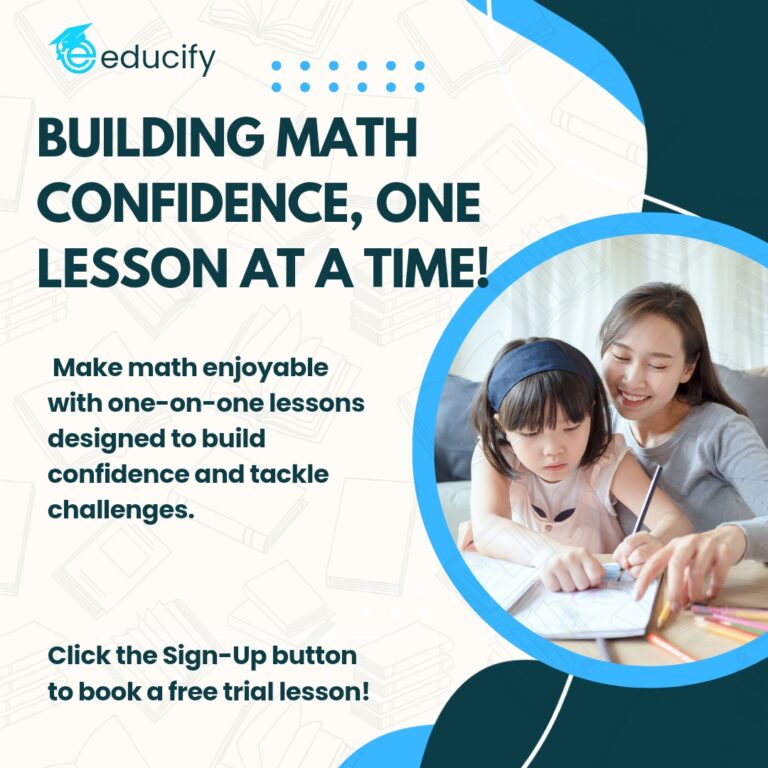
Explore Educify’s Math Programs 📊🖊️
Ready to make maths enjoyable and effective for your child? Educify offers structured math programs, interactive exercises, and personalized guidance designed to build confidence, number sense, and problem-solving skills.
Enroll today and give your child the tools to approach maths with curiosity, confidence, and success.