

Learning how to speak good English is not just about passing exams or sounding impressive. For most people, it is about being understood, expressing ideas clearly, and feeling confident in conversations at work, school, or everyday life. Many learners study English for years yet still feel nervous when they have to speak. They know the words, but when it is time to talk, their mind goes blank.
This article is written to solve that exact problem. If you want to know how to speak good English in a way that feels natural, confident, and useful in real situations, this guide will walk you through it step by step. You will not find vague advice or recycled tips here. Instead, you will learn practical methods, clear examples, and habits that actually help people improve their spoken English.
By the time you finish reading, you will understand how to speak good English with more clarity, better vocabulary, stronger confidence, and smoother flow, even if English is not your first language.
Why Speaking English Feels Harder Than Reading or Writing
Before learning how to speak good English, it is important to understand why speaking feels so difficult compared to reading or writing. When you read, your brain has time to process information. When you write, you can stop, think, delete, and rewrite. Speaking does not give you that luxury.
Speaking requires instant thinking. You must choose the right words, arrange them correctly, pronounce them clearly, and express emotion at the same time. This mental pressure often causes hesitation, mistakes, and self doubt. Many learners wrongly assume this means they are bad at English.
In reality, it means they have not trained their speaking skill properly. Speaking is a separate skill that needs its own type of practice. Understanding this is the first step toward learning how to speak good English with confidence.

How Can I Improve My English Speaking?
One of the most common questions learners ask is how can I improve my English speaking without feeling overwhelmed. The answer lies in changing how you practice, not how much you study.
To improve your speaking, you must start speaking before you feel confident. Confidence grows from action, not preparation alone. If you wait until your grammar is perfect, you will never feel ready. People who learn how to speak good English accept that mistakes are part of progress.
A very effective method is speaking to yourself. Describe your day, explain what you are doing, or talk through your thoughts out loud. This removes pressure and allows you to focus on fluency. Over time, your brain becomes faster at forming English sentences naturally.
Another important factor is clarity. Many learners aim for perfect grammar, but clarity matters more. If your listener understands you, your English is doing its job. This mindset shift alone helps many learners speak more freely and learn how to speak good English faster.
Practice Speaking With Purpose, Not Randomly
Random speaking does not lead to strong improvement, purposeful practice does. To truly understand how to speak good English, you need structure in your speaking routine.
Choose a topic, such as your job, a recent experience, or a news story. Set a time limit, for example two minutes. Speak without stopping. Record yourself if possible. Then listen back and notice one thing you can improve, such as pronunciation, sentence structure, or clarity.
This type of active practice is far more effective than passive learning methods. It aligns with the learning principles discussed in Active Learning Explained: The Secret Technique Top Students Use to Learn Faster, which shows that real improvement happens when learners actively engage rather than just consume information.
What Is the Secret of Speaking Good English?
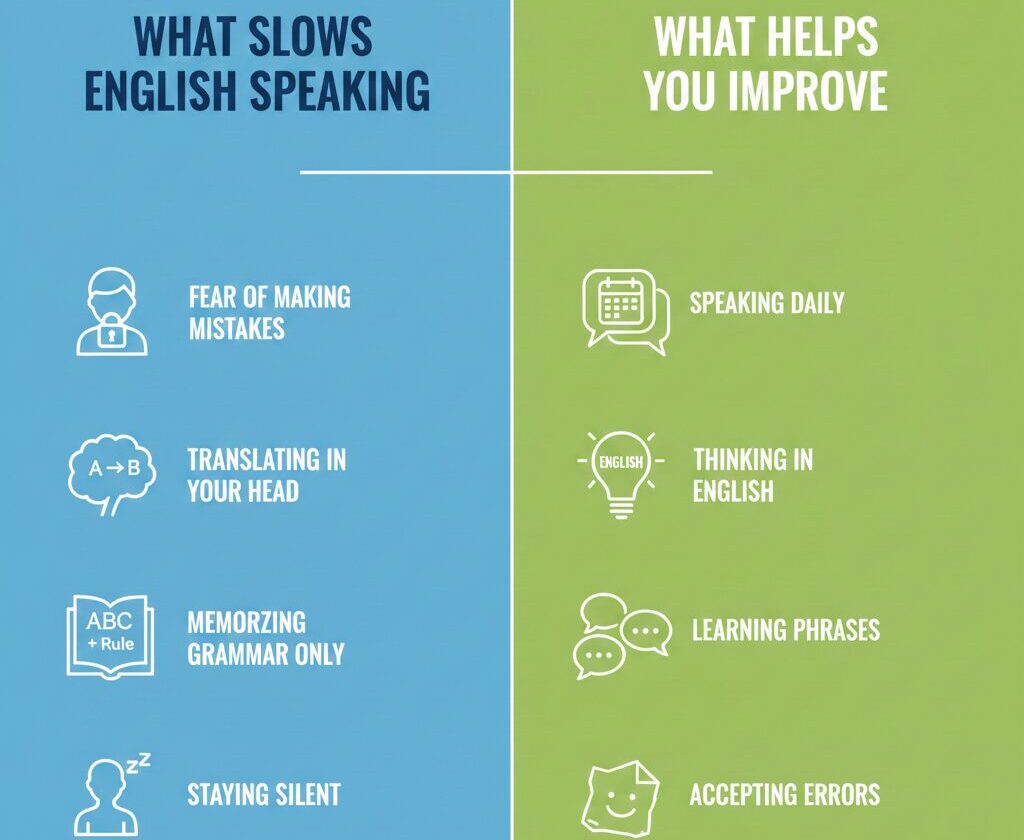
Many learners search for a secret shortcut to mastering English speaking. The truth is simple but powerful. The real secret of speaking good English is learning to think in English. Most learners think in their native language first and then translate into English. This process slows speech and increases mistakes. To learn how to speak good English naturally, your thoughts must form directly in English.
Start with simple thinking. Think about basic daily activities in English. Say sentences like “I am tired,” “I need to eat,” or “I am going to work.” These small habits train your brain to respond in English automatically.
Another key secret is learning phrases instead of isolated words. Real conversations are built on phrases, not vocabulary lists. When you learn phrases, you also learn grammar and pronunciation naturally. This method is supported by research in The Science of Learning: 7 Proven Brain Secrets to Learn Faster & Remember More, which explains how context strengthens memory.
What is the Fastest Way to Speak English Fluently?
When people ask about the fastest way to learn how to speak good English fluently, they often expect a shortcut. Fluency, however, is built through consistent habits.
Fluency does not mean speaking fast. It means speaking smoothly without long pauses. One of the fastest ways to build fluency is repetition with variation. Take one sentence structure and reuse it in different contexts. This trains your brain to produce language automatically.
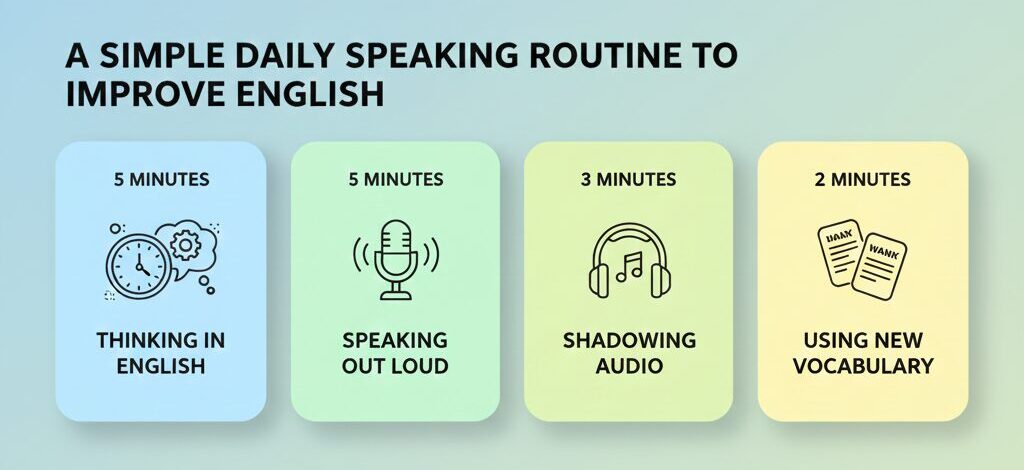
Another powerful method is shadowing. Shadowing involves listening to a native speaker and repeating immediately after them, copying their rhythm, stress, and tone. This helps you sound more natural and improves pronunciation at the same time.
Daily speaking is also essential. Even ten minutes a day makes a difference if done consistently. Your brain adapts faster to daily exposure than occasional long study sessions. This is explained further in How Your Brain Learns: The Hidden Science of Smarter Studying, which highlights the importance of consistent practice.
How Can I Improve My Vocabulary Fast?
A strong vocabulary is essential if you want to speak good English confidently. Many learners struggle because they try to memorize too many words too quickly.
The fastest way to improve vocabulary is to learn words in context. Instead of memorizing definitions, learn how words are used in real sentences. Context helps your brain understand meaning, tone, and usage at the same time.
Using new words immediately is also critical. If you learn a word but never use it, your brain forgets it. Make it a habit to use new vocabulary in a sentence the same day you learn it. This strengthens memory and improves speaking confidence.
It is also important to limit daily vocabulary intake. Five useful words used correctly are far more valuable than fifty forgotten words. This approach helps learners gradually build the language they need to learn how to speak good English naturally.
Pronunciation Matters More Than Accent
Many learners worry about having an accent. Accent is not the problem. Pronunciation clarity is what truly matters when learning how to speak good English. Native speakers from different countries have different accents, yet they understand each other. The key factor is clear pronunciation. Focus on vowel sounds, word stress, and sentence rhythm rather than trying to erase your accent.
English is a stress based language. Stressing the wrong word can change meaning completely. Listening carefully to native speech and repeating aloud helps you internalize correct patterns. Over time, your pronunciation becomes clearer and more natural.
Grammar That Actually Helps You Speak
Grammar is important, but not all grammar is equally useful for speaking. Many learners waste time studying complex rules they rarely use in conversation. To learn how to speak good English, focus on mastering the basics. The present simple, past simple, and basic future forms cover most everyday conversations. Once you can use these comfortably, your speaking improves significantly.
Apply grammar immediately in speech. If you learn a tense, use it in conversation the same day. Grammar that stays in your notebook does not help your speaking.
Build Confidence by Managing Conversations
Confidence in speaking English does not come from knowing everything. It comes from knowing how to manage conversations.
Using simple sentence structures well is more effective than using complex sentences poorly. Clear, simple speech sounds confident and professional. Phrases like “Can you explain again?” or “I need help with this” are powerful tools for communication.
Conversation fillers also help reduce pressure. Phrases such as “Let me think” or “That’s a good question” give you time to think while keeping the conversation flowing. These small tools make a big difference when learning how to speak good English.
Create an English Environment Anywhere
You do not need to live in an English speaking country to learn how to speak good English effectively. What matters more is how often your brain is exposed to English in daily life. You can create an English environment wherever you are by surrounding yourself with the language intentionally. Listen to podcasts or watch videos in English during commutes or breaks.
Change your phone, apps, and notifications to English so you interact with the language naturally. Try thinking in English while doing everyday tasks like cooking or walking. Over time, these habits turn English into a living language rather than something you study occasionally.
Mistakes Are a Necessary Part of Progress
Mistakes are not a sign that you are failing. They are clear evidence that learning is happening. Every fluent speaker you admire once struggled and made countless errors while learning how to speak good English. Avoiding mistakes by staying silent may feel safe, but it slows improvement significantly.
Speaking, even with errors, gives your brain valuable feedback and helps it adjust faster. Each mistake teaches you something new about vocabulary, grammar, or pronunciation. When you accept mistakes as part of the process, fear decreases and confidence grows. This mindset is essential for steady progress and long term fluency.
Build a Daily Speaking Routine That Actually Improves Your English
One of the biggest differences between learners who improve and those who stay stuck is having a simple, realistic speaking routine. Many people want to know how to speak good English, but they rely on motivation instead of structure. Motivation comes and goes. A routine creates progress even on days when you feel tired or busy.
A strong daily speaking routine does not need to be long or complicated. What matters is consistency and intention. Start by setting aside ten to fifteen minutes each day for speaking only. During this time, do not read, write, or translate. Focus entirely on speaking out loud. You can talk about your day, explain a topic you recently learned, or describe your opinions on a simple issue. This trains your brain to produce English without relying on preparation.
Recording yourself is another powerful habit. When you listen back, you become aware of pronunciation issues, repeated mistakes, or unclear sentences. This awareness is essential for improvement. Many learners are surprised by how much better they sound than they expected, which builds confidence. Others notice patterns they can fix gradually. Both outcomes support learning how to speak good English more effectively.
It is also helpful to rotate speaking activities to keep practice engaging. Some days, focus on storytelling. Other days, practice answering common interview questions or explaining a concept as if you were teaching someone else. Teaching forces you to organize your thoughts clearly, which strengthens speaking skills. This approach helps you move beyond memorized responses and toward real communication.
Most importantly, track small wins. Notice when you hesitate less, find words faster, or feel calmer while speaking. These signs show real progress, even if fluency is not perfect yet. Learning how to speak good English is a gradual process, but a daily speaking routine turns effort into visible results. Over time, speaking stops feeling like a challenge and starts feeling like a natural part of your life.
How Long Does It Take to Speak Good English?
Many learners want a clear answer to how long it takes to learn how to speak good English, but the reality is that there is no universal timeline. Language learning is highly individual. Progress depends less on natural ability and more on how you practice, how often you practice, and how you approach mistakes and challenges.
The quality of your practice plays a major role. Someone who speaks English for ten focused minutes every day, actively thinking and correcting themselves, will usually improve faster than someone who studies grammar for hours without speaking. Consistent, purposeful speaking helps your brain build automatic responses, which is essential for developing fluency and confidence.
Consistency matters more than intensity. Speaking English every day, even briefly, trains your brain to stay in English mode. Learners who practice daily often notice small improvements within a few weeks. These improvements might include speaking with fewer pauses, feeling less nervous, or forming sentences more easily. Over time, these small changes add up to significant progress in how to speak good English.
Ultimately, learning how to speak good English is a journey rather than a race. Some learners reach their goals quickly, while others take longer. What matters most is steady improvement and long term commitment. When you focus on growth instead of speed, fluency becomes a natural outcome rather than a stressful target.
Learning Other Languages Can Improve English Too
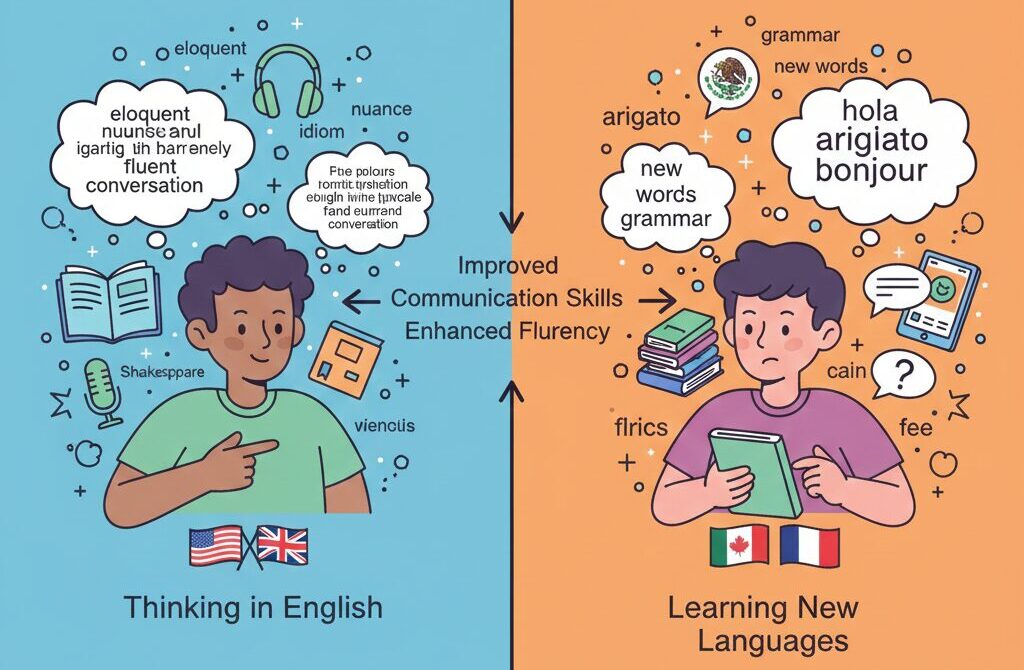
Many people do not realize that learning another language can actually make their English stronger. When you study a second or third language, you begin to notice how language works at a deeper level. This increased awareness often helps learners understand how to speak good English more clearly and confidently.
As you learn a new language, you naturally start comparing it with English. You notice sentence structure, word order, verb tenses, and how meaning changes based on context. These comparisons sharpen your understanding of English grammar, even if you never studied it deeply before. Concepts that once felt confusing often become clearer because you now see language as a system rather than a list of rules.
Pronunciation also improves when learning other languages. Many languages train your ear to hear sounds more carefully. This skill transfers directly to English speaking. You become more aware of stress, rhythm, and intonation, which are essential elements of speaking clearly. Learners who study additional languages often develop better listening skills, which in turn helps them respond more naturally in conversations.
If you are curious about language learning paths, Top 10 Proven Easiest Languages to Learn for English Speakers explores how learning additional languages can strengthen overall communication skills.
Final Thoughts
Learning how to speak good English is not about talent or perfection. It is about habits, consistency, and using the right methods. Speak daily, think in English, learn phrases, accept mistakes, and focus on clarity.
When you apply these principles consistently, English speaking stops feeling stressful and starts feeling natural. Progress becomes visible, confidence grows, and communication improves.
Learn More With Educify
If you are ready to take your language skills further, Educify offers structured, practical courses designed to help learners succeed in real world communication. Alongside English improvement, you can learn French with us and explore a wide range of subject based courses tailored for practical growth.
Start your next learning step with Educify and turn knowledge into real confidence.